
Dharamsala Buddhist Temple: Complete Guide to the Dalai Lama’s Sacred Himalayan Refuge
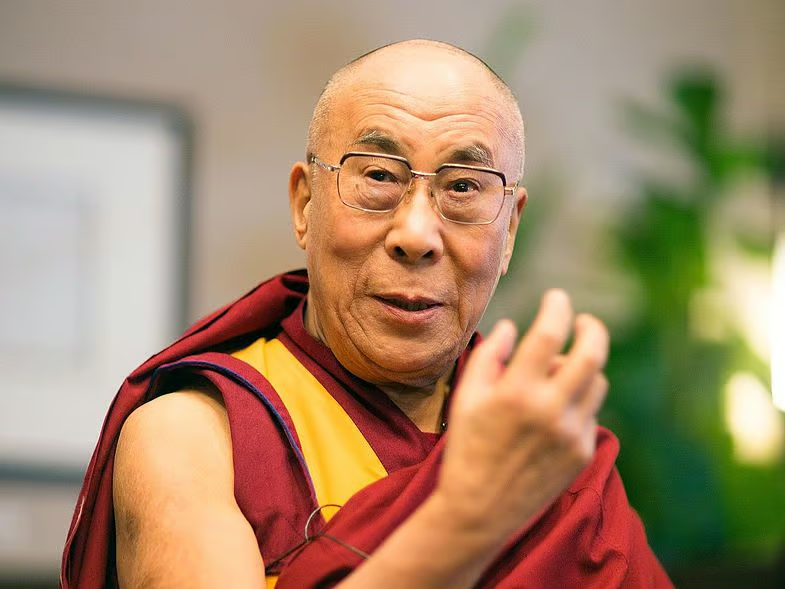
High in the mist-wrapped hills of Himachal Pradesh, where pine forests touch the snowline and prayer flags flutter in cold mountain air, sits a small temple that quietly holds the heart of Tibetan Buddhism in exile. The Dharamsala Buddhist Temple, known to monks and pilgrims as the Tsuglagkhang Complex, is the spiritual home of His Holiness the 14th Dalai Lama. For Buddhist travelers, this is not just another temple visit. It is a meeting with a living tradition.
At Prime Value Tours Pvt. Ltd., we have been guiding Thai and international Buddhist pilgrims across India and the Himalayas since 1999. As a Ministry of Tourism, Government of India – Verified Tour Operator and active IATO Member – Indian Association of Tour Operators, we know how meaningful a journey to the Dharamsala Buddhist Temple can be. In this complete guide, we share everything you need: what the temple is, why it matters, what to see, and how to plan a smooth, respectful visit.
What Is the Dharamsala Buddhist Temple?
The Dharamsala Buddhist Temple sits inside the Tsuglagkhang Complex in McLeod Ganj, also called Upper Dharamsala. McLeod Ganj is often called “Little Lhasa” because thousands of Tibetan refugees have built their second home here. The complex is the official residence and personal temple of His Holiness the 14th Dalai Lama, who fled Tibet in 1959.
Inside the complex you will find the main temple, Namgyal Monastery (the Dalai Lama’s personal monastery), the Tibet Museum, and a quiet outer prayer path called the kora.
The energy here is gentle and grounded. Monks chant in deep voices, butter lamps glow against gold statues, and the scent of juniper incense drifts through the courtyard. This is not a tourist showpiece. It is a working place of practice.
Why the Dharamsala Buddhist Temple Holds Sacred Importance
Here’s the thing most visitors don’t realise: the Dharamsala Buddhist Temple is not an ancient monument. It was built after 1959, when His Holiness and thousands of Tibetan monks settled in Dharamsala under the kind invitation of the Indian government.
But its spiritual lineage is ancient. The temple holds the same teachings, rituals, and tantric practices that flourished in Lhasa’s Jokhang and Potala for over 1,300 years. When Tibet’s old monasteries were destroyed, this small temple in India became the new center of Tibetan Buddhism.
For Thai Buddhist pilgrims, this is a unique blessing. You can study Mahayana and Vajrayana traditions side by side with the Theravada path you may already follow at home. In our experience, many guests describe it as one of the most moving stops on their India tour.
7 Sacred Spots Inside the Dharamsala Buddhist Temple Complex
Plan around 3 to 4 hours for a calm, complete visit. Here are the seven spots you should not miss.
1. The Main Tsuglagkhang Temple
This is the heart of the complex. Three massive gilded statues sit in the main hall. The largest, in the centre, is Buddha Shakyamuni. To his left stands Avalokiteshvara (Chenrezig), the bodhisattva of compassion, whom the Dalai Lama is believed to embody. To his right stands Padmasambhava (Guru Rinpoche), who brought Buddhism to Tibet in the 8th century. You may also see monks debating loudly in the courtyard outside, a 600-year-old training tradition.
2. Namgyal Monastery
Founded by the Third Dalai Lama in 16th-century Tibet, Namgyal moved to Dharamsala in 1959. Around 200 monks live and study here today. They lead daily prayers, perform tantric rituals, and accompany the Dalai Lama on official ceremonies. Visitors can sit quietly at the back during morning or evening prayers.
3. Tibet Museum
A small but powerful museum on the lower floor of the complex. It tells the story of Tibet through photographs, refugee testimonies, original documents, and quiet personal items. Plan 30 to 45 minutes here. It will change how you understand the temple above.
4. Kalachakra Temple
A smaller temple right next to the main hall. Inside you will find vivid murals of the Kalachakra (Wheel of Time) mandala. The Dalai Lama has personally given the Kalachakra empowerment more than 30 times around the world. If you have studied any tantric tradition, this room is a quiet treasure.
5. The Kora (Prayer Path)
The kora is a peaceful walking path that circles the complex. Hundreds of prayer wheels line the route. Pilgrims walk it clockwise, spinning each wheel as they go. The path takes around 20 minutes at a slow pace. Walking the kora once is considered a small but meaningful daily practice.
6. The Public Teaching Courtyard
This is where the Dalai Lama gives public teachings, usually around Tibetan New Year (Losar) and on special occasions. If your visit coincides with a teaching, register in advance through the official Dalai Lama website. Bring a cushion, a hat, and a small FM radio (English translation is broadcast on a local frequency).
7. Prayer Flag Viewpoint and Stupas
Just outside the main complex, colourful prayer flags carry mantras into the wind, sending blessings in every direction. The viewpoint looks across the Kangra Valley with the Dhauladhar mountains rising behind. A perfect place to sit quietly for a few minutes after your tour.
Best Time to Visit the Dharamsala Buddhist Temple
In our experience, the best months to visit are March to June and September to November.
- March to June: Pleasant 15 to 25 degrees Celsius, blooming rhododendrons, clear mountain views.
- September to November: Crisp post-monsoon air, golden autumn light, fewer crowds.
- December to February: Heavy snow, magical but very cold; some roads can close.
- July to August: Monsoon season, beautiful greenery but slippery paths and possible landslides.
For Thai Buddhist groups, we usually recommend October to early March. The weather pairs nicely with our Buddhist circuit pilgrimage tours in Bihar and Uttar Pradesh.
How to Reach the Dharamsala Buddhist Temple
The temple is located in McLeod Ganj, about 4 km uphill from Lower Dharamsala.
By Air
The closest airport is Kangra (Gaggal) Airport, just 15 km away. From there, a 30-minute taxi reaches McLeod Ganj. Many international travelers fly into Delhi first, then take a 1-hour domestic flight to Gaggal.
By Train
The nearest broad-gauge station is Pathankot, around 90 km away (3-hour drive). From Pathankot you can also take the scenic Kangra Valley narrow-gauge toy train for a slow, beautiful ride.
By Road
Delhi to Dharamsala is around 475 km. An overnight Volvo coach takes 10 to 12 hours. We arrange private comfortable vehicles for our pilgrim groups, with safe drivers and rest stops.
For Thai Pilgrims from Bangkok
The most efficient route is Bangkok to Delhi by direct flight (around 4.5 hours), then Delhi to Dharamsala by domestic flight (1 hour) or a scenic overnight drive. Plus, we can attach Dharamsala to a longer Buddhist pilgrimage circuit easily. Our team can build the full plan, see our Buddhist Pilgrimage Guide for ideas.
Temple Etiquette and Cultural Tips
A few simple rules will keep your visit smooth and respectful:
- Remove your shoes before entering temple halls.
- Walk clockwise around stupas, prayer wheels, and altars.
- Keep your voice soft. Do not point your feet toward statues or monks.
- Photography is allowed in courtyards but not inside the main shrines.
- Carry small notes for offerings, butter lamps, and museum entry.
- Mobile phones must be on silent during prayers and teachings.
- Wear modest clothing: shoulders and knees should be covered.
The good news is, the atmosphere is gentle and visitors are welcomed warmly. Just follow the example of the Tibetan elders walking the kora, and you will feel right at home.
Day Trip vs. Multi-Day Stay
For a quick spiritual taste, you can do a one-day visit covering the main temple, museum, and kora. But here’s what matters: Dharamsala rewards travelers who slow down. We recommend at least 2 to 3 nights so you can attend morning prayers, walk the kora at sunrise, visit nearby Norbulingka Institute, and breathe the mountain air without rushing. Travelers who pair Dharamsala with our Leh Ladakh Tour Packages or our Buddhist circuit tours often tell us this combination is the most enriching India experience they have ever had.
Plan Your Trip with Prime Value Tours
| Plan Your Trip with Prime Value Tours We have been organizing pilgrimage and cultural tours across India since 1999, with a special focus on Buddhist circuit tours for Thai and Southeast Asian groups. We are a Ministry of Tourism approved operator and proud IATO member. Our team can arrange: • Customized Dharamsala temple tours • Combined Buddhist circuit and Himalayan packages • Private transport, monk guides, and Thai-friendly support • Comfortable hotels close to the temple complex Contact us today to design your perfect itinerary: Phone : +91-542-2500113 WhatsApp : +91-9794122849 Email : info@primevaluetours.com Website : www.primevaluetours.com LINE : https://line.me/ti/p/6QtZRvYpeP We speak English and are happy to assist Thai-speaking groups. |
You can also Plan Your Trip online through our easy enquiry form, our team replies within 24 hours.
Standing in the courtyard of the Dharamsala Buddhist Temple, watching the morning sun catch the gold of Buddha’s face while monks softly chant the Heart Sutra, you understand something quiet and lasting. This place is not about tourism. It is about presence. And once you have walked the kora, breathed the mountain air, and felt the prayer wheels turn beneath your fingers, a small piece of Dharamsala will stay with you long after you go home.
Frequently Asked Questions
Q1. Is the Dharamsala Buddhist Temple open to non-Buddhists?
Yes, the temple welcomes visitors of all faiths and backgrounds. There is no entry fee for the main complex. Just follow basic temple etiquette: dress modestly, walk clockwise, and keep your voice soft.
Q2. Can I see the Dalai Lama in person at the Dharamsala Buddhist Temple?
Public teachings happen several times a year, usually around Tibetan New Year (Losar) and Buddha Jayanti. Private audiences are not granted to general visitors, but you can register for public teachings on the official Dalai Lama website in advance.
Q3. What is the entry fee for the Dharamsala Buddhist Temple?
Entry to the main temple complex is free. The Tibet Museum charges a small fee of around 50 INR. Donations for butter lamps and offerings are welcome but always optional.
Q4. How many days should I plan for a Dharamsala temple visit?
We recommend 2 to 3 nights to enjoy morning prayers, the kora walk, the Tibet Museum, and nearby spots like Norbulingka Institute and Bhagsunag waterfall. A rushed one-day visit is possible but far less rewarding.
Q5. Is Dharamsala safe for Thai senior pilgrims?
Yes, very safe. The town is small, friendly, and used to international visitors. Thai senior groups travel with our company every year without any trouble. The altitude is moderate (around 2,000 metres), so most travelers adjust easily within a day.