Delhi · Lucknow · Shravasti · Lumbini · Kushinagar · Vaishali · Patna · Nalanda · Rajgir · Bodhgaya · Varanasi · Agra
12 Days 11 Nights
Minimum 10 pax
4-Star Hotels
4 UNESCO Heritage sites
12 Days / 11 Nights
Minimum 10 pax | Maximum 25 pax per coach
USD 1,420 – USD 1,950 per person (land only, based on group size)
Delhi · Lucknow · Shravasti · Lumbini · Kushinagar · Vaishali · Patna · Nalanda · Rajgir · Bodhgaya · Varanasi · Agra · Delhi
4 UNESCO World Heritage Sites: Mahabodhi Temple (Bodhgaya), Nalanda University, Lumbini, Taj Mahal (Agra)
Private AC coach (Toyota/Volvo) + 2 domestic flights (Delhi–Lucknow, Varanasi–Delhi)
4-Star hotels throughout (double occupancy)
Daily breakfast + dinner | Pure vegetarian / Buddhist-friendly menus
Licensed heritage guide (English / Thai / Hindi) — full 13 days
October – March (peak: Dec–Jan for Bodhgaya Monlam; Mar–Apr for Vesak)
01
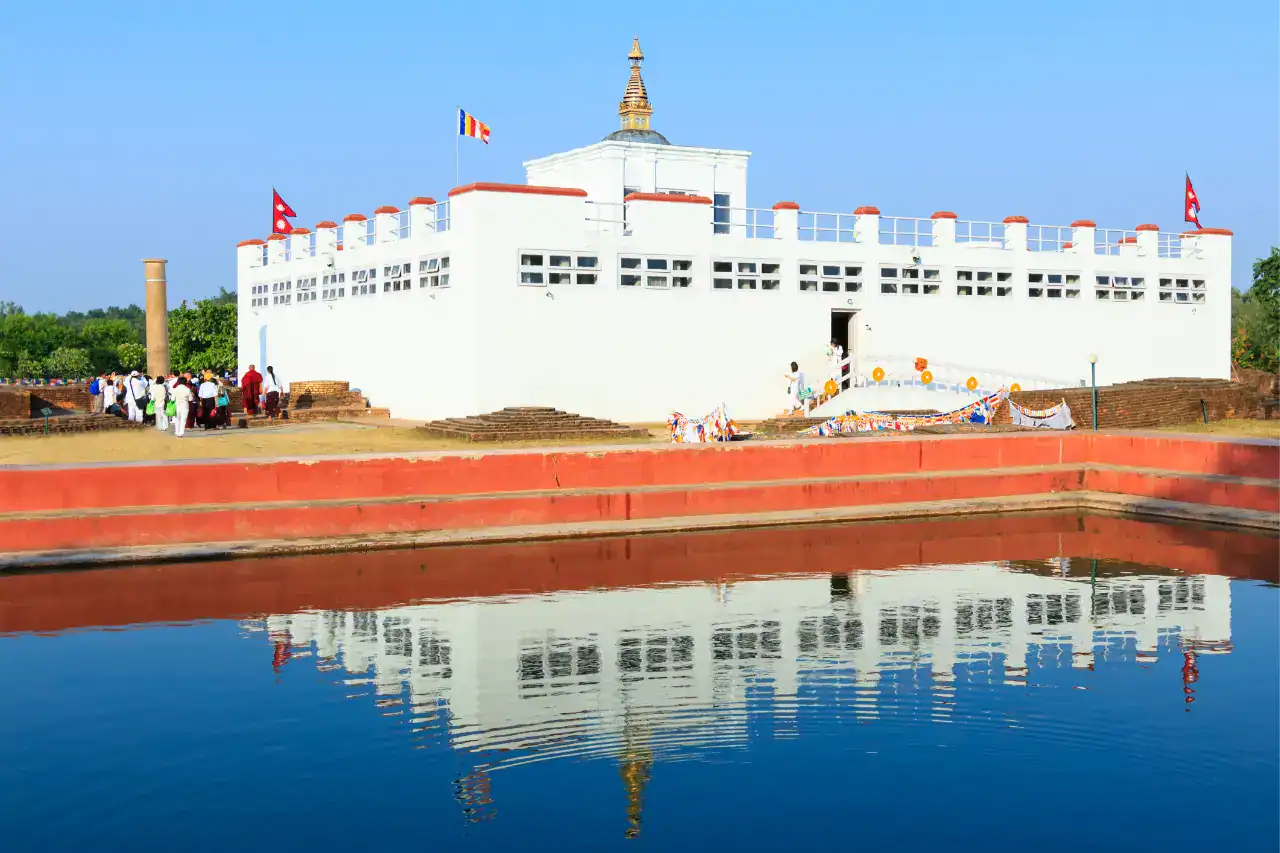
Birthplace of the Buddha — Maya Devi Temple & Ashokan Pillar
02
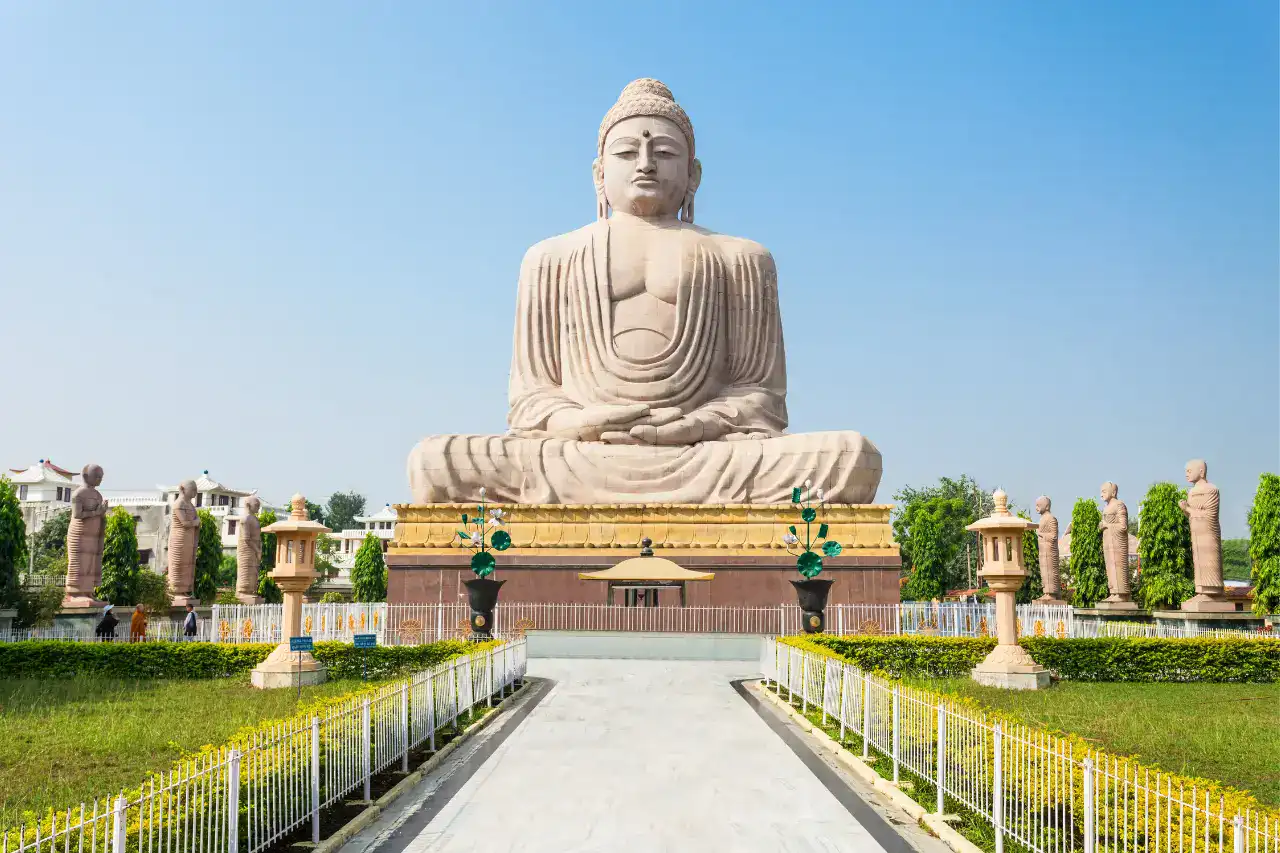
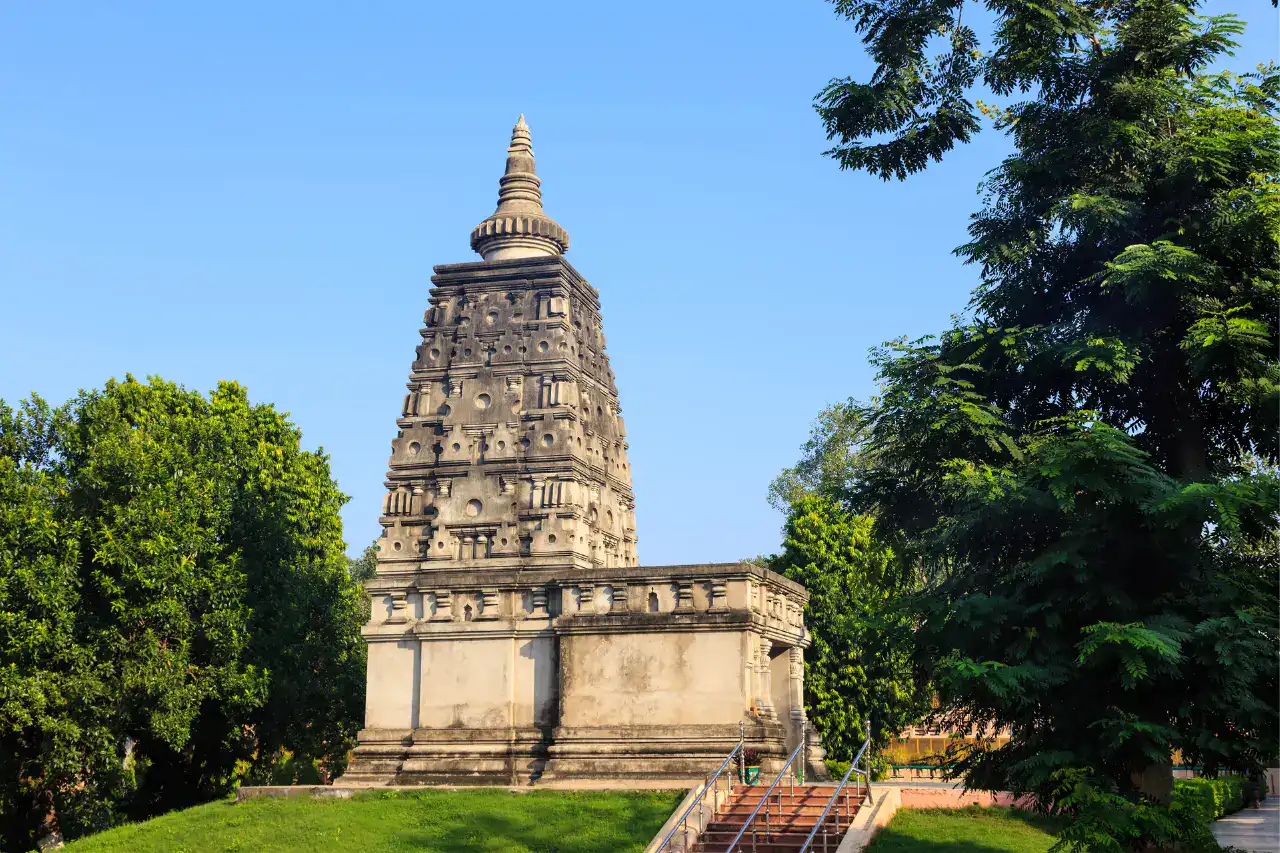
Site of the Enlightenment — Mahabodhi Temple & Sacred Bodhi Tree (UNESCO)
03
First Sermon — Dhamek Stupa & Lion Capital (national symbol of India)
04
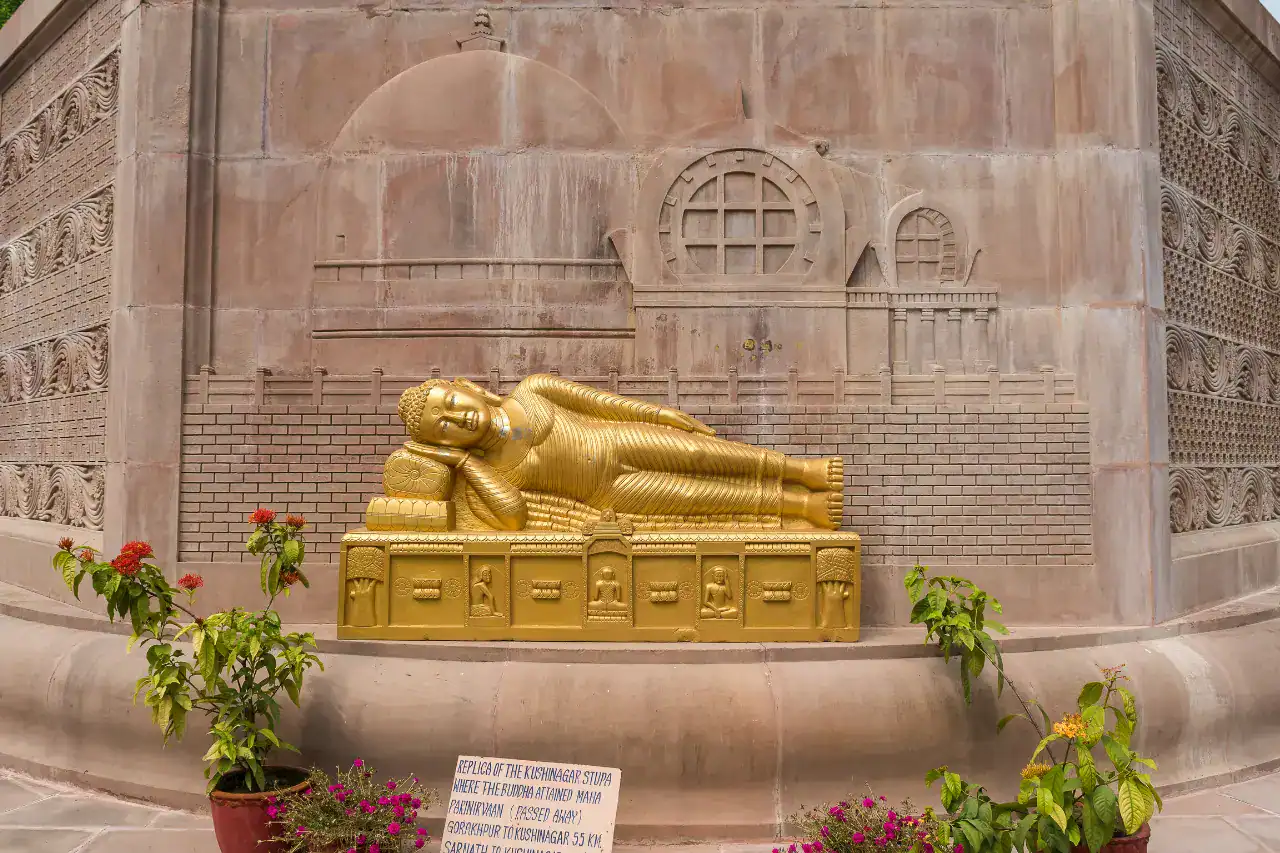
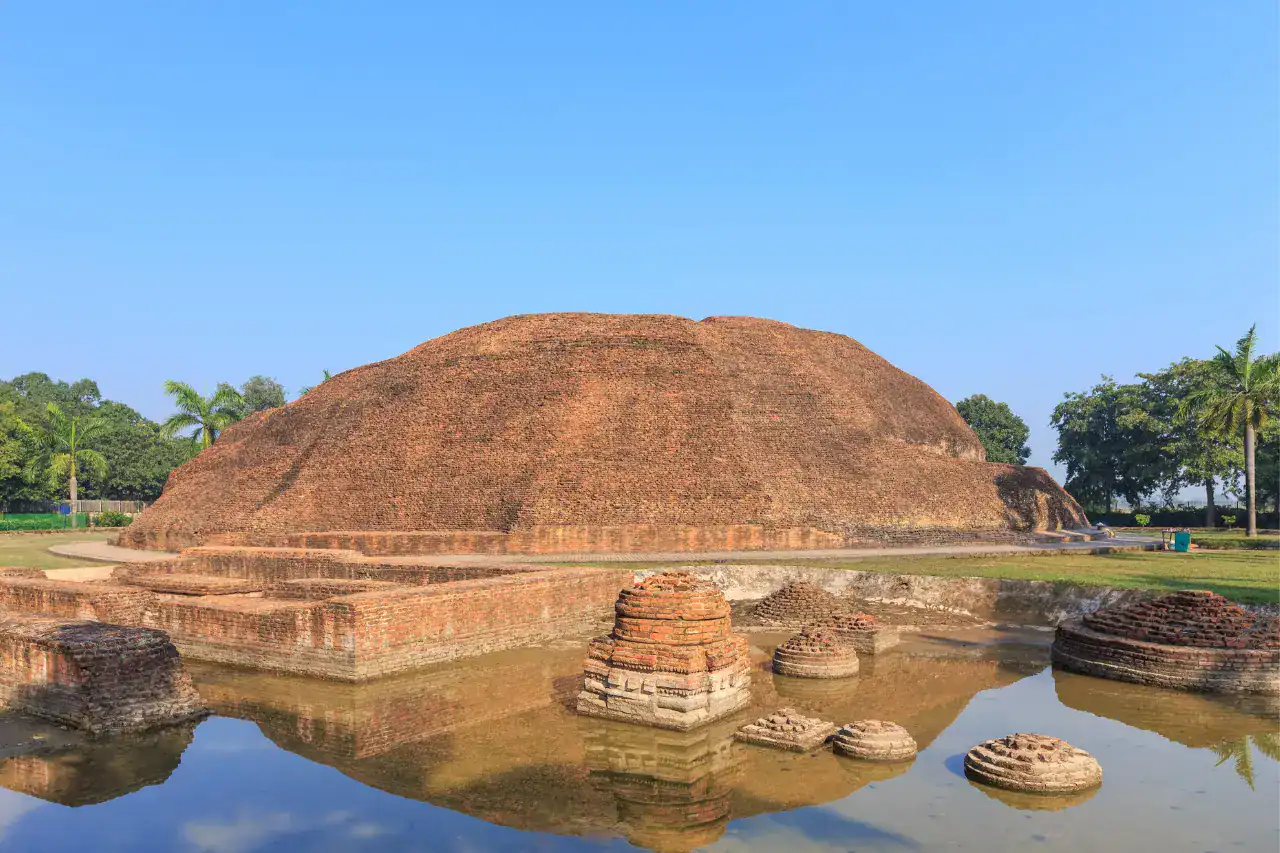
Parinirvana — Reclining Buddha & Ramabhar Stupa (cremation site)
05
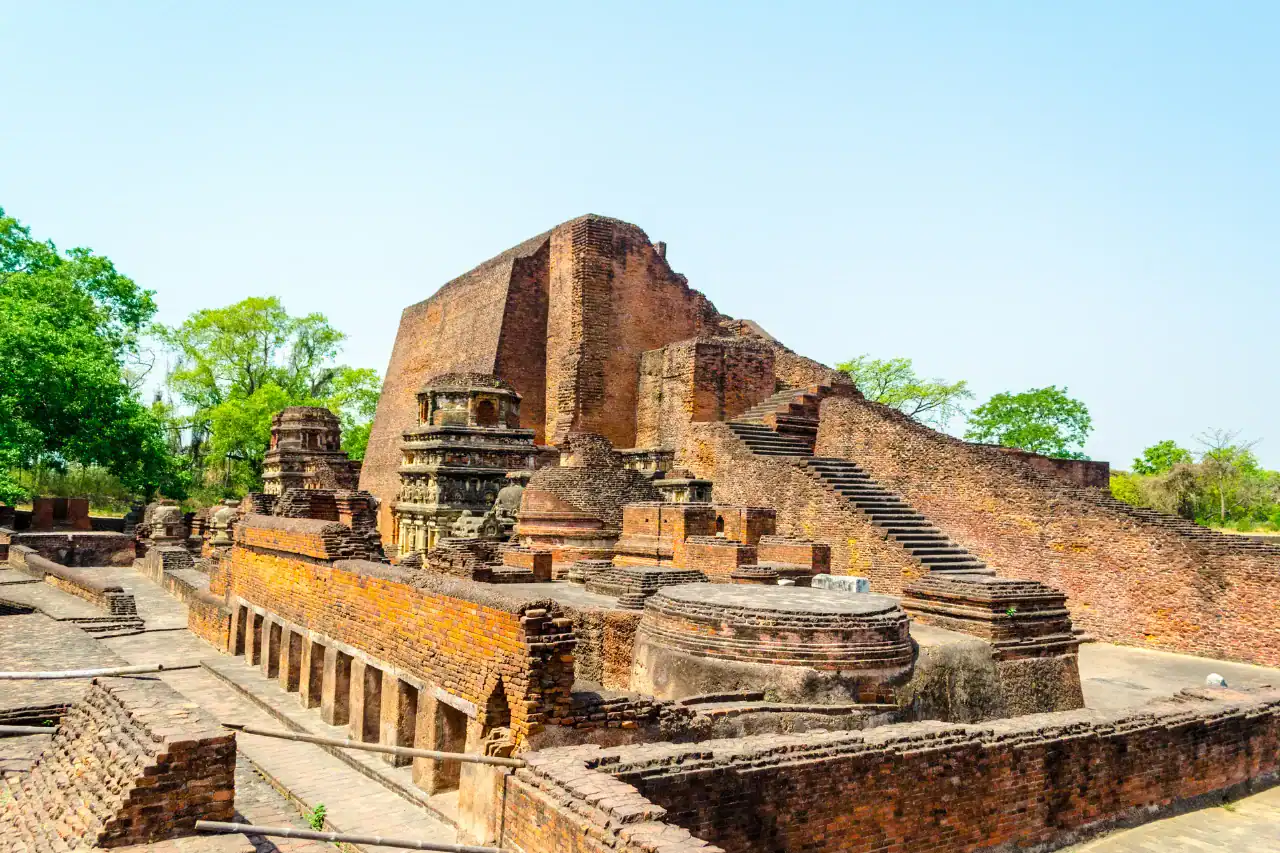
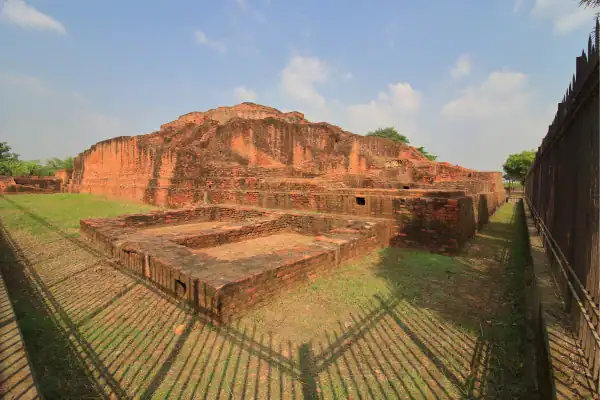
World’s first university — UNESCO World Heritage ruins
06
Vulture Peak (Griddhakuta) — where Prajnaparamita sutras were taught
07
The Twin Miracle site — Jetavana Monastery & Ananda Bodhi Tree
08
Buddha’s final sermon site — Relic Stupa & Ashokan Lion Pillar
09
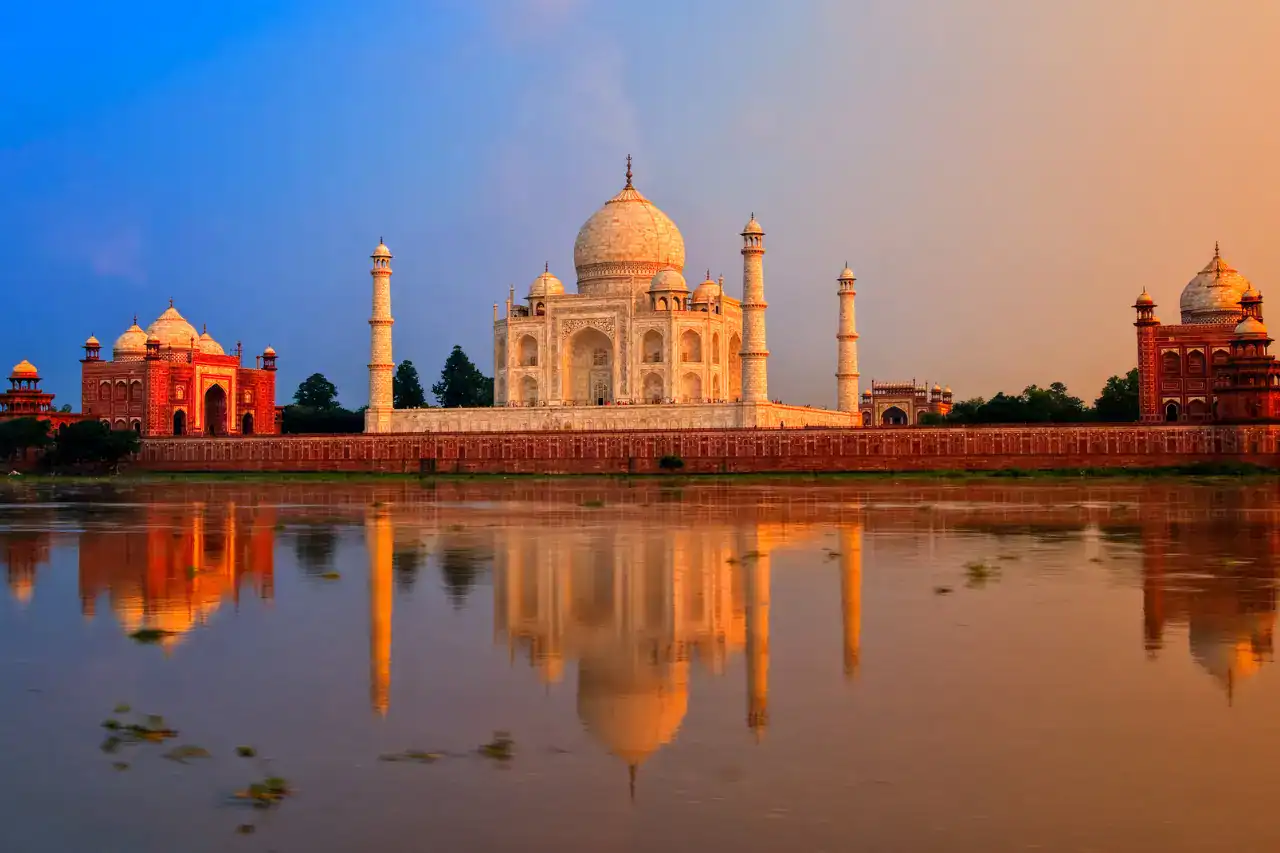
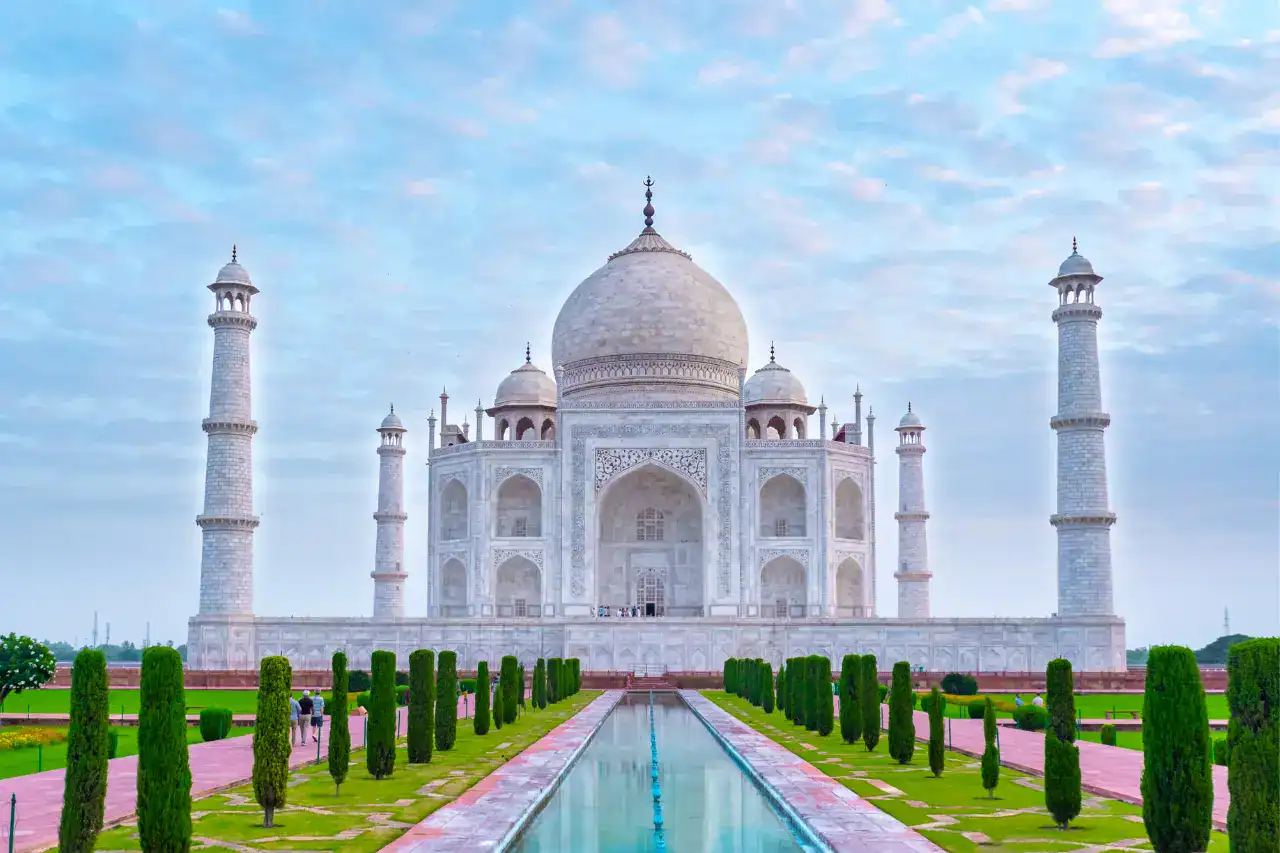
One of the Seven Wonders of the World — UNESCO World Heritage Site
10
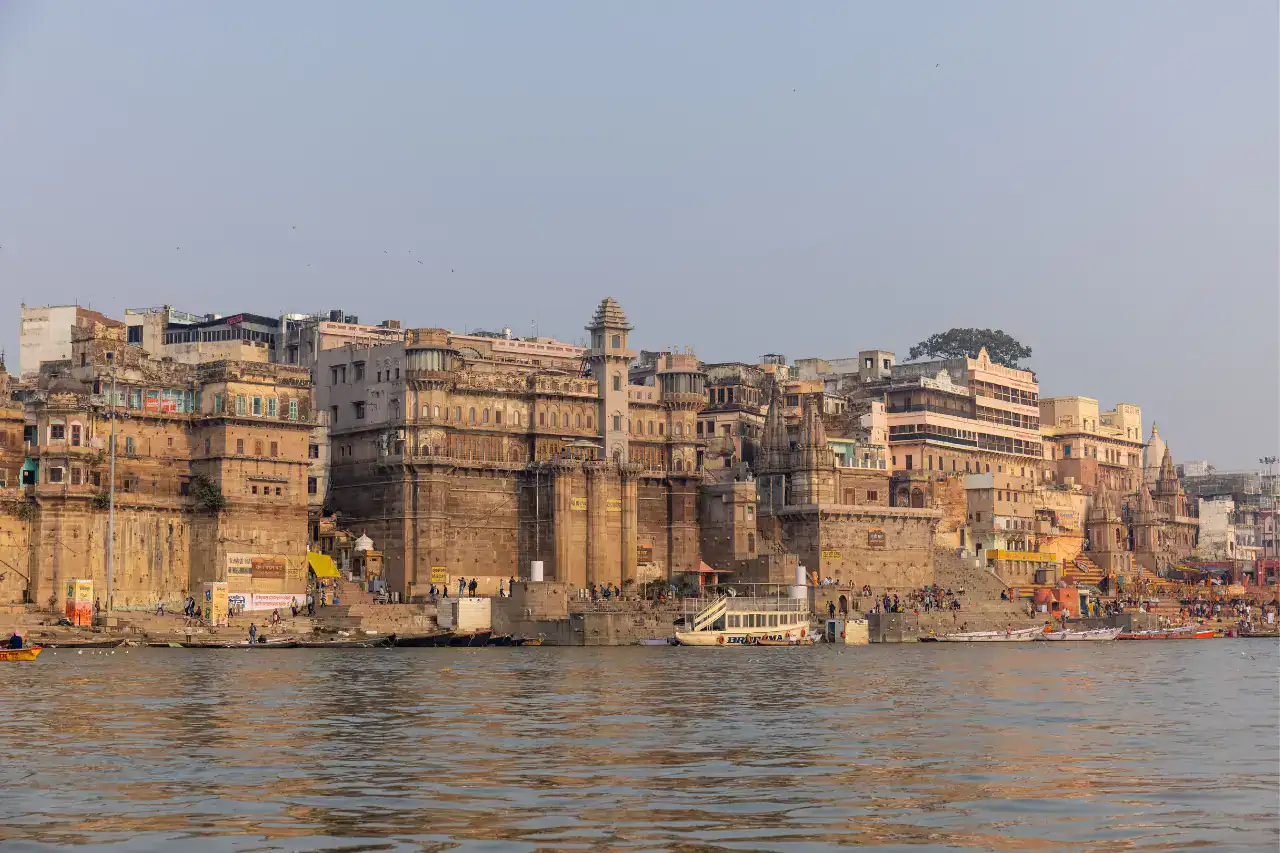
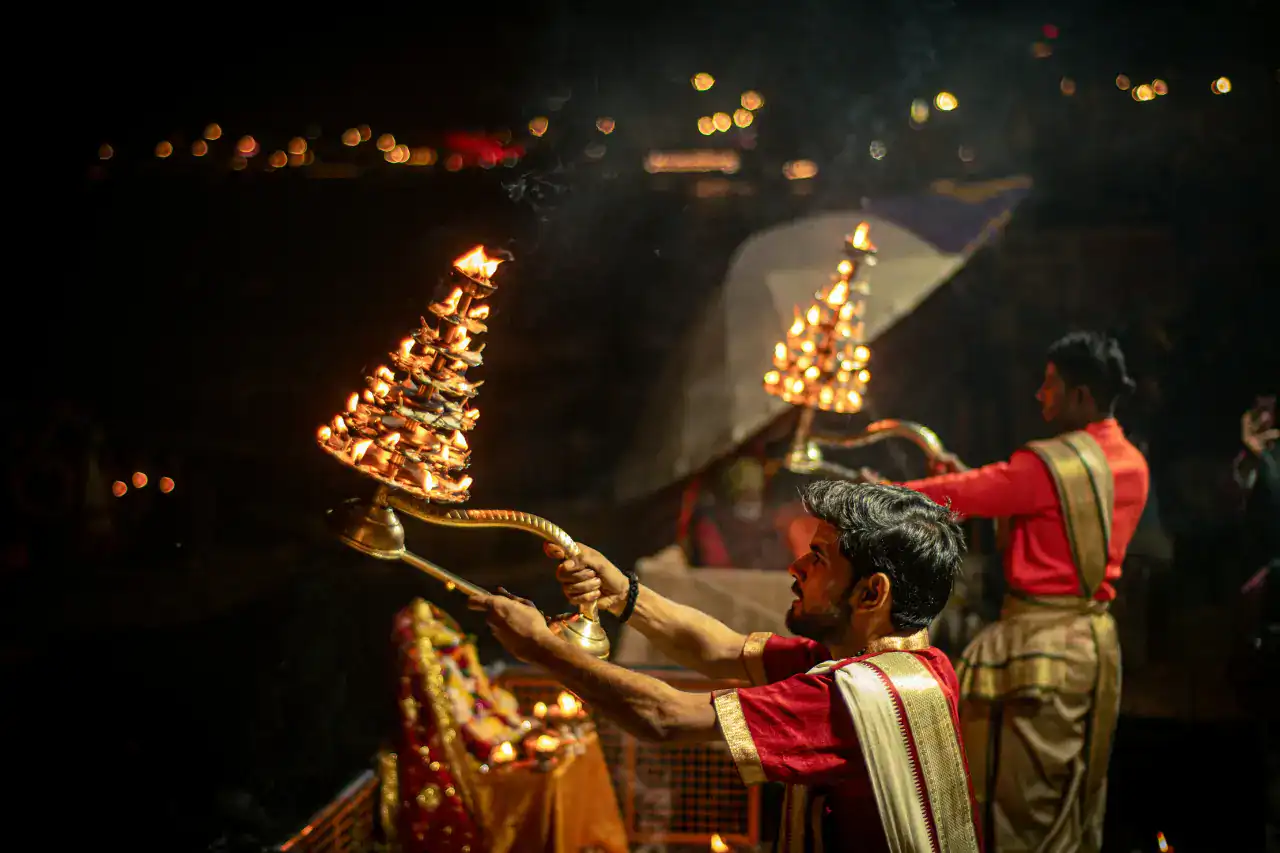
One of the most spectacular spiritual ceremonies on earth — at sunset
There are journeys we take for pleasure, journeys we take for knowledge, and then there are journeys we take because something deep within us compels it — a longing older than reason, a calling that transcends the ordinary rhythms of life. The Buddhist Pilgrimage Tour through India and Nepal is precisely this kind of journey. It is not merely a tour. It is a return to the source.
The Lord Buddha, Siddhartha Gautama, himself walked these lands more than 2,600 years ago. He was born in the serene gardens of Lumbini, Nepal. He attained full enlightenment under the sacred Bodhi Tree in Bodhgaya, Bihar. He turned the Wheel of the Dharma for the first time in the Deer Park of Sarnath, near Varanasi. And he breathed his last, passing peacefully into Parinirvana, between two Sal trees in Kushinagar, Uttar Pradesh. These four places — the cradle of Buddhism — draw millions of pilgrims from Thailand, Sri Lanka, Myanmar, Japan, Taiwan, South Korea, Tibet, and every Buddhist nation on earth. They are not destinations. They are homecomings.
Our 12-day Buddhist Circuit Tour goes beyond the four main sites. We include Shravasti — where the Buddha spent 25 monsoon seasons and performed the legendary Twin Miracle. We include Rajgir — the royal city where the Buddha taught for years from Vulture Peak, the sacred mountain where Mahayana’s Prajnaparamita scriptures were expounded. We include Nalanda — the brilliant ruins of the ancient world’s greatest university, a centre of Buddhist scholarship that attracted scholars from as far as China and Korea for seven centuries.
And then we do something genuinely unique: we add the Taj Mahal in Agra. At first glance, this magnificent Mughal monument might seem out of place on a Buddhist pilgrimage. But look more closely. The Taj Mahal is, at its heart, a meditation on impermanence — a monument to love built in the knowledge that love outlasts the body. Its white marble domes, mirrored in the still waters of its reflecting pools at dawn, recall the teachings of the Buddha on beauty, transience, and the longing for something eternal. India’s Buddhist heritage and India’s Mughal heritage are two threads woven into the same ancient tapestry — and our tour allows you to hold both.
Whether you travel from Thailand, Sri Lanka, Singapore, the United Kingdom, or Australia — whether you are a monk or a lay practitioner, a first-time pilgrim or a seasoned spiritual traveller — this journey will leave its mark on you. Prime Value Tours has been guiding Buddhist pilgrims through these sacred landscapes for over 25 years. We know every monastery, every meditation garden, every sunrise vista on this route. It would be our deep honour to walk alongside you.
Day
Delhi is the gateway to India’s Buddhist Heritage Circuit. Your journey of faith begins here. The National Museum, Delhi houses some of the finest Buddhist sculptures from Gandhara and Mathura schools — setting the spiritual tone for the days ahead.
* Arrive a day early if possible. Jet lag is real. Delhi is 5.5 hours ahead of Bangkok and 9.5 hours ahead of London
Day
Lucknow, the City of Nawabs, was once a thriving centre of culture along the Buddhist silk route. It serves as a comfortable overnight stop before the road journey to the sacred city of Shravasti.
* Book morning flights to maximize your day. IndiGo, Air India, and Vistara connect Delhi-Lucknow frequently.
Shravasti — ancient capital of the Kosala Kingdom — was where the Buddha spent 25 monsoon retreats. Here he performed the ‘Twin Miracle’ (Yamaka Patihariya), the most celebrated supernatural feat described in Buddhist scriptures. The Jetavana Monastery, gifted by the merchant Anathapindika, was the Buddha’s favourite dwelling. For Thai Theravada Buddhists, this is an intensely moving site.
* Book morning flights to maximize your day. IndiGo, Air India, and Vistara connect Delhi-Lucknow frequently.
Day
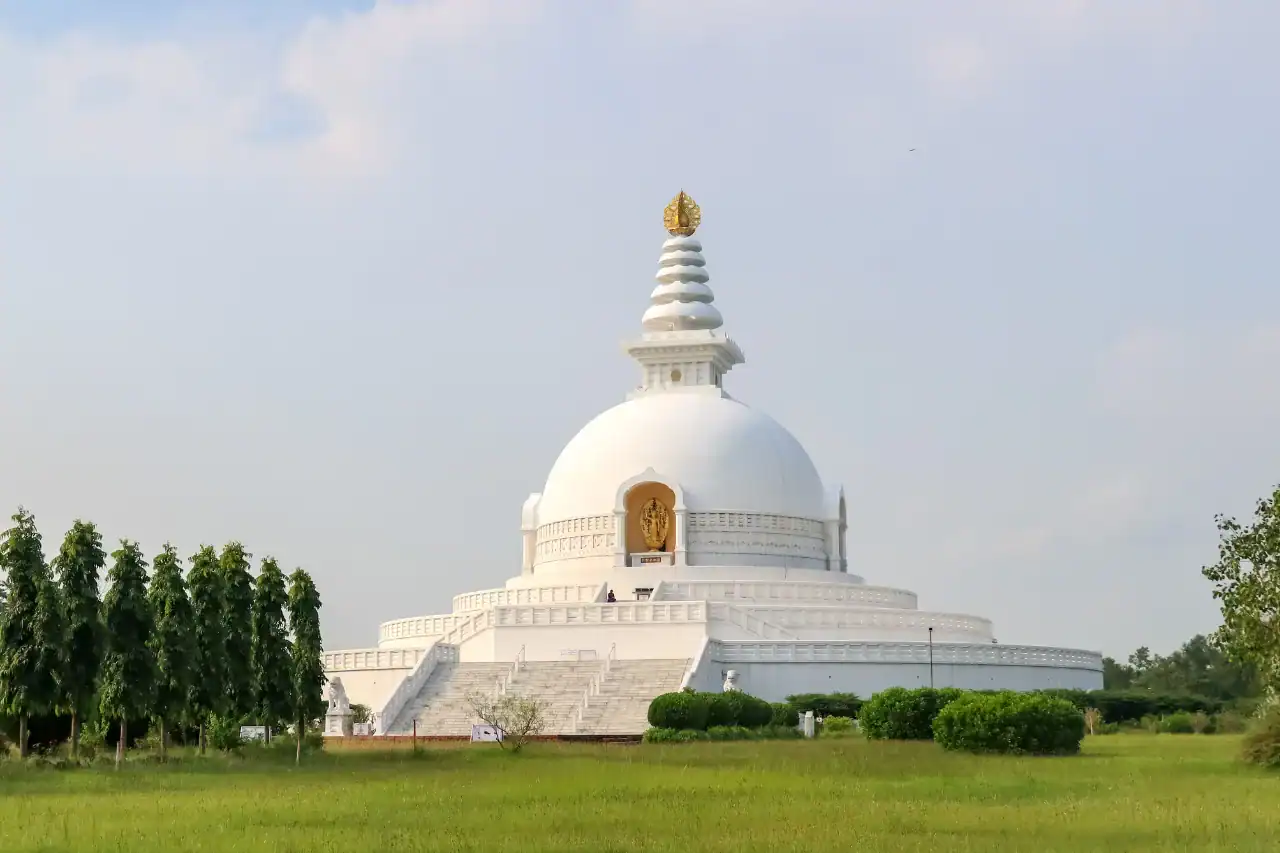
Lumbini is the holiest of all Buddhist sites — the very birthplace of Prince Siddhartha Gautama, who would become the Buddha. The Maya Devi Temple marks the precise spot where Queen Maya Devi gave birth in 563 BCE. Standing here, in the gardens of Lumbini, beneath the ancient Ashokan pillar bearing the inscription ‘Here the Buddha was born’ — there are no words adequate to describe the feeling.
* Ensure you carry your passport (Nepal visa on arrival available for most nationalities, $30 USD for 15 days). Indian nationals do not need a visa.
Day
Lumbini’s Monastic Zone is home to over 40 international monasteries — each built by Buddhist nations from around the world. Walking from the Thai Temple to the Tibetan shrine to the Sri Lankan monastery, you witness the living global unity of Buddhism. Many pilgrims spend an entire morning in silent meditation beneath the Bodhi trees of the Sacred Garden.
* Visit the Thai Temple (Wat Thai Lumbini) — your guides can arrange an audience with resident Thai monks.
Day
Kushinagar — ancient Kushinara of the Malla Kingdom — is where the Buddha passed into Parinirvana at the age of 80, lying between two Sal trees in a grove known as Upavattana. The atmosphere here is profoundly peaceful. Thai pilgrims often weep at the sight of the great reclining Buddha — the final, serene image of the Tathagata before his passing beyond sorrow.
* Sunset at the Ramabhar Stupa (cremation site) is an extraordinarily moving experience. Allow at least 30 minutes in silent reflection.
Day
Vaishali was the first democratic republic in world history and held profound significance for the Buddha — he gave his final sermon here before proceeding to Kushinagar. The Ananda Stupa marks where the venerable Ananda, the Buddha’s beloved attendant, attained Parinirvana. The Relic Stupa in Vaishali contains actual relics of the Lord Buddha — making this a site of supreme sanctity.
* The Didarganj Yakshi in Patna Museum is one of the finest examples of Mauryan sculpture — don’t miss it if the museum is open.
Day
Nalanda University, founded in the 5th century CE, was the world’s first residential university — accommodating 10,000 students from across Asia. It was a living beacon of Buddhist scholarship for 700 years until its destruction in 1193 CE. Rajgir’s Vulture Peak (Griddhakuta) is where the Buddha taught the Prajnaparamita sutras and the Lotus Sutra — making it the most sacred site for Mahayana Buddhists worldwide.
* The Rajgir ropeway to the Peace Pagoda operates until 4:30 PM. Reach before 3:30 PM to allow time for meditation at the hilltop.
Day
Bodhgaya is the holiest place in the Buddhist world — the very site where Prince Siddhartha Gautama sat under the Bodhi Tree, meditated through the night, and at the break of dawn 2,600 years ago, became fully enlightened as the Shakyamuni Buddha. Every step on this ground carries the weight of that supreme event. This is why hundreds of thousands of Thai, Sri Lankan, Tibetan, Chinese, and Japanese Buddhists make this journey each year.
* The evening meditation at the Mahabodhi Temple, lit by thousands of butter lamps, is one of the most profound spiritual experiences available to a human being. Attend without fail.
Day
Most pilgrims need more than one day in Bodhgaya — the second day allows for deeper exploration of the international monasteries (over 20 countries represented), a morning meditation at the Bodhi Tree, and a moving evening prayer service. Allow yourself to simply sit, be still, and breathe in this sacred place.
* The Tibetan monasteries open early (5 AM) for morning pujas. The Thai Temple offers free vegetarian breakfast to Buddhist pilgrims on request.
Day
Sarnath — the Deer Park of Isipatana — is where the Buddha delivered his first discourse, the Dhammacakkappavattana Sutta (Setting in Motion the Wheel of Dhamma) to the five ascetics who became his first disciples. This event, the first turning of the Wheel of the Law, marks the founding of the Buddhist Sangha. The Dhamek Stupa stands precisely on this hallowed spot — one of Buddhism’s four most sacred sites.
* The Sarnath Museum houses the original Ashoka Lion Capital — which became the national emblem of India. Entry is a mere 30 for foreign nationals.
Day
Combining the spiritual journey of the Buddhist Circuit with the Taj Mahal creates a truly unique travel experience — from the Bodhi Tree to one of the Seven Wonders of the World. The Taj Mahal, commissioned by Mughal Emperor Shah Jahan as a testament to eternal love, is not merely an architectural marvel — it is a monument to the deepest human longing for transcendence. In the golden light of sunset, its white marble domes glow like a vision from another world.
The Taj Mahal is closed on Fridays. Entry: ~INR 1,100 for foreign nationals. The Taj is best photographed at sunrise or sunset — the light is transformative.
Day
As your sacred journey draws to a close, you carry with you something that cannot be measured in photographs or souvenirs — the memory of sitting beneath the Bodhi Tree in Bodhgaya, of standing at the Vajrasana where the Buddha touched the earth, of the Ganga Aarti at dusk in Varanasi, and now the breathtaking sunrise glow of the Taj Mahal. These are not just places you have visited — they are places that have visited you.
Allow 4–5 hours from Agra to Delhi airport in traffic. Depart Agra by 11:00 AM for evening international flights.
All hotels are selected based on their proximity to Buddhist sites, quality of vegetarian dining, experience with international Buddhist groups, and consistent guest ratings. Rooms are on double occupancy (twin/double bed available on request).
Delhi
One of Delhi’s finest properties — home to Bukhara restaurant. Excellent locationn near diplomatic enclave. Buddhist pilgrims will appreciate the serene ambience and impeccable service.
Room Rate: ₹12,000–₹18,000
Lucknow
Contemporary luxury hotel in the heart of Lucknow. Excellent facilities, warm Indian hospitality, and conveniently located for an early morning departure to Shravasti.
Room Rate: ₹6,000–₹9,000
Shravasti
Purpose-built for Buddhist pilgrims near the Jetavana Monastery site. Peaceful gardens, vegetarian dining, and Japanese-style service. Ideal for meditation retreats.
Room Rate: ₹4,500–₹6,500
Lumbini
Located within the Lumbini Sacred Garden area. The best 4-star property in Lumbini, offering Buddhist-friendly amenities, Nepali vegetarian meals, and proximity to the Maya Devi Temple.
Room Rate: ₹8,000–₹12,000 NPR
Kushinagar
Adjacent to the Mahaparinirvana Temple complex. The finest hotel in Kushinagar, featuring a serene garden, meditation room, and knowledgeable local guides.
Room Rate: ₹5,000–₹7,000
Patna
Modern business hotel in central Patna. Well-equipped for group pilgrimages with large dining facilities, efficient service, and excellent road access to Nalanda and Rajgir.
Room Rate: ₹5,500–₹8,000
Rajgir
A Japanese-managed hotel — perfectly suited to Buddhist pilgrims from Thailand, Japan, and Sri Lanka. Zen-like gardens, Japanese and Indian vegetarian menus, and utstanding service.
Room Rate: ₹6,000–₹9,000
Bodhgaya
The finest 4-star hotel in Bodhgaya, located close to the Mahabodhi Temple. Features a rooftop terrace, vegetarian restaurant, and Buddhist cultural programmes.
Room Rate: ₹7,000–₹11,000
Varanasi
Elegant hotel in the heart of Varanasi, close to Sarnath and the Ganges Ghats. Excellent dinner-and-Ganga-Aarti packages available. Very comfortable for international groups.
Room Rate: ₹6,500–₹9,500
Agra
Surrounded by Mughal-style gardens near the Taj Mahal. Considered the best hotel in Agra. Luxury rooms, stunning pool, and an unforgettable ambience fitting the grandeur of the Taj.
Room Rate: ₹14,000–₹22,000
✦ Room rates are approximate for 2025-26 season (double occupancy). Rates vary by season. Peak season (Nov–Feb) rates may be 20–30% higher. All hotels are subject to availability at time of booking.
All prices are per person, based on double-sharing accommodation (twin rooms). Land cost only — international airfare not included. Prices in US Dollars (USD). GST applicable as per Government of India regulations.
| Group Size | Price/Person (USD) | Single Supplement | Peak Season + | Notes |
|---|---|---|---|---|
| 10 Pax | $1,950 | $500 | $450–$550 | Minimum group — slightly higher unit cost |
| 15 Pax | $1,750 | $450 | $450–$550 | Most popular group size — excellent value |
| 20 Pax | $1,590 | $420 | $450–$550 | Large group — best transport economics |
| 25 Pax | $1,420 | $380 | $450–$550 | Maximum single-coach group — lowest per-head cost |
| # | Component | Details | USD/Person |
|---|---|---|---|
| 1 | 4-Star Hotels (12 nights) | Double occupancy, all listed properties | $720 |
| 2 | Domestic Flights (2 sectors) | Delhi–Lucknow + Varanasi–Delhi (economy) | $160 |
| 3 | AC Private Coach (13 days) | Toyota Innova Crysta / Tempo Traveller (shared) | $240 |
| 4 | Expert Guide (13 days) | Licensed English/Thai-speaking heritage guide | $130 |
| 5 | Meals (B+D × 12 days) | Vegetarian breakfast & dinner | Buddhist diet available | $216 |
| 6 | Monument Entrance Fees | All listed UNESCO & heritage sites incl. Taj Mahal | $75 |
| 7 | Nepal Border Formalities | Visa assistance, border transfer, local coordination | $40 |
| 8 | Operations & Handling | 24/7 support, porterage, permits, contingency | $169 |
| TOTAL — 15 PAX GROUP | Land cost per person (double occ.) | $1,750 |
EXCLUDED: International airfare | Visa fees (except Nepal assistance) | Lunches | Personal expenses | Camera fees | Travel insurance | Tips & gratuities | Any sightseeing not listed in itinerary.
| Inclusions | Exclusions |
|---|---|
|
|
Since 1999, Prime Value Tours has been the trusted name in Buddhist heritage travel in India and Nepal. We have guided thousands of pilgrims from Thailand, Sri Lanka, Taiwan, Japan, South Korea, Australia, the UK, and the USA. We know these roads, these monasteries, and these sacred sites with a depth that no general tour operator can match. Our experience is your peace of mind.
Prime Value Tours Pvt. Ltd. is approved by the Ministry of Tourism, Government of India, and is a proud member of IATO (Indian Association of Tour Operators). Our GST registration (09AZPPS0293R1Z7) ensures full legal compliance and transparent billing. You travel with a company you can trust.
We are one of a very small number of Buddhist circuit operators in India offering dedicated Thai-speaking licensed guides. For our Thai Buddhist pilgrim groups, this makes an immeasurable difference — not just in communication, but in the depth of the spiritual and cultural commentary our guides provide at every site.
All meals on our tours are vegetarian by default. Pure vegan options are always available. We work exclusively with hotels and restaurants that understand Buddhist dietary requirements — no cross-contamination, no hidden meat stocks, no alcohol at dinner. Monks and strict practitioners travel with us with complete confidence.
Our itinerary is designed to allow genuine meditation time — not just rushing through sites for photographs. At the Mahabodhi Temple in Bodhgaya, at Vulture Peak in Rajgir, at the Jetavana Monastery in Shravasti — we build in quiet sitting time so pilgrims can connect deeply with the significance of each place.
We use well-maintained, air-conditioned vehicles — Toyota Innova Crysta for small groups, Tempo Travellers or Volvo coaches for larger groups. All vehicles are GPS-tracked. Drivers are experienced on the Buddhist Circuit routes and hold valid commercial licences. We do not use overcrowded public buses.
A dedicated Prime Value Tours representative is contactable 24 hours a day throughout your tour. For any emergency — medical, mechanical, or logistical — help is one phone call away. We also maintain relationships with hospitals, pharmacies, and embassies at all major stops.
Our pricing is clear, itemised, and honest. What you see in our cost table is what you pay. There are no surprise charges, no 'optional' fees that turn out to be mandatory, and no commission-driven shopping stops. We charge what we need to deliver an excellent experience — and not a rupee more.
The ideal time to visit Bodhgaya is between October and March, when the weather is cool and pleasant. The most spiritually significant period is around the Buddha Purnima festival in May (full moon) and the Tibetan Monlam Prayer Festival in February, when tens of thousands of monks gather. Avoid May–September due to intense heat and the monsoon season.
Most international travellers require a Nepal visa, available on arrival at land borders and Kathmandu airport. The fee is USD 30 for 15 days or USD 50 for 30 days. Indian nationals do not require a visa for Nepal. We handle all border formalities as part of the tour package.
The Buddhist Circuit in India and Nepal is extremely safe for international pilgrims. The main states — Uttar Pradesh, Bihar, and Nepal — are well-accustomed to international Buddhist tourists. We provide 24/7 guide support, vetted accommodation, and private AC vehicles throughout the tour. Group travel adds further security and comfort.
Yes — our 13-Day Buddhist Pilgrimage with Taj Mahal package specifically includes a visit to the Taj Mahal in Agra on Day 12 and Day 13. Entrance fees for the Taj Mahal are included in the tour cost. This unique combination sets our tour apart from standard Buddhist circuit packages.
This tour includes 4 UNESCO World Heritage Sites: Mahabodhi Temple (Bodhgaya), Nalanda University (Bihar), Lumbini (Nepal), and the Taj Mahal (Agra). All four are listed on UNESCO’s World Heritage roster and are among the most significant heritage sites in all of Asia.
Modest, comfortable clothing is recommended throughout. At all Buddhist temples and stupas — particularly the Mahabodhi Temple in Bodhgaya and the Maya Devi Temple in Lumbini — shoulders must be covered and shoes removed before entering. Light trousers, salwar kameez, or traditional Buddhist robes are all appropriate. Avoid shorts and sleeveless tops at sacred sites.
Absolutely. We regularly organize tours for groups of monks from Thailand, Sri Lanka, Myanmar, Taiwan, and South Korea. We accommodate monastic dietary requirements, arrange early-morning access to key sites for chanting and meditation, and ensure all temples and monasteries on the itinerary welcome monks. Please inform us of the number of monks in your group when booking.
Absolutely. We regularly organize tours for groups of monks from Thailand, Sri Lanka, Myanmar, Taiwan, and South Korea. We accommodate monastic dietary requirements, arrange early-morning access to key sites for chanting and meditation, and ensure all temples and monasteries on the itinerary welcome monks. Please inform us of the number of monks in your group when booking.
Our lead guides are available in English, Thai, and Hindi. For large groups from Thailand, we provide a dedicated Thai-speaking guide for the full duration of the tour. Mandarin, Japanese, Korean, and Sinhalese guides can be arranged with advance notice of 30+ days.
This tour involves moderate walking at heritage sites — generally 2–5 km of walking per day on uneven terrain. There are no mountain treks or strenuous climbs except for the optional ropeway to Rajgir Peace Pagoda. Most sites have paved pathways and are accessible to senior travellers. A good pair of walking sandals is recommended.
Our pricing is based on a minimum of 10 paying passengers. However, we can accommodate smaller groups of 2–9 passengers with a small group supplement. The maximum practical group size for a single AC coach is 25 passengers. For larger groups of 26–50, we provide two coaches with separate guides.
Without doubt. Shravasti is one of the most underrated yet profoundly significant Buddhist sites — the place where the Buddha spent 25 rainy seasons (more than anywhere else) and performed the Twin Miracle. The Jetavana Monastery complex and the Ananda Bodhi Tree create a deeply peaceful atmosphere. Thai Theravada pilgrims in particular find Shravasti deeply moving, as many of the Jataka stories were narrated here.
The standard Buddhist Circuit focuses on the four main sites sanctioned by the Buddha himself for pilgrimage (Lumbini, Bodhgaya, Sarnath, Kushinagar). Our extended 13-day tour adds Rajgir and Nalanda — significant for Mahayana Buddhism — as well as Vaishali, Shravasti, and the unique addition of the Taj Mahal, making it a comprehensive journey for practitioners of all Buddhist traditions.
Yes. All Prime Value Tours itineraries are fully customisable. Common customisations include: adding a meditation retreat day in Bodhgaya, extending the Varanasi stay for a sunrise Ganga boat ride, including Sarnath light-and-sound show, or incorporating a visit to Rajgir’s New Nalanda Mahavihara. Contact us to discuss your group’s specific needs.
The per-person land cost includes: 4-star hotel accommodation (double occupancy), daily breakfast and dinner, private AC coach transportation, English/Thai-speaking guide for 13 days, all listed monument entrance fees, Nepal border assistance, and 24/7 Prime Value Tours support. It does not include international flights, travel insurance, personal expenses, or lunches.
You can make an enquiry via our website at primevaluetours.com/plan-your-trip/, send an email to info@primevaluetours.com, or contact us via WhatsApp. We recommend booking at least 45–60 days in advance, especially for peak season travel (October–February). A deposit of 25% confirms your booking.
Travel insurance is not included in the package price but is strongly recommended for all international pilgrims. Ensure your policy covers medical evacuation, trip cancellation, and emergency repatriation. We can recommend trusted insurance providers upon request.
Travellers wishing to have their own room throughout the tour will incur a single room supplement of approximately USD 50–500 for the full 12 nights, depending on the season. This is a mandatory surcharge for individual travellers not wishing to share accommodation.
Yes. A peak season surcharge of 12–15% applies for travel during December 15 – January 15, which coincides with India’s peak winter tourism season and the Tibetan Monlam Festival in Bodhgaya. This period is also the most spiritually rich time to visit. We advise booking 90+ days ahead for this season.
No. International airfare is not included in the land package cost. However, we can assist in recommending routing options: Bangkok (BKK/DMK) → Delhi is served by Thai Airways, IndiGo, and Air India; Colombo (CMB) → Delhi by Sri Lankan Airlines and Air India. We can coordinate arrival/departure times with your airline tickets.
If this guide has stirred something in your heart, perhaps the time is right. At Prime Value Tours, we have been walking alongside Buddhist pilgrims for over 25 years — from the Bodhi Tree in Bodhgaya to the serene gardens of Lumbini, from Vulture Peak in Rajgir to the golden Ganga Aarti in Varanasi. We would be honoured to plan your pilgrimage.