
Buddhist Pilgrimage Packages India: How to Choose the Right One
Search for Buddhist pilgrimage packages India today and you will find pages of results, most built by operators who bolt Bodh Gaya onto a Golden Triangle tour and call it a pilgrimage. For a devotee who has saved for years to walk where the Buddha walked, that is not good enough. A genuine Buddhist pilgrimage tour India should be planned around the dharma itself: enough time to sit under the Bodhi Tree, chant at Sarnath without being rushed to the next stop, and travel with a guide who understands why these places matter, not just where they sit on a map. This guide covers what a proper pilgrimage package should include, how fixed-date group departures compare with a private customized yatra, what drives the price up or down, and the specific things worth checking before you commit your dates, your budget, and your temple group’s trust to an operator.
What a Genuine Buddhist Pilgrimage Package Should Include
A complete package covers the core Attha Maha Thana sites: Bodh Gaya, Sarnath, Kushinagar, Rajgir, Vaishali, and Sravasti, plus Lumbini across the Nepal border for longer circuits. Beyond transport and hotels, the details that separate a pilgrimage from an ordinary sightseeing tour are the ones most brochures leave out: a Thai-speaking, dhamma-literate guide who can explain why a site matters rather than just its history; built-in time for chanting, meditation, and offering rather than a schedule that treats every stop as a twenty-minute photo halt; and meal arrangements that respect a monastic or vegetarian group without needing to be reminded twice. Our complete Attha Maha Thana route guide lays out the full eight-site circuit in detail if you want to see how the sites connect geographically before choosing a package.
Fixed Departure vs Customized Buddhist Pilgrimage Tours
Group operators typically offer two structures. Fixed departures run on set dates, pool pilgrims from different temples or travel agents into a single coach, and cost less per person, which suits a wat group of twenty-five to forty travelling together under one leading monk where the itinerary is agreed in advance and everyone accepts a shared pace. A customized Buddhist pilgrimage tour India, by contrast, is built around your group alone: your dates, your chosen sites, your own monk or elder setting the rhythm of each day, and room to add a site like Nalanda or extend time at Bodh Gaya for a longer retreat. It costs more per head, but for a temple that wants full control over pace and observance, it is usually the better choice.
What to Check Before You Book
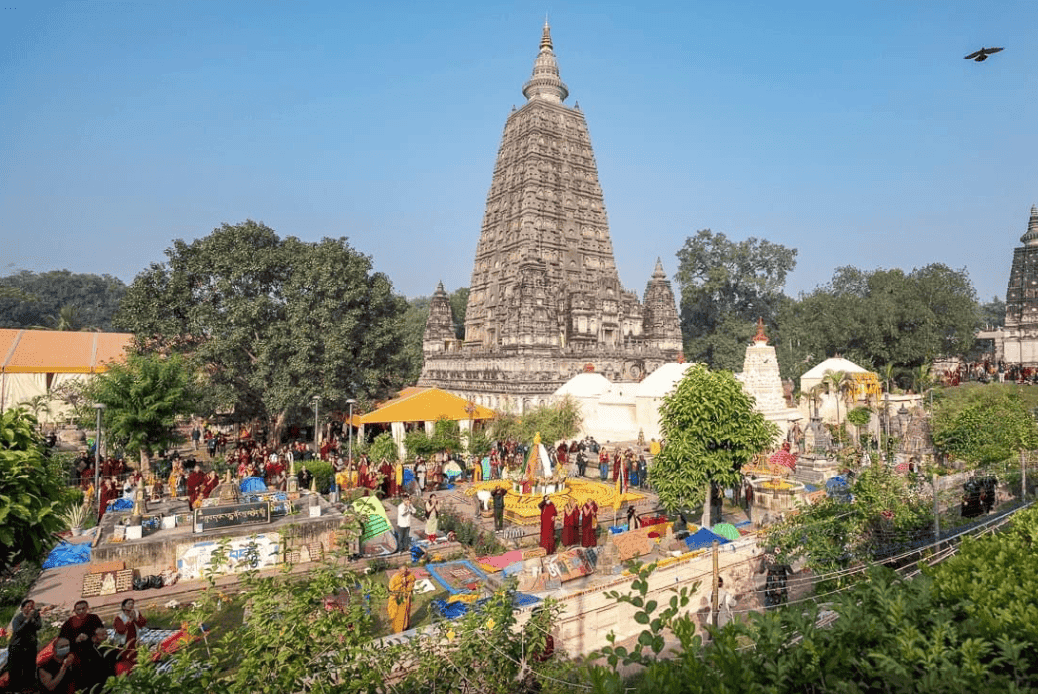
Before signing with any operator, confirm four things. First, accreditation: is the company Government of India-approved and an IATO member, or is it operating without any formal oversight? Second, guiding: will your guide actually speak Thai and understand Buddhist practice, or is that promise a generic English-speaking driver-guide in disguise? Third, inclusions: are monastery entrance fees and any World Heritage site charges built into the quoted price, or added later as surprises? The Mahabodhi Temple Complex at Bodh Gaya carries UNESCO World Heritage status, and site management there follows specific visitor protocols that an experienced operator should already know without being asked. Fourth, the coach itself: Bihar and Uttar Pradesh have long stretches of rural road between sites, and an older non-AC vehicle turns a spiritual journey into an exhausting one, especially for elderly pilgrims.
What Drives the Cost of a Buddhist Pilgrimage Package
Group size is the single biggest lever on per-person cost, since coach, guide, and driver expenses are shared across the group; a full forty-seat coach brings the per-head price down sharply compared with a private group of eight. Hotel grade near Bodh Gaya is the second factor, since accommodation directly around the Mahabodhi Temple carries a premium over lodging a short drive away. Adding the Lumbini leg into Nepal increases cost through an extra day, an additional border crossing, and Nepal-side hotel and transport charges. A transparent operator will break these line items out separately rather than folding them into one number you cannot compare against a competing quote.
Best Time and Duration for a Buddhist Pilgrimage Tour India
October through March is the standard pilgrimage season, when daytime heat across Bihar and Uttar Pradesh drops enough for full-day site visits to stay comfortable. A complete eight-site circuit including Lumbini typically runs eight to ten days; a shorter Bodh Gaya, Sarnath, Rajgir, and Nalanda loop can be done in four to five days if your group has limited time. Groups planning around Buddha Purnima or the Kathina robe-offering season should book several months ahead, since accommodation near Bodh Gaya fills quickly during these periods.
Common Booking Mistakes First-Time Groups Make
The most frequent mistake is choosing an operator on headline price alone, without asking what that price excludes. A quote that looks thirty percent cheaper often removes the Thai-speaking guide, downgrades the coach, or drops Lumbini from the route entirely, and none of that becomes obvious until the group is already on the ground. The second mistake is booking too close to the travel date for peak season, particularly around Buddha Purnima, when the limited hotel inventory near Bodh Gaya sells out and latecomers end up housed a long drive from the Mahabodhi Temple. The third is leaving meal and observance arrangements as a verbal understanding rather than a written confirmation; a temple group travelling with monks needs specific dietary timing respected at every stop, and that expectation should be on the itinerary document itself, not assumed.
Frequently Asked Questions
Q: What is typically included in a Buddhist pilgrimage package to India?
A: A standard package covers AC coach transport, hotel accommodation near each site, a guide, and entrance fees for the core Attha Maha Thana locations. Meals, visas, and personal donations are usually quoted separately.
Q: How many days does a full Buddhist pilgrimage tour of India take?
A: A complete circuit covering all eight major sites, including Lumbini in Nepal, generally takes eight to ten days. Shorter loops focused on Bodh Gaya, Sarnath, and Rajgir can be completed in four to five days.
Q: Do Buddhist pilgrimage packages from India also cover Lumbini in Nepal?
A: Longer packages do, crossing the Sunauli border to include Lumbini as the Buddha’s birthplace. Shorter India-only circuits typically stop at Sravasti or Kushinagar without crossing into Nepal.
Q: Is a Thai-speaking guide available on these pilgrimage tours?
A: With an operator experienced in the Thai Buddhist market, yes. A Thai-speaking, dhamma-literate guide should be standard, not an add-on request.
Q: What is the best season for a Buddhist pilgrimage tour in India?
A: October to March, when cooler daytime temperatures across Bihar and Uttar Pradesh make full-day site visits comfortable for pilgrims of all ages.
Plan Your Pilgrimage
Prime Value Tours Pvt. Ltd. is a Government of India-approved, IATO-member operator with over 25 years of experience running Buddhist pilgrimage tours for Thai and international devotees, led by Thai-speaking, dhamma-literate guides. Get a customized Buddhist pilgrimage package quote to start planning your circuit.
Prime Value Tours Pvt. Ltd.
GST: 09AZPPS0293R1Z7 | PAN: AZPPS0293R | www.primevaluetours.com