
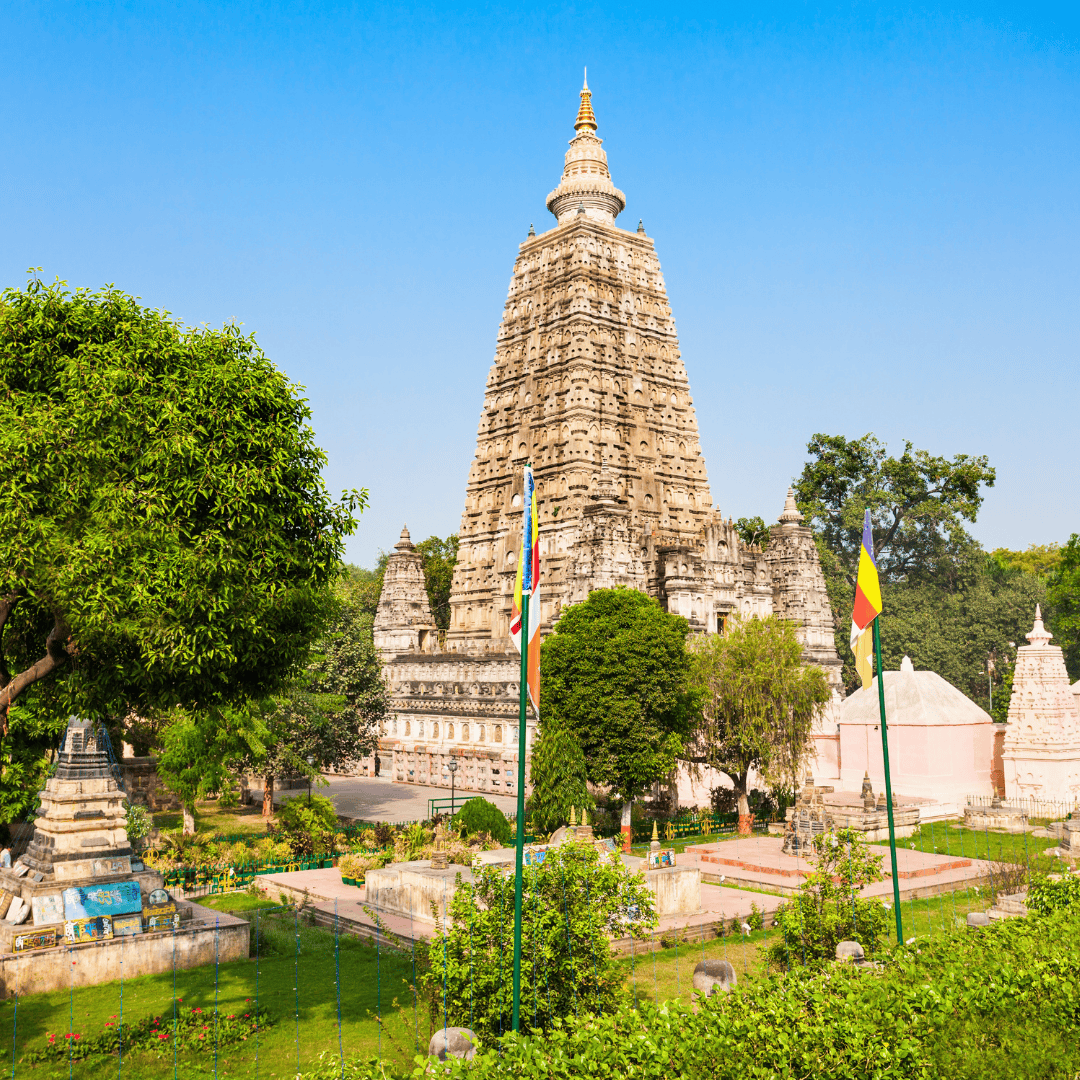
Bodh Gaya Travel Guide for Thai Buddhist Pilgrims | Complete 2026 Guide The complete Bodh Gaya travel guide for Thai Buddhist pilgrims. Sacred sites, Mahabodhi Temple tips, Bodhi Tree meditation, Thai Monastery, how to reach them, where to stay, and practical advice from 25+ years of guiding Thai groups. –Bodh Gaya travel guide Buddhist pilgrims Thailand
There is a moment that every Thai Buddhist pilgrim remembers for the rest of their life — the first time you walk through the gates of the Mahabodhi Temple Complex in Bodh Gaya and see the sacred Bodhi Tree with your own eyes.
This is where it all began. Over 2,500 years ago, Prince Siddhartha Gautama sat beneath this tree, vowed not to rise until he found the truth, and after 49 days of deep meditation, attained supreme enlightenment. He became the Buddha — the Awakened One — and everything that followed — the teachings, the Sangha, the Dhamma that guides your daily life in Thailand — traces back to this single place.
Bodh Gaya is not just the most sacred site in Buddhism. It is the spiritual centre of the entire Buddhist world. Every year, hundreds of thousands of pilgrims from Thailand, Sri Lanka, Japan, Tibet, China, Myanmar, and across the globe travel here to walk the same ground, breathe the same air, and sit beneath the descendant of the very tree where the Buddha found liberation.
We have been bringing Thai Buddhist groups to Bodh Gaya for over 25 years. We have watched pilgrims weep with joy at their first sight of the temple. We have sat quietly as monks led chanting beneath the Bodhi Tree at dawn. We have guided hundreds of groups through every corner of this sacred town. This guide shares everything we know — the sacred sites, the best times to visit, the practical details, and the insider tips that only come from decades of experience on this holy ground.
Why Bodh Gaya is Sacred: The Story Every Pilgrim Should Know
Before visiting Bodh Gaya, it helps to understand why this place holds such singular importance.
After six years of intense spiritual seeking — including severe austerities at the Dungeshwari Caves just 12 kilometres from here — Prince Siddhartha abandoned extreme practices and walked to what was then a quiet grove near the Niranjana River. He sat beneath a large Pipal tree (Ficus religiosa), faced east, and resolved not to move until he had discovered the ultimate truth about human suffering and liberation.
For 49 days he sat in deep meditation, facing every temptation and distraction that Mara could throw at him. And then, on the full moon night of the month of Vaishakha, he broke through. He saw the nature of suffering, its cause, its end, and the path to that end — the Four Noble Truths. He understood the cycle of birth and death. He achieved complete, perfect enlightenment.
That tree became the Bodhi Tree. That spot became the Vajrasana — the Diamond Throne. And that small grove in Bihar became Bodh Gaya — the most important place on earth for over 500 million Buddhists worldwide.
The Mahabodhi Temple was first built here by Emperor Ashoka in the 3rd century BCE. It has been destroyed, rebuilt, renovated, and restored many times over the centuries. Today it stands as a UNESCO World Heritage Site and the living heart of Buddhist pilgrimage.
For Thai Buddhists who follow the Theravada tradition, Bodh Gaya holds special significance. The enlightenment is the pivotal event that made everything else possible — without this moment, there would be no Dhamma, no Sangha, no Buddhism as you know and practise it in Thailand. Standing here is standing at the source.
Sacred Sites in Bodh Gaya: A Complete Guide
1. Mahabodhi Temple Complex — The Heart of the Buddhist World
The Mahabodhi Temple Complex is the single most important Buddhist site on earth. The entire complex is a UNESCO World Heritage Site, and within its walls you will find several distinct sacred spots, each connected to the Buddha’s enlightenment and the days that followed.
Plan to visit the complex multiple times during your stay — morning and evening each offer a different atmosphere and spiritual energy.
The Mahabodhi Temple
The main temple is a towering pyramidal structure rising 55 metres above the ground, visible from across Bodh Gaya. The current structure dates primarily from the 5th-6th century CE, though it stands on foundations going back to Ashoka’s original 3rd century BCE construction. The temple’s distinctive shape — a tall central spire with four smaller corner towers — has become the most recognised symbol of Buddhist architecture in the world.
Inside the temple, at the ground level, is a large gilded statue of the Buddha in the Bhumisparsha Mudra (earth-touching gesture) — the posture of calling the earth to witness his enlightenment. This is the image you will see pilgrims offering flowers, incense, and prayers before throughout the day.
The Sacred Bodhi Tree
Behind the main temple stands the sacred Bodhi Tree — a direct descendant of the original tree under which the Buddha attained enlightenment. This is the most emotionally powerful spot in all of Bodh Gaya for most pilgrims.
The current tree is believed to be the fifth generation descendant of the original. One branch of the original tree was taken to Sri Lanka by Emperor Ashoka’s daughter Sanghamitta in the 3rd century BCE, and that tree still survives in Anuradhapura, Sri Lanka — making it the oldest verified human-planted tree in recorded history. The Bodh Gaya tree was regrown from that Sri Lankan lineage.
Sitting beneath the Bodhi Tree in meditation is an experience words cannot fully describe. The canopy of heart-shaped leaves filters the sunlight. The air is thick with the fragrance of incense and flowers left by pilgrims. The sound of soft chanting drifts from nearby. Many Thai pilgrims describe this as the single most meaningful moment of their entire India journey.
When to visit the Bodhi Tree:
We recommend visiting both in the early morning and in the evening. Each time offers something different:
- Early morning (5:00-7:00 AM): The temple complex opens at 5:00 AM. At dawn, the atmosphere is extraordinarily peaceful. Fewer visitors, soft golden light, and the coolness of the morning create ideal conditions for meditation. Many monks come for early morning chanting. This is the best time for your group to sit quietly beneath the tree, meditate, and feel the full spiritual weight of the place without distractions.
- Evening (5:00-8:00 PM): The evening brings a different kind of beauty. As the sun sets, hundreds of butter lamps and candles are lit around the temple. The golden spire glows against the darkening sky. Monks from different traditions — Theravada, Mahayana, Vajrayana — gather for evening prayers. The atmosphere is devotional, warm, and alive with spiritual energy. Thai pilgrimage groups typically visit in the evening for group chanting and ceremonies led by the monks travelling with them.
The Vajrasana (Diamond Throne)
Between the temple wall and the Bodhi Tree, you will find the Vajrasana — a red sandstone platform that marks the exact spot where the Buddha sat during his enlightenment meditation. This is considered the most sacred single point in the Buddhist world. Emperor Ashoka originally placed this marker, and it has been venerated for over 2,300 years.
The Animeshlochan Chaitya
To the north-east of the temple, a raised platform marks the spot where the Buddha stood and gazed at the Bodhi Tree for an entire week without blinking, in gratitude for the shelter it provided during his enlightenment. A statue of the standing Buddha with unblinking eyes marks this spot.
The Ratnachankrama (Jewelled Walking Path)
A raised platform between the temple and the Bodhi Tree marks the path where the Buddha practised walking meditation during the third week after enlightenment. According to tradition, lotus flowers sprang up wherever he stepped. The carved lotus flowers on the platform commemorate this event. Walking slowly along this path in mindful meditation is a beautiful practice.
The Ratnaghar Chaitya and Ajapala Nigrodh Tree
Other sacred spots within the complex mark the locations where the Buddha spent each of the seven weeks following his enlightenment. Take your time to visit each one — together they tell the complete story of what happened in the days after the most important spiritual event in Buddhist history.
Practical information for the Mahabodhi Temple:
- Opening hours: 5:00 AM to 9:00 PM daily
- Entry fee: Free for all visitors (a nominal fee applies for camera/mobile phone use inside)
- Dress code: Modest clothing required — covered shoulders and knees. Remove shoes before entering the complex
- Photography: Allowed in most outdoor areas. Photography may be restricted inside the main temple. Always ask permission before photographing monks
- Security: Bags are checked at the entrance. Large bags may need to be deposited at the cloakroom
- Circumambulation: Walk clockwise around the temple and the Bodhi Tree — this is the traditional Buddhist practice
2. Thai Monastery (Wat Thai Bodh Gaya)
The Royal Thai Monastery in Bodh Gaya is a beautiful piece of Thailand in the heart of India. Built in traditional Thai architectural style with golden spires, ornate carvings, and familiar Buddha images, this monastery serves as a spiritual home for Thai Buddhist pilgrims visiting Bodh Gaya.
Thai monks live and practise at this monastery, and visiting Thai pilgrims can participate in prayers and ceremonies here. For many Thai groups, visiting the Thai Monastery after the intensity of the Mahabodhi Temple provides a sense of comfort and familiarity — a place where you can chant in the Thai tradition, speak Thai, and connect with fellow Thai Buddhists who have made this sacred land their home.
The monastery is well-maintained and welcoming. If your group’s monks wish to stay at the Thai Monastery during your visit, accommodation may be available — coordinate with the monastery in advance through your tour operator.
3. International Buddhist Monasteries
Bodh Gaya hosts more than a dozen monasteries built by Buddhist communities from around the world. Each one reflects the architectural tradition and spiritual practice of its home country, creating a remarkable display of global Buddhist unity in one small Indian town.
Monasteries worth visiting:
- Tibetan Monastery (Karma Temple) — One of the most impressive structures in Bodh Gaya. The large prayer hall houses a beautiful statue of the Buddha, and the walls are covered with intricate Tibetan murals. Attending morning prayers here — with monks chanting in deep Tibetan tones — is a cross-cultural spiritual experience unlike any other
- Japanese Temple (Indosan Nippon Temple) — A striking modern temple in Japanese architectural style. The elegant simplicity of the design offers a peaceful contrast to the ornate temples of other traditions
- Bhutanese Monastery — A colourful building decorated in the distinctive Bhutanese architectural style with traditional dragon motifs and vibrant prayer flags
- Chinese Temple (Linh Son Temple) — Features a large Buddha hall with Chinese-style imagery and decorations
- Myanmar (Burmese) Monastery — Built in the style of golden Myanmar pagodas
- Vietnamese Temple — A newer addition with beautiful gardens
Walking through these monasteries in a single morning gives you a remarkable sense of how Buddhism has spread across Asia and how each culture has shaped the teachings into its own unique expression — while the core Dhamma remains the same everywhere.
4. Dungeshwari Caves (Mahakala Caves)
Located approximately 12 kilometres from Bodh Gaya, the Dungeshwari Caves are where Prince Siddhartha practised severe austerities for six years before abandoning that path and walking to the Bodhi Tree.
The drive takes about 25-30 minutes through rural Bihar countryside, giving you a glimpse of everyday village life in India. At the caves, you climb a short set of stairs to reach the small cave where the Buddha is believed to have meditated. Inside, a gilded statue depicts the emaciated Siddhartha during his years of extreme fasting — the ribs and bones visible through his skin. It is a striking and sobering image.
A small Hindu temple and a Thai-built Buddhist temple are also at the site. The views from the hilltop across the green Bihar plains are beautiful.
Practical tips:
- Allow about 2 hours total for the visit including travel time
- The stairs to the caves are short but can be steep — wear comfortable shoes
- There are basic facilities at the site but nothing extensive — use your hotel restroom before departing
- Morning visits are more comfortable as the sun can be strong on the exposed hillside in the afternoon
- Your tour guide can explain the fascinating story of Sujata, the village woman who offered the Buddha rice milk and helped him realise that the Middle Way — not extreme austerity — was the path to enlightenment
5. Sujata Stupa and Sujata Village
Near the banks of the Niranjana River, about 3 kilometres from the Mahabodhi Temple, you will find the Sujata Stupa — marking the village where the young woman Sujata lived. According to Buddhist tradition, Sujata offered the emaciated Siddhartha a bowl of kheer (rice milk pudding), which gave him the strength to walk to the Bodhi Tree and begin his final meditation.
This is a smaller, quieter site, but it holds real significance in the enlightenment story. Without Sujata’s offering, the Buddha might not have had the physical strength to achieve enlightenment. The stupa and the surrounding ruins of an ancient monastery are worth a brief visit if your schedule allows.
6. Bodh Gaya Archaeological Museum
A small but interesting museum near the Mahabodhi Temple housing sculptures, artifacts, and architectural fragments from the temple complex and surrounding excavations. The collection includes Buddha statues from various periods, stone railings with carved panels, and other objects that help you understand the 2,300-year history of this sacred site.
Entry fee: Nominal. Timing: Check locally as hours can vary. Closed on Fridays.
How to Reach Bodh Gaya from Thailand
By Air: Direct Flights from Bangkok
The most convenient way for Thai pilgrims to reach Bodh Gaya is by direct flight from Bangkok (Suvarnabhumi) to Gaya International Airport (GAY). The flight takes approximately 3 to 3.5 hours and is available during the peak pilgrimage season (typically October to March).
Gaya Airport is a small, manageable airport. Immigration and baggage collection are usually quick. From the airport, the drive to Bodh Gaya town takes about 30-40 minutes.
Important note about fog: During December and January, dense fog can affect flight operations at Gaya Airport, causing delays of 2-4 hours or occasional diversions to Patna or Varanasi. If you are travelling during these months, plan buffer time on your arrival day and do not schedule important activities immediately after landing. For more details, read our Best Time to Visit Bodh Gaya from Thailand.
Via Delhi
If direct flights to Gaya are not available on your preferred dates, fly Bangkok → Delhi, then connect to Gaya by domestic flight (approximately 1.5 hours) or take the train/road to Bodh Gaya.
Via Kolkata
Another option is Bangkok → Kolkata, then a domestic flight to Gaya or an overnight train to Gaya Junction. Kolkata has good flight connectivity with Bangkok.
By Train
Gaya Junction Railway Station is about 16 kilometres from Bodh Gaya. It is well-connected to Delhi, Varanasi, Kolkata, and Patna. The Mahabodhi Express runs directly from New Delhi to Gaya. From the station, taxis and auto-rickshaws take about 25-30 minutes to reach Bodh Gaya town.
By Road
If you are arriving from other Buddhist Circuit destinations:
- From Rajgir: approximately 80 km (2 hours)
- From Nalanda: approximately 100 km (2.5 hours)
- From Patna: approximately 130 km (3 hours)
- From Varanasi: approximately 250 km (5-6 hours)
Where to Stay in Bodh Gaya
Bodh Gaya offers accommodation for every budget, from free monastery guesthouses to comfortable hotels.
Hotels Near the Mahabodhi Temple
For pilgrimage groups, staying close to the Mahabodhi Temple is ideal. You can walk to the temple for early morning and evening visits without needing transport. Most hotels in this area offer clean rooms, vegetarian meals, and basic amenities.
Budget range:
- Budget guesthouses and dharamshalas: ₹500–1,500 per night
- Mid-range hotels (recommended for groups): ₹2,000–4,000 per night
- Premium hotels: ₹5,000–10,000+ per night
Monastery Guesthouses
Several international monasteries in Bodh Gaya offer guest accommodation at very affordable rates. This is the most immersive way to experience Buddhist pilgrimage life — staying within a monastery, attending morning and evening prayers, and living in a community of practitioners. The Thai Monastery may offer accommodation for Thai monks and pilgrims — check availability in advance.
Booking Advice for Thai Groups
- Book 6-8 weeks in advance for November to February visits. Bodh Gaya’s limited hotel supply fills up fast during peak pilgrimage season, especially when the Kagyu Monlam festival is running (December-January)
- Group bookings through a tour operator typically get better rates and guaranteed rooms
- Confirm that your hotel provides vegetarian meals, hot water, and clean Western-style toilets — standards vary between properties
- Hotels near the temple can be noisy in the evening due to the busy pilgrimage area. If your group needs quiet rest, a hotel slightly further from the centre (10-15 minutes walk) may be better
Best Time to Visit Bodh Gaya from Thailand
October to March is the best period for Thai Buddhist pilgrims.
| Month | Weather | Crowd Level | Notes for Thai Pilgrims |
|---|---|---|---|
| October | Warm, clear (25-30°C) | Low-Medium | Great value, post-monsoon freshness |
| November | Perfect (22-28°C) | Medium | Our top recommendation — best overall |
| December | Cold (8-22°C) | High | Kagyu Monlam festival, fog risk at airport |
| January | Coldest (3-20°C) | Peak | Bring heavy winter clothing, fog delays likely |
| February | Warming (10-26°C) | High | Good balance of weather and atmosphere |
| March | Warm (18-32°C) | Medium | Last comfortable month before summer heat |
Our recommendation: November is the best single month for Thai groups — comfortable weather, no fog risk, good spiritual atmosphere, and moderate crowds. For a detailed month-by-month breakdown, read our complete guide: Best Time to Visit Bodh Gaya from Thailand.
Practical Tips for Thai Pilgrims in Bodh Gaya
Temple Etiquette
- Remove shoes before entering the Mahabodhi Temple Complex and all monasteries
- Dress modestly — covered shoulders and knees at all times within sacred areas
- Walk clockwise around the temple and the Bodhi Tree
- Maintain silence or speak softly inside meditation areas
- Do not touch or climb on ancient structures or sculptures
- Ask permission before photographing monks or inside temples
- When meditating under the Bodhi Tree, sit respectfully and do not block walkways
Health and Safety
- Drink only sealed bottled water — never tap water, never ice from unknown sources
- Carry hand sanitiser and wet wipes at all times
- Bring basic medicines from Thailand (stomach remedies, headache tablets, cold medicine)
- In winter months, temple floors are extremely cold — carry warm socks for temple visits where you remove shoes
- Apply sunscreen even in winter — the Bihar sun is strong
- Mosquito repellent is advisable, especially during October and March
Getting Around Bodh Gaya
Bodh Gaya is a small town and most sacred sites are within walking distance of each other if you are staying near the Mahabodhi Temple. For the Dungeshwari Caves and the Sujata Stupa, you will need a vehicle (auto-rickshaw, taxi, or your tour bus).
E-rickshaws and auto-rickshaws are available everywhere for short local trips. Agree on the fare before starting the ride.
Money
- ATMs are available in Bodh Gaya but can sometimes run out of cash during peak season. Carry enough Indian Rupees for 2-3 days of personal expenses
- Small notes (₹10, ₹20, ₹50, ₹100) are useful for offerings, small purchases, and tips
- Most shops and restaurants are cash-only. Only larger hotels accept cards
- Money exchange is available in town, but rates may not be favourable. It is better to exchange at Bangkok airport before departure or withdraw from ATMs
Shopping and Offerings
Bodh Gaya has a busy market area near the temple where you can buy:
- Buddhist souvenirs — small Buddha statues, prayer beads (mala), Bodhi Tree leaf pressings, incense
- Offerings for the temple — flowers, incense sticks, butter lamps, candles, gold leaf
- Warm clothing if you did not pack enough (shawls, scarves, and jackets are sold cheaply in winter)
- Bodhi Tree saplings (check Thai customs regulations before bringing plants back)
How Many Days to Spend in Bodh Gaya
Minimum: 2 nights / 1.5 days — This allows for an afternoon arrival visit to the Mahabodhi Temple, a full second day covering the temple complex in depth plus the Dungeshwari Caves and international monasteries.
Recommended: 2 to 3 nights — This gives your group time for mult😎👍e temple visits (morning and evening), unhurried meditation under the Bodhi Tree, visits to monasteries, the Dungeshwari Caves, and the Sujata Stupa, plus some rest between activities.
Extended stay: 3 to 4 nights — Ideal for groups that want to participate in meditation retreats, attend special ceremonies, visit the Root Institute for Wisdom Culture, or simply spend more contemplative time at the Bodhi Tree.
Most Thai pilgrimage groups on an 8-day Buddhist Circuit tour spend 2 nights in Bodh Gaya. This is enough to experience the major sacred sites meaningfully without rushing.
Extend Your Pilgrimage: The Buddhist Circuit from Bodh Gaya
Bodh Gaya is the natural starting point for a larger Buddhist Circuit pilgrimage. From here, the journey continues to other sacred sites tracing the key moments of the Buddha’s life:
| Destination | Significance | Distance from Bodh Gaya |
|---|---|---|
| Rajgir, Bihar | Where the Buddha taught at Vulture Peak | ~80 km (2 hours) |
| Nalanda, Bihar | Ancient Buddhist University | ~100 km (2.5 hours) |
| Vaishali, Bihar | Site of the Buddha’s last sermon | ~180 km (4 hours) |
| Kushinagar, UP | Place of Mahaparinirvana | ~450 km (9 hours) |
| Lumbini, Nepal | Birthplace of the Buddha | ~500 km (10 hours via Kushinagar) |
| Sravasti, UP | Jetavana Monastery — 24 rainy seasons | ~650 km |
| Sarnath, Varanasi | First sermon — Dhamek Stupa | ~250 km (5-6 hours) |
For a complete day-by-day itinerary and practical details of the full circuit, read our Complete Buddhist Pilgrimage Tour from Thailand to India (2026 Guide).
More destination guides:
- Kushinagar Travel Guide 2026
- Lumbini Travel Guide 2026
- Nalanda Buddhist Pilgrimage Guide
- Sravasti: Walk in the Footsteps of Buddha
- Varanasi and Sarnath Travel Guide
Frequently Asked Questions
What is the significance of Bodh Gaya in Buddhism? Bodh Gaya is the most sacred site in Buddhism — the exact place where Siddhartha Gautama attained enlightenment under the Bodhi Tree and became the Buddha. It is one of the four holy places every Buddhist pilgrim is encouraged to visit in their lifetime, alongside Lumbini (birth), Sarnath (first sermon), and Kushinagar (Mahaparinirvana).
What are the Mahabodhi Temple’s visiting hours? The temple is open daily from 5:00 AM to 9:00 PM. Early morning (5:00-7:00 AM) is the most peaceful time for meditation. Evenings (5:00-8:00 PM) are the most devotional, with butter lamps, chanting, and a warm spiritual atmosphere.
Can my group hold a chanting ceremony at the Mahabodhi Temple? Yes. Thai groups with monks regularly conduct chanting and merit-making ceremonies in the temple complex, particularly near the Bodhi Tree. Your tour operator can help coordinate timing to ensure your group has a peaceful, undisturbed experience. Early morning and evening are the best times.
Is Bodh Gaya safe for Thai tourists? Yes. Bodh Gaya is a well-established international pilgrimage town that welcomes visitors from across the world. The area around the Mahabodhi Temple is heavily visited and secure. As with any tourist destination, keep your valuables safe and be aware of touts near the temple entrance who may try to sell overpriced goods or offer unsolicited guide services.
How cold does Bodh Gaya get in winter? December and January nights can drop to 3-7°C, which feels extremely cold for visitors from Thailand. Pack thermal innerwear, a heavy jacket, warm socks, gloves, and a scarf. Temple floors are cold when you remove shoes — thick warm socks help significantly.
Can I attend a meditation retreat in Bodh Gaya? Yes. Several centres offer meditation programmes for visitors of all traditions. The Root Institute for Wisdom Culture, affiliated with the FPMT (Foundation for the Preservation of the Mahayana Tradition), regularly hosts courses. Various Tibetan and Vipassana centres also offer retreats. Check schedules in advance as programmes vary seasonally.
How many days should I spend in Bodh Gaya? A minimum of 2 nights is recommended to properly visit the Mahabodhi Temple, the Bodhi Tree, the international monasteries, and the Dungeshwari Caves. Three nights allow a more relaxed, contemplative pace with time for deeper meditation.
Is vegetarian food easily available? Yes. Bodh Gaya is a pilgrimage town and vegetarian food is widely available. Most hotels serve vegetarian meals. There are also small restaurants near the temple area serving Indian vegetarian food. For Thai groups, meals are typically arranged at the hotel for convenience and dietary consistency.
What should I bring as offerings to the Mahabodhi Temple? Fresh flowers, incense sticks, candles, and butter lamps are the most common offerings. These can be purchased from vendors near the temple entrance at reasonable prices. Gold leaf for the Buddha statue inside the temple is also available. Many Thai pilgrims also bring offerings from Thailand — sacred threads, small Buddha amulets, or prayer flags.
Is there a Thai Monastery in Bodh Gaya? Yes. The Royal Thai Monastery (Wat Thai Bodh Gaya) is a beautiful temple built in traditional Thai architectural style. Thai monks live and practise there. Visiting Thai pilgrims can attend prayers and ceremonies at the monastery. It is a wonderful place to feel a connection to home while on sacred ground in India.
Plan Your Bodh Gaya Pilgrimage
Prime Value Tours has been guiding Thai Buddhist pilgrims to Bodh Gaya since 1999. We handle every detail — flights from Bangkok, airport transfers, hotel bookings, meals, guided temple visits, chanting ceremony coordination, and onward travel to the rest of the Buddhist Circuit — so your group can focus entirely on the spiritual journey.
Whether Bodh Gaya is your only destination or the starting point for a full Buddhist Circuit pilgrimage, we will create an itinerary that fits your group’s needs, pace, and budget.
Contact us to start planning:
- Email: info@primevaluetours.com
- Line: line.me/ti/p/6QtZRvYpeP
- WhatsApp: +91-9794122849
- Website: primevaluetours.com