
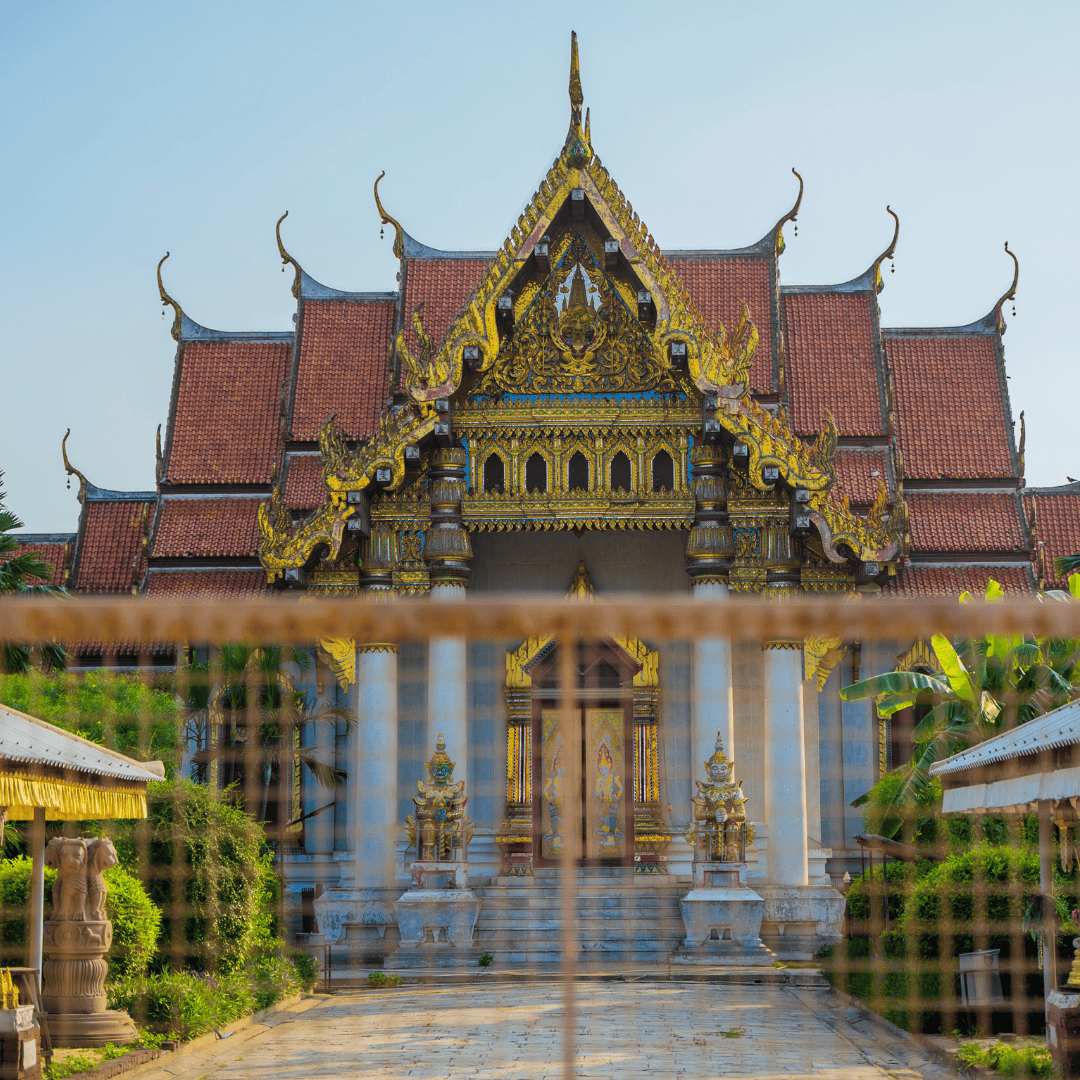
Buddhist Pilgrimage Tour from Thailand to India | 8-Day Guide 2026.
Plan your Buddhist pilgrimage from Thailand to India with this complete 8-day guide. Covers Bodh Gaya, Rajgir, Vaishali, Kushinagar, Lumbini, Sravasti, and Sarnath — route, costs, tips, and what Thai pilgrims need to know.
:
Estimated cost for an 8-day Buddhist Circuit tour: 30,000 to 45,000 THB per person
This typically includes:
- Direct return flights from Bangkok to Gaya (and Varanasi to Bangkok via Delhi)
- All ground transportation in AC buses throughout the tour
- 7 nights hotel accommodation (clean, comfortable hotels near the sacred sites)
- Daily breakfast, lunch, and dinner (vegetarian meals)
- All site entrance fees and permits
- Nepal visa fees and border crossing assistance
- Experienced English-speaking Buddhist guide throughout
- All temple and monastery visit coordination
The price range depends on:
- Group size — Larger groups (30+ people) get significantly better rates per person than smaller groups
- Hotel category — 3-star vs 4-star accommodation
- Season — Peak season (December-January) is more expensive than shoulder months (October, March)
- Flight prices — Airfares fluctuate seasonally and should be booked early
What is usually NOT included:
- Travel insurance (strongly recommended)
- Personal shopping and souvenirs
- Tips and gratuities for guides and drivers
- Any additional activities outside the planned itinerary
Our advice: Book as a group through your temple to get the best rate. Groups of 20-30 people travelling together offer the ideal balance of per-person cost and comfortable travel logistics.
What Thai Pilgrims Should Know Before Visiting India
After guiding hundreds of Thai groups through India, here are the most important things we want every pilgrim to know before they arrive:
Toilets in India — Let Us Be Honest
This is the number one concern we hear from Thai tourists visiting India for the first time, and we want to address it directly.
Toilet facilities in India vary greatly. Hotels in our itinerary provide clean, modern, Western-style toilets. However, during long drives between cities (some drives are 5-7 hours), roadside toilet stops can be very basic compared to what you are used to in Thailand.
How we handle this:
- We carefully select rest stops that have the cleanest available facilities on each route
- We ensure your hotel has clean, well-maintained bathrooms before including it in our tours
- We recommend using hotel facilities before departing each morning
- We schedule comfort stops at the best available locations along each route
What you can do:
- Carry your own toilet paper and wet wipes (essential — many facilities do not provide paper)
- Carry a small bottle of hand sanitiser
- Use the hotel restroom every time before getting on the bus
- Pack a small personal hygiene kit in your day bag (not in your checked luggage on the bus)
We understand this is a significant concern and we take it seriously. India’s infrastructure is improving every year, and the situation is much better now than it was even five years ago. But being prepared makes a big difference in your comfort level.
Food
All meals on our tours are vegetarian, respecting both Buddhist principles and the dietary preferences of most Thai pilgrimage groups. Hotels prepare Indian vegetarian meals — rice, dal (lentil soup), various vegetable curries, roti (flatbread), and curd (yoghurt). Most Thai visitors find Indian vegetarian food enjoyable, though the spice levels and flavours are different from Thai food.
Tips:
- If you have specific dietary needs (allergies, no spicy food, etc.), inform your tour operator in advance so hotels can prepare accordingly
- Carry familiar Thai snacks for the first couple of days until your stomach adjusts
- Drink only sealed bottled water — never tap water. We provide bottled water throughout the tour
- Avoid street food and uncooked salads during the trip
- Carry basic stomach medication (your Thai pharmacist can recommend appropriate options)
Weather and Clothing
If you are visiting during the peak season (November to February), prepare for weather much colder than anything you experience in Thailand. Early mornings and evenings can drop to 3-10°C. Temple floors are extremely cold when you remove your shoes for entry.
Packing essentials:
- Thermal innerwear (available cheaply in Bangkok if needed)
- Warm jacket or fleece
- Warm socks (especially for temple visits — your feet will get cold on stone floors)
- Shawl or scarf (useful for warmth and as a respectful covering at temples)
- Comfortable walking shoes
- Modest clothing (covered shoulders and knees at all sacred sites)
For more seasonal advice, read our Best Time to Visit Bodh Gaya from Thailand.
Long Drives
The Buddhist Circuit covers a large area across two Indian states and Nepal. Some drives between cities are long — 5 to 7 hours on Indian roads. Indian road conditions are improving but are generally rougher than Thai highways.
How we make this comfortable:
- All groups travel in air-conditioned buses with comfortable seating
- Our drivers are experienced professionals who know these routes well
- We plan regular comfort stops and meal breaks
- Long drives are good opportunities for group chanting, discussion, or rest
- The scenery along the route — rural India, rice paddies, small towns — is interesting and gives you a real picture of everyday life in the Indian countryside
Communication
English is spoken at all hotels and major tourist sites. However, in smaller towns, markets, and rural areas, communication can be limited. Having a tour guide who understands both the historical significance of the sites and the cultural expectations of Thai pilgrims makes a significant difference to the quality of your experience.
Money
The Indian Rupee (INR) is the only currency accepted in India. In Nepal, the Nepalese Rupee is used. ATMs are available in larger cities (Patna, Varanasi) but may be limited in smaller pilgrimage towns. We recommend:
- Exchange some money at Bangkok airport before departure
- Carry USD cash for your Nepal visa fee ($30)
- Inform your Thai bank about your India travel dates to avoid card blocks
- Keep small denomination notes for tips, offerings, and small purchases
Visa Requirements for Thai Citizens
India Visa
Thai citizens need a valid visa to enter India. The easiest option is the India e-Visa, which can be applied for online:
- Processing time: 3-5 business days
- Passport must be valid for at least 6 months from your travel date
- Apply through the official Indian government e-Visa portal
- Keep a printed copy of your e-Visa approval with your passport
Nepal Visa
Thai citizens can obtain a Nepal visa on arrival at the Sunauli-Belahiya border crossing:
- Fee: approximately $30 USD for a 15-day visa
- You will need your passport and one passport-size photograph
- Carry the fee in USD cash (exact amount preferred)
Our team assists with all visa documentation and border crossing procedures for both countries.
Why Temple Groups Choose Prime Value Tours
Most of our Thai pilgrimage groups are organised by Buddhist temples in Thailand, led by senior monks, and travel as a spiritual community of 20-40 people. We understand the specific needs of these groups because we have been serving them for over 25 years:
- Complete pilgrimage logistics — flights, AC buses, hotels, meals, guides, and temple visit coordination handled end-to-end
- Buddhist Circuit expertise — we know every sacred site, every road, every hotel on this route intimately
- Vegetarian meals — all meals are vegetarian, arranged at the hotels where your group stays
- Nepal border assistance — our teams on both sides of the border ensure smooth crossing
- Temple coordination — we arrange chanting sessions and merit-making ceremonies at each sacred site
- 24/7 support — our local team is available throughout the journey for any need
Frequently Asked Questions
How many days do I need for the Buddhist Circuit? Our most popular itinerary is 8 days, covering all major sacred sites. If you want a more relaxed pace with extra time for meditation at each site, a 10-day version is also available. We do not recommend fewer than 7 days as it makes the journey rushed and tiring.
Can we customise the itinerary? Absolutely. Some groups want extra days in Bodh Gaya for deeper meditation. Others want to add Kapilavastu (near Lumbini) or extend to Sanchi. We build each itinerary around your group’s priorities.
Is the trip suitable for elderly pilgrims? Yes, with some preparation. Most sacred sites involve moderate walking on flat ground. Vulture Peak in Rajgir has a hill climb, but a ropeway is available. We select hotels with good accessibility and plan comfortable pacing. The biggest challenges for elderly travellers are the cold weather (bring warm clothing) and long bus rides (we add extra stops).
Do we need a monk to lead the group? Most Thai groups travel with monks who lead the chanting and merit-making ceremonies at each site. However, groups without monks are also welcome. We can arrange for local Buddhist guides to provide spiritual context at each destination.
What happens if our flight is delayed due to fog? Fog at Gaya Airport in December-January can cause delays. We always plan buffer time on arrival days and have backup transport arrangements. If a flight is diverted to Patna or Varanasi, our vehicles are ready at those airports to bring your group to Bodh Gaya by road.
Is India safe for Thai tourists? Yes. The Buddhist Circuit is well-established for international pilgrims and the towns along the route are accustomed to hosting visitors from Thailand, Japan, Sri Lanka, and other Buddhist countries. Having a local tour operator ensures you always have support, safe transport, and reliable information.
How far in advance should we book? For the peak season (November to February), we recommend booking 2-3 months in advance. This ensures availability of direct Bangkok-Gaya flights, preferred hotels, and AC buses for your group size. Earlier booking also typically secures better rates.
Can you arrange additional activities like robe offerings or alms ceremonies? Yes. We regularly coordinate special Buddhist ceremonies for Thai groups, including robe-offering ceremonies (Kathin), alms-giving, and group meditation sessions at the sacred sites. Let us know your requirements when planning the trip.
Start Planning Your Pilgrimage
Whether your temple is organising its first pilgrimage to India or you have visited before and want a deeper experience, Prime Value Tours will create a journey that is spiritually meaningful, practically comfortable, and within your budget.
Contact us to discuss your group’s pilgrimage:
- Email: info@floralwhite-eel-181618.hostingersite.com
- Line: line.me/ti/p/6QtZRvYpeP
- WhatsApp: +91-9794122849
- Website: primevaluetours.com/