
Planning a pilgrimage to Varanasi and Sarnath from Thailand? This practical guide covers sacred sites, Ganga Aarti, Dhamek Stupa chanting, travel tips, and everything Thai Buddhist pilgrims need to know.
Varanasi is unlike any city you have ever seen.
The smoke of incense mixes with the sound of temple bells. Thousands of oil lamps float on the Ganga river at dusk. Monks in saffron robes walk along narrow lanes that are older than most civilizations. And just 10 kilometres away, in the quiet town of Sarnath, Lord Buddha delivered his very first teaching after attaining enlightenment — setting the Wheel of Dharma in motion for all of humanity.
For Thai Buddhist pilgrims, visiting Varanasi and Sarnath together is one of the most powerful spiritual experiences on the Buddhist Circuit in India. Sarnath is where the Dhammacakkappavattana Sutta was first spoken. Varanasi is where you witness a living, breathing spiritual tradition that has continued unbroken for over 3,000 years.
Having guided Thai pilgrimage groups through Varanasi and Sarnath for over 25 years, we at Prime Value Tours have seen how deeply this journey touches people. The chanting at Dhamek Stupa, the boat ride on the Ganga at sunrise, the overwhelming energy of the evening Aarti — these are moments that stay with pilgrims long after they return home to Thailand.
This guide shares everything you need to plan a meaningful visit — the sacred sites, the practical details, and the insider tips that only come from decades of experience on the ground.
Sarnath: Where the Buddha’s Teachings Began
Sarnath, known in ancient texts as Isipatana (the Deer Park), is one of the four most sacred places in Buddhism. It was here that Lord Buddha came after his enlightenment in Bodh Gaya, walking nearly 250 kilometres to find his five former companions and share the truth he had discovered.
This is where the first Sangha was born. This is where the Four Noble Truths were spoken aloud for the first time. For Thai Buddhists who follow the Theravada tradition, Sarnath holds a special significance — the Dhamma that guides your daily practice was first taught on this very ground.
What to See at Sarnath
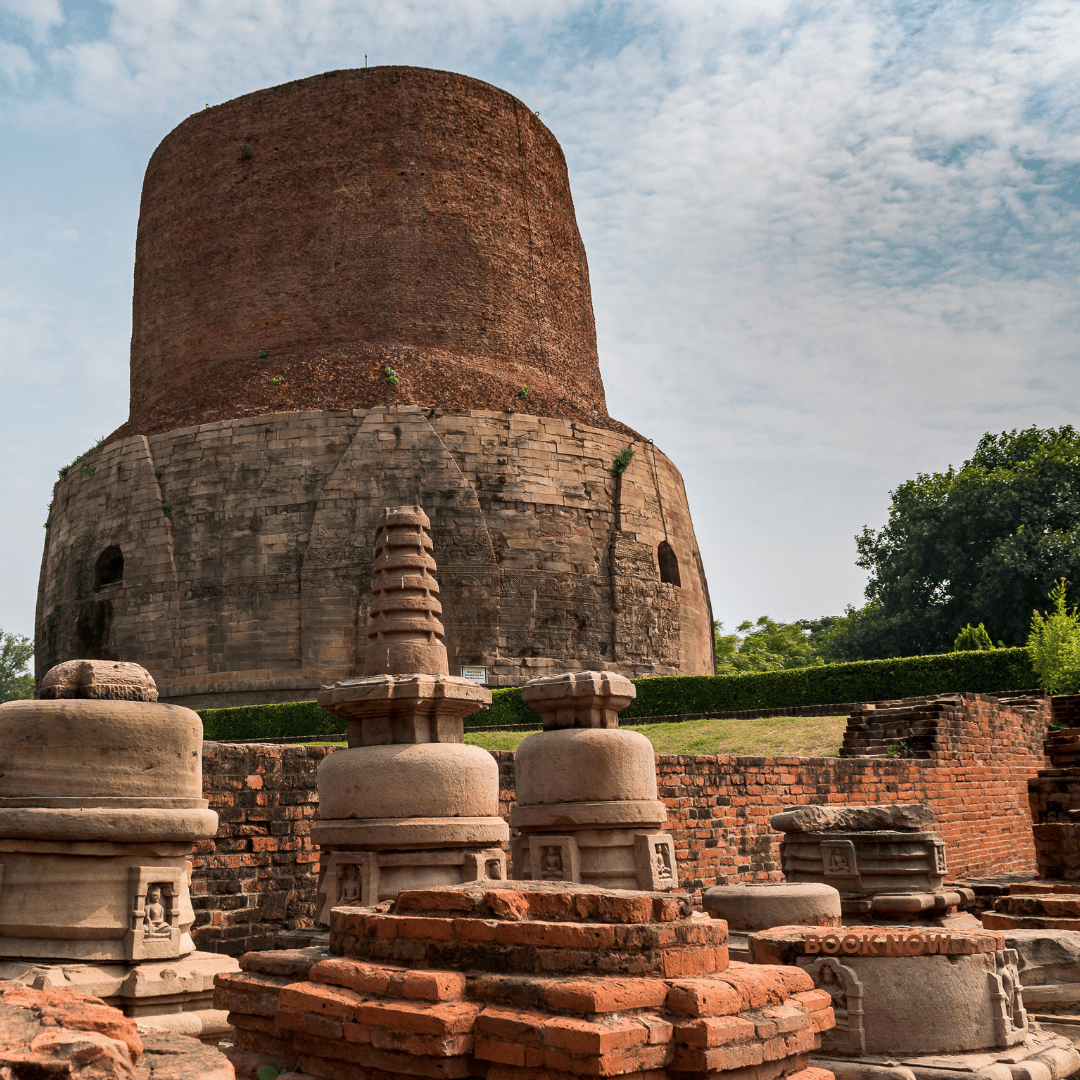
Dhamek Stupa The Dhamek Stupa is the heart of Sarnath. Standing 43 metres tall and dating back to 500 CE (built over an earlier structure from Emperor Ashoka’s time), this massive cylindrical stupa marks the exact spot where Buddha gave his first sermon. The lower portion is covered with beautifully carved floral and geometric patterns that have survived over 1,500 years.
For Thai pilgrimage groups, this is the most meaningful moment in Sarnath. Groups typically gather around the base of the stupa to chant together — hearing familiar Pali verses in the very place where the Buddha first spoke those truths creates a deeply moving experience. If your group includes monks, they can lead a special chanting and meditation session here. The early morning hours are the quietest and most peaceful time for this.
Dharmarajika Stupa (Ashoka’s Stupa) Originally built by Emperor Ashoka in the 3rd century BCE, this stupa once contained sacred relics of the Buddha. Although much of the structure was damaged over the centuries, the remaining foundation gives you a powerful sense of the scale of Buddhist devotion in ancient India.
Ashoka Pillar The famous lion capital from this pillar — four lions sitting back to back — became the national emblem of India. The original capital is displayed in the Sarnath Archaeological Museum (a must-visit, entry fee is nominal). Standing before this pillar, you are looking at one of the oldest surviving symbols of Buddhist kingship in the world.
Mulagandha Kuti Vihar This modern temple, built by the Maha Bodhi Society, houses beautiful wall paintings depicting scenes from the Buddha’s life. The Japanese-style paintings inside are remarkably detailed. A relic of the Buddha is enshrined here, and the temple holds an evening prayer service that visitors can attend.
Chaukhandi Stupa Located on the outskirts of Sarnath, this stupa marks the spot where Buddha met his five discussed before delivering the first sermon. It is a quieter site, less visited by large groups, but historically very significant.
How Much Time to Spend at Sarnath
Most Thai pilgrimage groups spend 2 to 3 hours at Sarnath, which is enough to visit the main sites, spend time chanting at the Dhamek Stupa, and visit the museum. If your group wants a deeper experience — longer meditation, visiting the monasteries, or exploring the Deer Park at a slower pace — plan for half a day.
Varanasi: The Eternal City on the Ganga
Varanasi (also called Kashi or Banaras) is one of the oldest continuously inhabited cities in the world. While it is primarily a Hindu holy city, its connection to Buddhism is ancient and deep — the Buddha himself chose to come to this region to begin his teaching mission.
For Thai pilgrims, Varanasi offers something you cannot find anywhere else on the Buddhist Circuit: the raw, living energy of India’s spiritual heart. The city can feel overwhelming at first — the narrow lanes, the crowds, the sounds, the smells — but once you settle in, it becomes an unforgettable experience.
The Ganga Aarti at Dashashwamedh Ghat
This is the highlight of any evening in Varanasi, and it is something every Thai pilgrim should experience.
Every evening at sunset, a group of young priests performs the Ganga Aarti ceremony at Dashashwamedh Ghat — the most famous ghat in Varanasi. Standing in a line facing the river, they lift large brass lamps with mult😎👍e flames, moving them in synchronized patterns while bells ring, conch shells blow, and thousands of people watch from the steps and from boats on the river.
The ceremony lasts about 45 minutes and is deeply atmospheric. Even though it is a Hindu ritual, the devotion and energy are universal. Thai pilgrims often describe it as one of the most visually stunning spiritual experiences of their entire India journey.
Practical tip: The ghat gets extremely crowded during the Aarti. We recommend watching from a boat on the river — you get a better view, more comfort, and beautiful photographs. Book your boat in advance through your tour operator to avoid last-minute price negotiations at the ghat.
Boat Ride on the Ganga
A boat ride on the Ganga is essential — it gives you the best perspective of Varanasi’s famous riverfront. The ideal time is early morning at sunrise, when the ghats come alive with people performing morning prayers, yoga practitioners, and priests preparing for the day’s rituals.
From the boat, you can see the full sweep of Varanasi’s 84 ghats stretching along the river. The golden light of sunrise reflecting on the water, the sound of temple bells drifting across the surface — it is genuinely one of India’s most beautiful sights.
Practical tip: Morning boat rides start around 5:30–6:00 AM depending on the season. Carry a light jacket or shawl — it can be surprisingly cool on the water, especially from November to February.
Walking the Ghats
If time permits, a morning walk along the ghats is a wonderful experience. Starting from Assi Ghat in the south and walking north towards Dashashwamedh Ghat, you pass through a living museum of Indian spiritual life — sadhus in meditation, families performing rituals, children flying kites, and flower sellers preparing offerings.
The walk takes about 45 minutes to an hour at a relaxed pace. Wear comfortable shoes and be prepared for uneven stone steps.
Practical Travel Information
How to Reach Varanasi
By Air: Lal Bahadur Shastri International Airport (VNS) is about 25 kilometres from the city centre and about 30 kilometres from Sarnath. There are direct flights from Delhi, Mumbai, Kolkata, and Bangalore. For Thai pilgrims, the most common routes are Bangkok → Delhi → Varanasi or Bangkok → Kolkata → Varanasi.
By Train: Varanasi Junction (also called Varanasi Cantt) is one of India’s major railway stations, well-connected to Delhi, Kolkata, Agra, and other cities. If you are coming from Bodh Gaya, the train journey takes about 4–5 hours. Private car hire (approximately 250 km, 5–6 hours by road) is more comfortable for groups.
From Varanasi to Sarnath: Sarnath is only about 10 kilometres from central Varanasi. By private car, it takes 20–30 minutes depending on traffic. This short distance is one of the biggest advantages of this destination — you can comfortably visit both in a single trip.
Where to Stay
For Buddhist pilgrimage groups, we recommend staying in hotels near Sarnath rather than in the old city of Varanasi. Here is why:
- Hotels near Sarnath are newer, cleaner, and more spacious than most options in the congested old city
- You are just minutes from the Dhamek Stupa for early morning visits
- The area is quieter and more peaceful — much better for rest after a long travel day
- Getting to Dashashwamedh Ghat for the evening Aarti takes only 20–30 minutes by car
Most good hotels near Sarnath offer comfortable rooms, vegetarian meal options, and parking for tour buses.
Food and Dining
Varanasi is a strictly vegetarian city in most areas near the ghats and temples (no meat or alcohol is served in the holy zone). For Thai pilgrimage groups, meals are usually arranged at the hotel where you stay — this is the most convenient and hygienic option, especially for groups with specific dietary preferences.
Hotels near Sarnath can prepare Indian vegetarian meals that Thai visitors generally enjoy — rice, dal (lentil soup), vegetable curries, roti (flatbread), and curd. If your group has specific preferences, your tour operator can arrange meal plans in advance.
Tip: Carry some familiar snacks from Thailand for the first couple of days, especially if anyone in your group is not used to Indian food. Bottled water is essential — always drink sealed bottled water.
Best Time to Visit
October to March is the ideal time for Thai pilgrims to visit Varanasi and Sarnath. The weather is cool and pleasant (10°C to 25°C), perfect for walking the ghats, visiting outdoor sites, and sitting comfortably during chanting sessions at the Dhamek Stupa.
| Season | Months | Temperature | Recommendation |
|---|---|---|---|
| Winter (Best) | November – February | 8°C – 22°C | Ideal for pilgrimage, bring warm layers |
| Spring | March – April | 22°C – 35°C | Good, but gets warm by late March |
| Summer | May – June | 35°C – 45°C | Very hot, not recommended for groups |
| Monsoon | July – September | 28°C – 35°C | Humid, occasional flooding near ghats |
For more details on seasonal planning, read our guide: Best Time to Visit Bodh Gaya & Buddhist Circuit (2026)
Tips for Thai Buddhist Pilgrims in Varanasi
Here are some practical tips based on our experience guiding Thai groups through this city for over two decades:
Temple and Stupa Etiquette
- Remove your shoes before entering any temple or sacred area at Sarnath
- Dress modestly — covered shoulders and knees. Carry a shawl or scarf
- Walk clockwise (pradakshina) around the Dhamek Stupa — this is the traditional Buddhist practice
- Photography is usually allowed at Sarnath’s outdoor sites, but always ask before photographing monks or inside temples
- At Dashashwamedh Ghat, be respectful during the Aarti — it is a deeply sacred ceremony for Hindu devotees
Health and Comfort
- Drink only sealed bottled water — never tap water
- Carry hand sanitiser and wet wipes
- Wear comfortable walking shoes for the ghats (stone steps can be uneven and slippery)
- In winter (December–January), mornings can be very cold (6–8°C) — bring a warm jacket, especially for the sunrise boat ride
- Carry basic medicines (stomach remedies, headache tablets) as pharmacies may not stock familiar Thai brands
Communication
- English is widely spoken at hotels and tourist sites, but local vendors in the old city may only speak Hindi
- Having a local guide or tour operator who understands Thai cultural expectations makes a big difference
- Keep your hotel’s name and phone number written down (or saved on your phone) in case you need directions
Money and Shopping
- Indian Rupee (INR) is the only accepted currency. Exchange money at the airport or use ATMs
- Varanasi is famous for Banarasi silk sarees and fabrics — these make wonderful gifts
- Always agree on a price before buying, especially at market stalls near the ghats
Extend Your Pilgrimage: The Buddhist Circuit from Sarnath
Sarnath is one stop on the sacred Buddhist Circuit that traces the key events of Lord Buddha’s life across India and Nepal. Most Thai pilgrimage groups visit mult😎👍e sites in a single journey.
Here is how Varanasi-Sarnath connects to the broader circuit:
| Destination | Significance | Distance from Varanasi |
|---|---|---|
| Bodh Gaya, Bihar | Site of Enlightenment | ~250 km (5–6 hrs by road) |
| Kushinagar, UP | Place of Mahaparinirvana | ~260 km (6 hrs by road) |
| Lumbini, Nepal | Birthplace of the Buddha | ~310 km (7–8 hrs by road) |
| Sravasti, UP | Where Buddha spent 24 rainy seasons | ~310 km (7 hrs by road) |
| Nalanda, Bihar | Ancient Buddhist University | ~300 km (6–7 hrs by road) |
| Rajgir, Bihar | Where Buddha taught and meditated | ~280 km (6 hrs by road) |
Recommended reading for your pilgrimage planning:
- Bodh Gaya Travel Guide for Buddhist Pilgrims
- Kushinagar Travel Guide 2026
- Lumbini Travel Guide 2026
- Nalanda Buddhist Pilgrimage Tour
- Sravasti: Walk in the Footsteps of Buddha
Frequently Asked Questions
How many days should I spend in Varanasi and Sarnath? A minimum of 2 days and 1 night is recommended. Day 1: arrive, visit Sarnath (2–3 hours), evening Ganga Aarti at Dashashwamedh Ghat. Day 2: sunrise boat ride on the Ganga, explore the ghats, then depart for your next destination. If you have more time, a third day allows for a more relaxed pace, revisiting Sarnath for longer meditation, or exploring Varanasi’s silk weaving heritage.
Is Varanasi safe for Thai tourists? Yes. Varanasi is a major pilgrimage city with millions of visitors every year. The tourist areas are generally safe. However, the narrow lanes of the old city can feel confusing for first-time visitors, so having a local guide or tour operator is highly recommended. Petty theft can happen in crowded areas — keep your valuables secure.
Do I need a visa to visit India from Thailand? Yes. Thai citizens need an Indian visa. The easiest option is the India e-Visa, which you can apply for online. Processing takes 3–5 business days. Your passport must be valid for at least 6 months from your travel date. Apply at the official Indian government visa portal.
Can my group arrange a chanting ceremony at Sarnath? Yes, this is very common for Thai Buddhist pilgrimage groups. If your group includes monks, they can lead chanting at the Dhamek Stupa. Your tour operator should coordinate the timing to ensure a peaceful experience with minimal crowds — early morning is usually best.
What language is spoken in Varanasi? Hindi is the main language. English is understood at hotels, restaurants, and major tourist sites. In the old city lanes and local markets, communication can be more challenging. Having a guide who understands Thai cultural needs is very helpful.
Is vegetarian food easily available? Absolutely. Varanasi is one of the most vegetarian-friendly cities in India. Most restaurants near the ghats and temples serve only vegetarian food. Hotels near Sarnath offer full vegetarian meal services that can be customized for group dietary needs.
Plan Your Varanasi-Sarnath Pilgrimage
Prime Value Tours has been guiding Buddhist pilgrimage groups through Varanasi and Sarnath since 1999. We handle all logistics — airport transfers, hotel bookings near Sarnath, private vehicles, guided site visits, boat rides, and meal arrangements — so your group can focus entirely on the spiritual experience.
Whether Varanasi-Sarnath is your only destination or part of a larger Buddhist Circuit journey, we create customised itineraries that match your group’s pace, preferences, and budget.
Contact us to start planning:
- Email: info@primevaluetours.com
- Line: line.me/ti/p/6QtZRvYpeP
- WhatsApp: +91-9794122849
- Website: primevaluetours.com