
Kushinagar Travel Guide for Thai Buddhist Pilgrims | Complete 2026 Guide. Planning a pilgrimage to Kushinagar from Thailand? Complete guide to the Mahaparinirvana Temple, Reclining Buddha, Ramabhar Stupa, and Wat Thai Temple: how to reach them, where to stay, and practical tips from 25+ years of guiding Thai groups. Kushinagar travel guide Buddhist pilgrims Thailand.
Of all the sacred places on the Buddhist Circuit, Kushinagar is the one that touches pilgrims most deeply.
This is where Lord Buddha took his final breath. This is where he spoke his last words to his discuses — “All conditioned things are impermanent. Work out your own salvation with diligence.” And this is where he attained Mahaparinirvana, his complete and final liberation from the cycle of birth, death, and rebirth.
For Thai Buddhists, Kushinagar carries a unique emotional weight. At Bodh Gaya, you celebrate the Buddha’s triumph — his enlightenment. At Sarnath, you honour the beginning of his teaching. But at Kushinagar, you face the reality of impermanence — the core teaching of the Dhamma itself. The Buddha, who taught that all things arise and pass away, demonstrated this truth with his own passing.
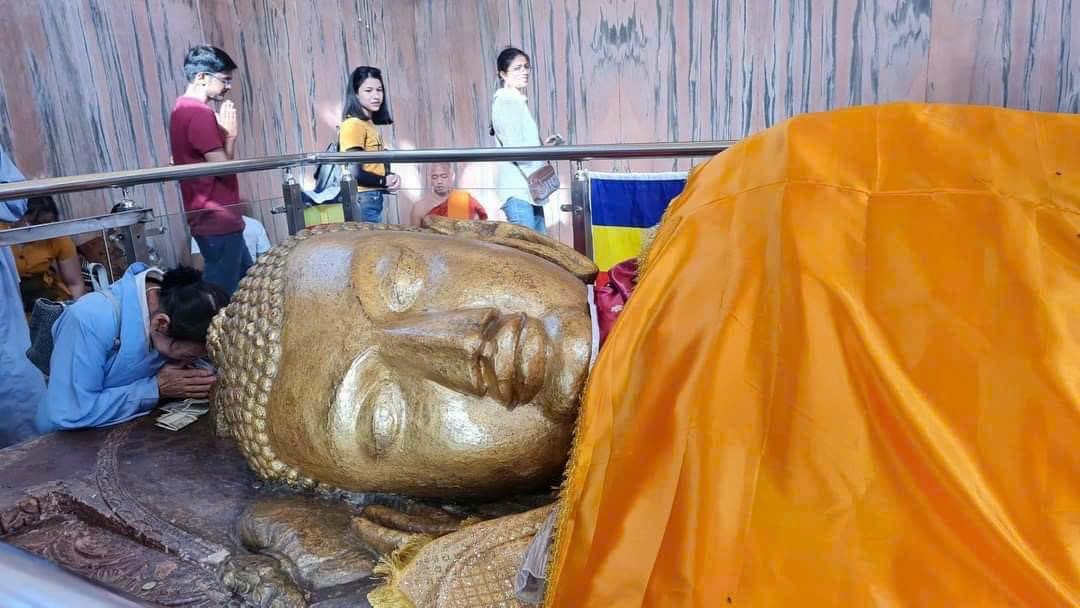
We have been bringing Thai pilgrimage groups to Kushinagar for over 25 years, and the reaction is always the same. When pilgrims walk into the Mahaparinirvana Temple and see the great Reclining Buddha statue for the first time — the Buddha lying peacefully on his right side, his expression of perfect calm — the room falls silent. Then the chanting begins. And in that moment, the teaching of impermanence stops being an idea and becomes something you feel in your heart.
This guide covers everything you need to plan a meaningful visit to Kushinagar — the sacred sites, the practical details, and the tips that come from decades of walking this path with Thai pilgrims.
Why Kushinagar is Sacred: The Buddha’s Final Days
Understanding what happened at Kushinagar makes the visit far more powerful. Here is the story every pilgrim should know before arriving.
After 45 years of teaching the Dhamma across northern India, the Buddha — now 80 years old — began his final journey. Travelling from Vaishali, where he delivered his last sermon and announced his approaching death, he walked with his attendant Ananda and a group of discuses towards the small town of Kushinara (modern Kushinagar).
Along the way, the Buddha fell seriously ill after accepting a meal from a blacksmith named Cunda. Despite his suffering, he continued walking. When they reached a grove of Sal trees on the outskirts of Kushinara, the Buddha asked Ananda to prepare a resting place between two Sal trees.
Lying on his right side, facing north, with his head resting on his right hand, the Buddha gave his final teachings to the monks gathered around him. He reminded them that the Dhamma and Vinaya (the teachings and the discuss would be their guide after he was gone. He invited anyone with lingering doubts to ask their final questions. And then he spoke his last recorded words:
“Vayadhammā saṅkhārā, appamādena sampādetha.” (“All conditioned things are impermanent. Strive on with diligence.”)
He then passed through the four stages of meditation (jhanas) and attained Mahaparinirvana — final, complete liberation. The Sal trees are said to have burst into bloom out of season, showering white flowers over his body.
For seven days, the people of Kushinara and monks from surrounding regions paid their respects. Then the Buddha’s body was cremated with the honours given to a universal monarch. His relics were divided into eight portions and distributed to eight kingdoms, each of which built a stupa to enshrine them.
This is the story that gives Kushinagar its sacred power. Walking these grounds, you walk where the Buddha took his last steps. Sitting in the Mahaparinirvana Temple, you sit where his closest discussed sat, weeping and chanting as they said goodbye to their teacher.
Sacred Sites in Kushinagar: A Complete Guide
Kushinagar is a small, quiet town — far smaller than Varanasi or even Bodh Gaya. The major sacred sites are close together and can be covered in a single day. But do not mistake its size for its significance. What happened here changed the Buddhist world forever.
1. Mahaparinirvana Temple — The Heart of Kushinagar
The Mahaparinirvana Temple is the most important site in Kushinagar and one of the most emotionally powerful places on the entire Buddhist Circuit. Inside this temple lies the great Reclining Buddha statue — a magnificent 6.1-metre figure carved from a single block of red sandstone, depicting Lord Buddha in his final moments.
The statue dates back to the 5th century CE and was discovered during British-era archaeological excavations. The Buddha lies on his right side, his head resting on his right hand supported by a pillow, his eyes gently closed, his expression one of perfect, complete peace. The posture is exactly as described in the Pali texts — the “lion’s posture” (Simhasayana) in which he attained Mahaparinirvana.
The experience for Thai pilgrims:
This is one of those moments that stays with you forever. After travelling across India, visiting the sites of the Buddha’s enlightenment and teaching, you arrive at the place where his earthly journey ended. When Thai pilgrimage groups enter the temple and see the Reclining Buddha for the first time, the reaction is immediate and deeply emotional. There is a hush, then a wave of reverence. Many pilgrims are visibly moved.
Thai groups with monks typically conduct a special chanting ceremony inside the temple, offering flowers, incense, and candles at the feet of the statue. The sound of Pali chanting echoing through the ancient temple, in the very place where the Buddha’s discuses chanted their grief and devotion 2,500 years ago — this is one of the most profound spiritual experiences on the Buddhist Circuit.
Practical tips for visiting:
- The temple is open daily. Early morning visits are quieter and more peaceful for group chanting
- Remove shoes before entering. The temple floor can be cold in winter — carry warm socks
- Photography is generally allowed but use discretion during prayer and chanting. Flash photography may be restricted
- Dress modestly — covered shoulders and knees
- Walk clockwise around the statue as a mark of respect
- The adjoining Nirvana Stupa — a large brick stupa next to the temple — marks the exact location of the Mahaparinirvana. Circumambulate this stupa as part of your visit
2. Ramabhar Stupa — The Sacred Cremation Site
About 1.5 kilometres from the Mahaparinirvana Temple, the Ramabhar Stupa (also called Mukutbandhan Chaitya) stands 15 metres tall, marking the exact spot where the Buddha’s body was cremated after his Mahaparinirvana.
According to ancient texts, the cremation was performed with the full honours of a Chakravartin (universal monarch). The Malla rulers of Kushinara carried the Buddha’s body in a grand procession through the town to this cremation ground, where a funeral pyre was built and lit.
The stupa today is set within beautifully maintained gardens — green lawns, tall trees, and flower beds create a peaceful atmosphere ideal for quiet reflection. It is a contemplative place, less busy than the main temple, and many pilgrims find it deeply moving to sit here in silence and reflect on the Buddha’s final teaching of impermanence.
Thai pilgrimage groups typically hold a chanting ceremony at the Ramabhar Stupa, offering prayers and reflecting on the significance of this sacred ground. The open-air setting, surrounded by the garden’s natural beauty, creates a different atmosphere from the enclosed temple — more spacious, more meditative, with the sky above and the earth below.
Practical tips:
- Allow about 30-45 minutes for a meaningful visit including chanting
- The walk from the Mahaparinirvana Temple takes about 20 minutes on foot, or 5 minutes by vehicle
- The gardens are well maintained with benches and shaded areas for rest
- Morning visits are especially pleasant — the light is soft and the gardens are quiet
- Bring water, especially if visiting in warmer months
3. Wat Thai Temple — A Piece of Thailand in Sacred Ground
The Wat Thai Temple in Kushinagar is a beautiful Buddhist temple built by the Thai Buddhist community, designed in traditional Thai architectural style. Golden spires rise above the surrounding greenery, and the interior features intricate carvings and vibrant murals depicting scenes from the Buddha’s life.
For Thai pilgrims, visiting this temple holds special meaning. After the emotional intensity of the Mahaparinirvana Temple — standing where the Buddha passed away — walking into a familiar Thai temple with its recognisable architecture, Thai Buddha images, and the sound of Thai-style chanting brings a sense of comfort and connection. You are reminded that the Dhamma the Buddha taught here 2,500 years ago is alive and thriving in Thailand today.
The temple is well-maintained and welcoming to visitors. The surrounding gardens are peaceful and the architecture itself is worth admiring — a reminder that Buddhist communities from around the world have come to Kushinagar to honour the Buddha’s memory.
4. Matha Kuar Shrine — The Blessing Buddha
The Matha Kuar Shrine houses a striking Buddha statue carved from a single block of blue-black stone, believed to date from the 10th or 11th century CE. The statue depicts the Buddha seated with his right hand raised in the Abhaya Mudra — the gesture of fearlessness and blessing.
The statue’s serene expression and the gesture of reassurance carry a powerful message: even in the place of the Buddha’s passing, there is no reason for fear. The Dhamma continues. The path remains open.
The shrine is located in a garden setting and is a quieter, less-visited site — perfect for a short contemplative stop.
5. Japanese Temple and Indo-Japan Sri Lanka Centre
The Japanese Temple is one of the finest examples of international Buddhist devotion in Kushinagar. The Ashta Dhatu (eight-metal) statue of the Buddha inside is beautifully crafted, and the temple’s clean, minimalist Japanese design offers a peaceful space for reflection.
The nearby Indo-Japan Sri Lanka Centre represents the cross-cultural cooperation among Buddhist nations in preserving and honouring these sacred sites. Together, these temples demonstrate how Kushinagar belongs not to one country but to the entire Buddhist world.
6. Kushinagar Museum
Located near the Sri Lankan Buddhist temple, the Kushinagar Museum houses a small but significant collection of archaeological finds from the surrounding area:
- Excavated Buddha statues from various periods
- Carved stone and terracotta panels
- Bronze seals and copper plates
- Architectural fragments from ancient monasteries
- Buddhist Thangka paintings
The museum provides important historical context for everything you see at the pilgrimage sites. A 30-minute visit is enough to appreciate the key exhibits.
Note: The museum is closed on Fridays. Check local timings before planning your visit.
7. Meditation Park
The Meditation Park in Kushinagar is a newer addition, designed specifically for visitors seeking a space for quiet meditation and reflection. The park features flower gardens, tall trees, green lawns, and small water features that create a naturally calming environment.
Even if you do not formally meditate, simply sitting here for 15-20 minutes after visiting the emotionally intense Mahaparinirvana Temple and cremation site can help you process the experience. Many pilgrims find that Kushinagar’s teachings sink in most deeply during these quiet moments between the major sites.
How to Reach Kushinagar
Kushinagar is located in the Kushinagar district of eastern Uttar Pradesh, approximately 53 kilometres from Gorakhpur — the nearest major city.
By Air
Nearest airport: Gorakhpur Airport (GOP) — approximately 45 km from Kushinagar (about 1 to 1.5 hours by road). Gorakhpur has domestic flights connecting to Delhi, Lucknow, Mumbai, and Kolkata. For Thai pilgrims, the typical route is to fly into Gaya (for Bodh Gaya) and reach Kushinagar by road as part of the Buddhist Circuit.
Kushinagar International Airport — A newer airport that has started limited operations. Check with your tour operator for the latest flight availability.
By Train
Gorakhpur Junction is one of the largest railway stations in India, well-connected to Delhi, Mumbai, Kolkata, Lucknow, and Varanasi. From Gorakhpur, the drive to Kushinagar takes about 1.5 hours by road.
By Road
For Buddhist Circuit pilgrims, Kushinagar is typically reached by road from other circuit destinations:
| From | Distance | Driving Time |
|---|---|---|
| Vaishali | ~250 km | 5-6 hours |
| Patna | ~280 km | 6-7 hours |
| Bodh Gaya | ~450 km | 9-10 hours |
| Lumbini (Nepal) | ~160 km | 3-4 hours (plus border crossing) |
| Gorakhpur | ~53 km | 1-1.5 hours |
| Varanasi | ~260 km | 5-6 hours |
On our 8-day Buddhist Circuit itinerary, Thai groups typically arrive in Kushinagar from Vaishali, which is the longest single drive on the tour (approximately 5-6 hours). Our AC buses make the journey comfortable with regular stops along the way.
For the complete day-by-day route, read our Complete Buddhist Pilgrimage Tour from Thailand to India (2026 Guide).
Where to Stay in Kushinagar
Kushinagar is a small pilgrimage town, and accommodation options are more limited than in Bodh Gaya or Varanasi. Hotels here are functional and clean, though you should not expect the same range of luxury options available in larger cities.
What to expect:
- Most hotels catering to pilgrimage groups offer clean rooms with attached bathrooms, hot water, air conditioning (or heating in winter), and vegetarian meal service
- The best hotels are located close to the Mahaparinirvana Temple, making morning and evening visits convenient
- Room quality is generally adequate but simpler than what you might find in Bangkok. Set expectations accordingly
Booking advice:
- During peak season (November to February), hotels fill up quickly. Book well in advance through your tour operator
- Confirm that your hotel provides vegetarian meals, clean drinking water, and functioning hot water (important in winter)
- Most Thai pilgrimage groups spend 1 night in Kushinagar, which is sufficient to visit all the major sacred sites at a comfortable pace
Best Time to Visit Kushinagar
Kushinagar follows the same seasonal pattern as the rest of the Buddhist Circuit in the eastern Uttar Pradesh and Bihar plains.
| Season | Months | Temperature | Recommendation |
|---|---|---|---|
| Winter (Best) | November – February | 8°C – 25°C | Ideal for pilgrimage visits |
| Spring | March – April | 22°C – 38°C | Acceptable, increasingly warm |
| Summer | May – June | 35°C – 45°C | Not recommended — extreme heat |
| Monsoon | July – September | 28°C – 35°C | Heavy rain, not suitable for groups |
Buddha Purnima (May, full moon) is the most spiritually significant time to visit Kushinagar — the town hosts special ceremonies and processions. However, the extreme heat makes it challenging for Thai groups. November to February remains the most practical and comfortable window.
For a detailed month-by-month seasonal guide, read our Best Time to Visit Bodh Gaya and the Buddhist Circuit from Thailand.
Tips for Thai Pilgrims in Kushinagar
Prepare Emotionally
Kushinagar is different from other Buddhist Circuit sites. While Bodh Gaya is uplifting and Sarnath is intellectually inspiring, Kushinagar can be emotionally heavy. The realisation that the Buddha — the greatest teacher humanity has known — also passed away, just as all beings must, is a profound confrontation with impermanence.
Allow time after your temple visits for quiet reflection. The Meditation Park is a good place for this. Some pilgrims find journaling or group discussion helpful for processing the experience.
Practical Tips
- Carry water and snacks. Kushinagar is a small town with limited restaurants and shops compared to Bodh Gaya or Varanasi. Your hotel meals will be your main food source
- ATMs are limited. Carry enough cash for any personal purchases, offerings, or tips. Do not rely on finding an ATM easily
- Temple floors are cold in winter. As with all Buddhist sites, you must remove shoes before entering. Carry warm socks for the Mahaparinirvana Temple, especially during December and January
- Dress modestly at all sacred sites — covered shoulders and knees
- The town is quiet. Unlike bustling Varanasi, Kushinagar is peaceful and slow-paced. There is no shopping district or nightlife. This quietness is part of its appeal — it allows you to absorb the spiritual weight of the place without distraction
- Photography is allowed at most outdoor sites. Inside the Mahaparinirvana Temple, be respectful — photograph the statue quietly without flash, and never during group chanting or prayers
- Mosquito repellent is advisable, especially during October and March when evenings can be warm
How Long to Spend
1 night and most of 1 day is sufficient for most Thai pilgrimage groups to visit all the major sites meaningfully — the Mahaparinirvana Temple (with chanting), the Ramabhar Stupa (with chanting), the Wat Thai Temple, the Matha Kuar Shrine, and the museum. If you want a more contemplative pace with time for meditation at each site, 2 nights allows you to revisit the main temple in the quiet of early morning.
Kushinagar’s Connection to the Buddhist Circuit
Kushinagar is one of the four most sacred Buddhist pilgrimage sites in the world. Together with Lumbini (birth), Bodh Gaya (enlightenment), and Sarnath (first sermon), it completes the story of the Buddha’s life on earth.
On a typical pilgrimage circuit from Thailand:
- Groups arrive in Kushinagar from Vaishali (where the Buddha gave his last sermon before his final journey)
- After Kushinagar, groups travel to Lumbini in Nepal (the Buddha’s birthplace), crossing the India-Nepal border at Sunauli/Belahiya
This sequence creates a powerful narrative arc: you follow the Buddha’s final footsteps from his last sermon (Vaishali) to his passing (Kushinagar), and then journey to where his life began (Lumbini) — a beautiful circle of reflection on birth, life, and the end of suffering.
Related guides for your pilgrimage planning:
- Complete Buddhist Pilgrimage Tour from Thailand to India (2026 Guide)
- Bodh Gaya Travel Guide for Buddhist Pilgrims
- Lumbini Travel Guide 2026
- Varanasi and Sarnath Travel Guide
- Nalanda Buddhist Pilgrimage Guide
- Sravasti: Walk in the Footsteps of Buddha
Frequently Asked Questions
What is the significance of Kushinagar in Buddhism? Kushinagar is one of the four most sacred Buddhist pilgrimage sites in the world. It is the place where Lord Buddha attained Mahaparinirvana — his final passing and complete liberation from the cycle of birth and death. The Buddha’s last words, teaching the impermanence of all things, were spoken here.
How old is the Reclining Buddha statue? The Reclining Buddha statue in the Mahaparinirvana Temple dates back to the 5th century CE. It is carved from a single block of red sandstone and measures 6.1 metres in length. The statue was discovered during British-era archaeological excavations and has been beautifully restored.
Can my group hold a chanting ceremony at the Mahaparinirvana Temple? Yes. Thai pilgrimage groups regularly conduct chanting ceremonies inside the temple before the Reclining Buddha statue. Your tour operator can help coordinate timing for a peaceful experience. Groups also hold chanting at the Ramabhar Stupa (cremation site).
How many days should I spend in Kushinagar? Most Thai pilgrimage groups spend 1 night in Kushinagar, arriving in the afternoon or evening and spending the following morning visiting the sacred sites before departing for Lumbini. This is enough time to visit all major sites and conduct meaningful chanting ceremonies. Groups wanting a slower pace can stay 2 nights.
Is Kushinagar a big city? No. Kushinagar is a small, quiet pilgrimage town. It does not have the bustle of Varanasi or the commercial activity of Bodh Gaya. Restaurants, shops, and ATMs are limited. This quietness is actually part of its appeal — the peaceful atmosphere is fitting for a place of such profound spiritual significance.
How do I get from Kushinagar to Lumbini (Nepal)? The drive from Kushinagar to the India-Nepal border at Sunauli/Belahiya takes approximately 3-4 hours. After crossing the border (where Thai citizens can get a Nepal visa on arrival), it is another 2 hours to Lumbini. The total journey takes 6-8 hours including the border crossing, which can take 1-5 hours depending on the day. Our teams handle border logistics on both sides.
Is there a Thai temple in Kushinagar? Yes. The Wat Thai Temple in Kushinagar is built in traditional Thai architectural style with golden spires and beautiful murals. It is a meaningful stop for Thai pilgrims, offering a familiar spiritual space in the land where the Buddha passed away.
What should I wear when visiting the temples? Modest clothing that covers shoulders and knees. Remove shoes before entering all temples and sacred areas. In winter (November to February), carry warm socks because temple floors become very cold. A shawl or scarf is useful for warmth and as a respectful covering.
Is vegetarian food available in Kushinagar? Yes, though restaurant options are more limited than in larger cities. Most pilgrimage hotels serve vegetarian meals. For Thai groups, meals are typically arranged at the hotel. Carry some snacks from your previous stop for the journey and in case hotel meal timings do not align with your schedule.
Plan Your Kushinagar Pilgrimage
Prime Value Tours has been guiding Thai Buddhist pilgrims through Kushinagar and the entire Buddhist Circuit since 1999. We handle all logistics — transport from your previous destination, hotel bookings, meals, guided visits, chanting ceremony coordination, and onward travel to Lumbini — so your group can be fully present for this deeply moving experience.
Contact us to start planning:
- Email: info@primevaluetours.com
- Line: line.me/ti/p/6QtZRvYpeP
- WhatsApp: +91-9794122849
- Website: primevaluetours.com