
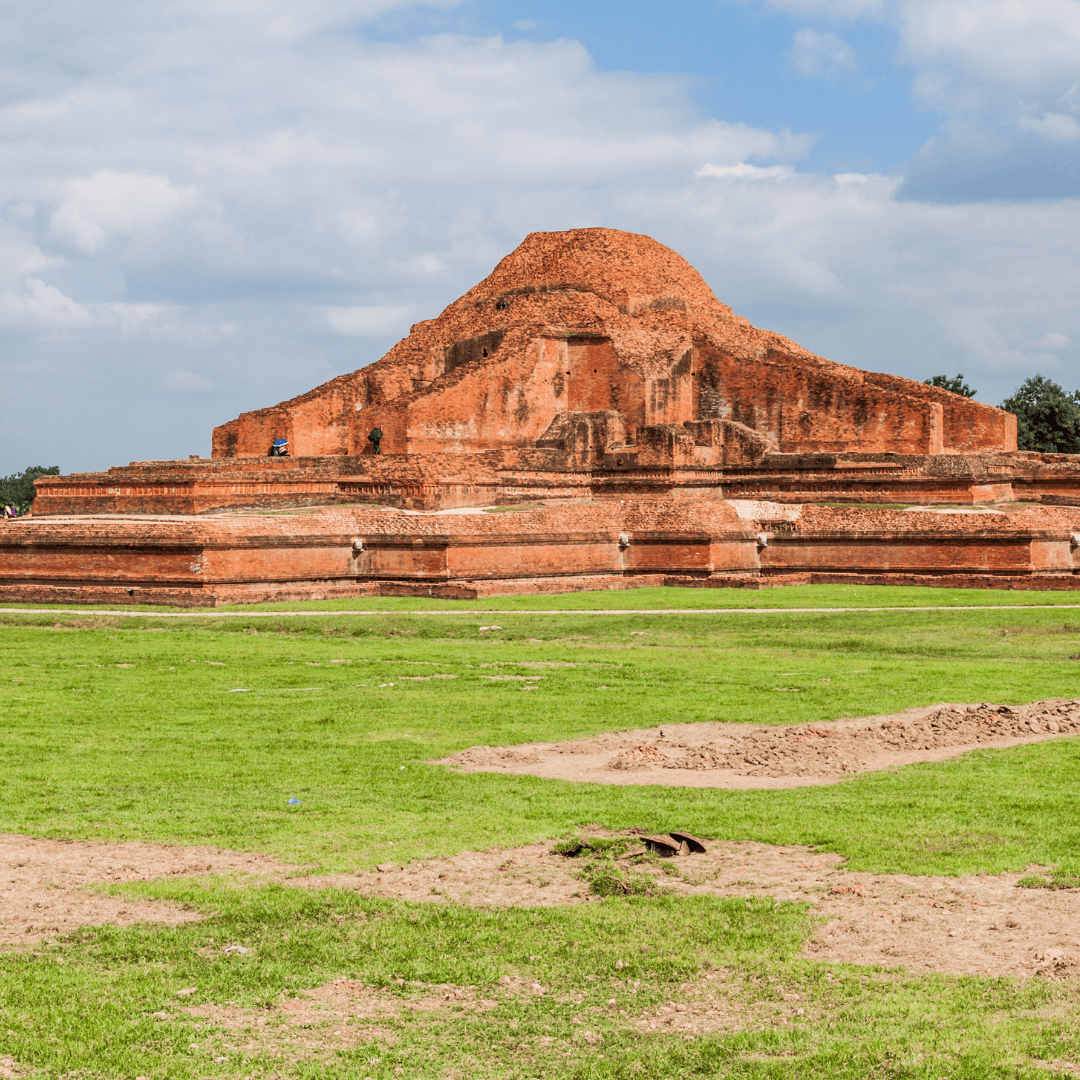
Sravasti Travel Guide for Thai Buddhist Pilgrims | Jetavana Monastery 2026 –Complete Sravasti travel guide for Thai Buddhist pilgrims. Visit Jetavana Monastery where the Buddha spent 24 rainy seasons, Anandabodhi Tree, how to reach from Lumbini, practical tips, and advice from 25+ years of guiding Thai groups
Of all the places connected to the Buddha’s life, Sravasti is where he spent the most time.
While Bodh Gaya is remembered for a single transformative night of enlightenment and Sarnath for a single historic sermon, Sravasti was the Buddha’s home for 24 out of his 45 rainy season retreats — more than half his teaching career. The Jetavana Monastery here was not just a place he visited. It was the place where he lived, taught, meditated, and guided the growing Sangha year after year, decade after decade.
More suttas in the Pali Canon were delivered at Jetavana than at any other location. The stories, teachings, and monastic rules that form the backbone of Theravada Buddhism — the tradition followed in Thailand — were spoken within these walls. When you hear a sutta chanted in a Thai temple on any given morning, there is a strong chance those words were first spoken here, in this quiet monastery in Uttar Pradesh.
For Thai Buddhists, Sravasti is not just another stop on the Buddhist Circuit. It is the place where the daily practice of Buddhism — the routines, the rules, the community life of the Sangha — was shaped and refined over 24 years of the Buddha’s direct guidance.
We have been bringing Thai pilgrimage groups to Sravasti for over 25 years. Though it is a smaller and quieter site than Bodh Gaya or Sarnath, many pilgrims tell us that Sravasti feels the most intimate — the closest they come to the Buddha’s everyday life, not his extraordinary moments, but his ordinary, devoted, daily practice of the Dhamma.
Why Sravasti is Sacred: 24 Years of the Buddha’s Life
Understanding why the Buddha spent so much time here deepens the experience of visiting.
Sravasti (ancient Savatthi) was the capital of the powerful Kosala kingdom, ruled by King Pasenadi, one of the Buddha’s most devoted royal supporters. It was one of the largest and most prosperous cities in ancient India — a centre of trade, culture, and political power.
The Buddha’s connection to Sravasti began with a remarkable act of generosity. A wealthy merchant named Anathapindika (meaning “feeder of the helpless”) met the Buddha and was so moved by his teachings that he decided to build a monastery for the Sangha. He purchased a grove belonging to Prince Jeta by covering the entire ground with gold coins — a story that illustrates both his devotion and the extraordinary value he placed on the Dhamma.
This grove became Jetavana Monastery — the most important monastery of the Buddha’s lifetime. For 24 rainy seasons (roughly equivalent to 24 years of extended stays), the Buddha lived here during the monsoon retreat period, teaching monks, nuns, lay followers, and visitors from across the kingdom.
During those years at Jetavana, the Buddha:
- Delivered hundreds of suttas that form the core of the Pali Canon
- Established and refined many of the Vinaya rules that govern monastic life to this day
- Performed the famous Twin Miracle (Yamaka Patihariya), where he simultaneously produced fire and water from his body to demonstrate the truth of his teachings
- Taught King Pasenadi, Queen Mallika, Anathapindika, Visakha, and many other prominent lay followers
Sravasti is also the site of the story of Angulimala — the feared robber who wore a garland of human fingers and was transformed by a single encounter with the Buddha into a peaceful, enlightened monk. This story of ultimate compassion and the possibility of transformation is one of the most beloved narratives in Thai Buddhism.
Sacred Sites in Sravasti: A Complete Guide
Sravasti’s archaeological sites are divided into two main areas: Saheth (the Jetavana Monastery complex) and Maheth (the ruins of the ancient city of Sravasti). Most pilgrimage groups focus on Saheth, where the monastery ruins are located.
1. Jetavana Monastery (Saheth) — Where the Buddha Lived and Taught
The Jetavana Monastery ruins are the heart of any Sravasti visit. Walking through this archaeological complex, you walk through the place where the Buddha spent more time than anywhere else in his life.
The excavated ruins reveal the foundations of numerous structures — monks’ cells, prayer halls, wells, and walkways — arranged around a central area where the Buddha’s personal dwelling stood. Though the buildings are gone, the foundations tell a clear story of a large, well-organised monastic community.
Key structures within the complex:
Gandhakuti (The Buddha’s Personal Dwelling)
The Gandhakuti is the most sacred spot within Jetavana — the remains of the small building where the Buddha himself lived during his stays at the monastery. The word “Gandhakuti” means “fragrant chamber,” named because devotees would fill it with flowers and incense for the Buddha.
A small shrine marks the location today. This is where most Thai pilgrimage groups conduct their chanting ceremony at Sravasti — offering prayers and flowers at the very spot where the Buddha slept, meditated, and received visitors for 24 rainy seasons. The intimacy of this place is powerful. Unlike the grand scale of the Mahabodhi Temple at Bodh Gaya or the towering Dhamek Stupa at Sarnath, the Gandhakuti is small and humble — a reminder that the Buddha lived simply, even as his following grew into one of the largest spiritual movements in history.
Anandabodhi Tree
Near the Gandhakuti stands the Anandabodhi Tree — a Bodhi tree said to have been planted during the Buddha’s own lifetime by his attendant Ananda. According to tradition, Anathapindika wanted something for devotees to venerate when the Buddha was away on his travels. Ananda planted a sapling from the original Bodhi Tree at Bodh Gaya, and the Buddha himself consecrated it.
If this tradition is accurate, the Anandabodhi Tree at Sravasti is one of the oldest sacred trees in the Buddhist world — planted with the Buddha’s blessing, in the Buddha’s presence, at the monastery where he spent 24 years.
Some Thai pilgrimage groups visit the tree and spend a few moments in meditation beneath its branches. While it is a quieter, less-visited spot than the Gandhakuti, pilgrims who take the time to sit here often describe a deep sense of peace and connection.
Kosambakuti
The remains of another important building within the Jetavana complex. This structure is associated with several events in the Buddha’s life at the monastery.
Ancient Wells and Walkways
Throughout the complex, you can see the remains of wells that supplied water to the monastic community and stone walkways that monks used for walking meditation — a practice (cankama) that continues in Thai forest monasteries to this day.
2. Angulimala Stupa
Near the Jetavana complex, a stupa marks the story of Angulimala — the notorious robber who terrorised the region, wearing a garland of his victims’ fingers as a necklace. When the Buddha encountered Angulimala on the road, instead of fleeing, he walked calmly towards him. Through a simple but profound exchange, the Buddha broke through Angulimala’s violence and transformed him into a monk who later attained enlightenment.
This story is deeply meaningful in Thai Buddhism — it demonstrates that no one is beyond redemption, that compassion is more powerful than violence, and that the Dhamma can transform even the most troubled heart. The stupa marking this event is a contemplative stop worth a few minutes of reflection.
3. Maheth — The Ancient City of Sravasti
Maheth is the archaeological site of the ancient city of Sravasti itself, located about a kilometre from the Jetavana complex. The ruins include:
- Sobhanath Temple area — Ruins of ancient structures within the old city
- City walls and gates — The remains of the fortifications that once protected one of ancient India’s greatest cities
- Pakki Kuti — A large ruined stupa within the city area
Maheth gives you a sense of the urban context in which the Buddha taught. Jetavana was not in a remote forest — it was on the outskirts of a thriving, powerful city. The Buddha’s audience included not just monks but merchants, kings, soldiers, and ordinary families going about their daily lives.
Most Thai pilgrimage groups focus their limited time on the Jetavana complex (Saheth) rather than the city ruins (Maheth), which is the right priority if you have only about an hour at the site.
How to Reach Sravasti
Sravasti is located in the Shravasti district of Uttar Pradesh, in a relatively rural area compared to the larger cities on the Buddhist Circuit.
By Road from the Buddhist Circuit
For Thai pilgrimage groups, Sravasti is typically reached by road from Lumbini (Nepal), after crossing back into India via the Sunauli-Belahiya border.
| From | Distance | Driving Time |
|---|---|---|
| Lumbini (Nepal, via Sunauli border) | ~300 km | ~6 hours (plus border crossing time) |
| Lucknow | ~175 km | 4 hours |
| Varanasi | ~310 km | 7 hours |
| Kushinagar | ~250 km | 5-6 hours |
| Gorakhpur | ~180 km | 4 hours |
The drive from Lumbini to Sravasti is approximately 6 hours (not including the border crossing time). This is a long travel day, as your group will also need to cross back from Nepal into India. Our AC buses make the journey as comfortable as possible with regular stops along the way.
By Train and Air
Nearest railway station: Balrampur (about 17 km from Sravasti) — a small station with limited connectivity.
Nearest major railway station: Gonda Junction (about 50 km) — better connected to Lucknow and other cities.
Nearest airport: Lucknow (Chaudhary Charan Singh International Airport) — approximately 175 km from Sravasti.
In practice, virtually all Buddhist Circuit pilgrims reach Sravasti by road as part of the larger tour route.
For the complete day-by-day route, read our Complete Buddhist Pilgrimage Tour from Thailand to India (2026 Guide).
Where to Stay in Sravasti
Sravasti is a small pilgrimage town — similar in character to Kushinagar. Accommodation options are limited but adequate for an overnight stay.
What to expect:
- Hotels catering to pilgrimage groups offer clean rooms with attached bathrooms, basic amenities, and vegetarian meal service
- Room quality is simple and functional — do not expect the same standards as hotels in larger cities
- The best available properties are located reasonably close to the Jetavana complex
Booking advice:
- Book in advance through your tour operator during peak season (November to February)
- Confirm that your hotel provides hot water (essential in winter), vegetarian meals, and clean drinking water
- Most Thai pilgrimage groups spend 1 night in Sravasti, which is sufficient to visit the sacred sites and rest before the drive to Varanasi the next day
Best Time to Visit Sravasti
Sravasti follows the same seasonal pattern as the rest of the Uttar Pradesh plains on the Buddhist Circuit.
| Season | Months | Temperature | Recommendation |
|---|---|---|---|
| Winter (Best) | November – February | 8°C – 25°C | Ideal for comfortable site visits |
| Spring | March – April | 22°C – 38°C | Acceptable, increasingly warm |
| Summer | May – June | 35°C – 45°C | Extreme heat — not recommended |
| Monsoon | July – September | 28°C – 35°C | Heavy rain — avoid |
For a detailed month-by-month seasonal guide, read our Best Time to Visit Bodh Gaya and the Buddhist Circuit from Thailand.
Practical Tips for Thai Pilgrims in Sravasti
At the Jetavana Complex
- Wear comfortable walking shoes — the ruins are on uneven ground with brick foundations and gravel paths
- Carry water — there are limited vendors at the site
- Sun protection — the ruins area has little shade. Wear a hat and sunscreen, especially from March onwards
- A guide is essential — without explanation, the ruins look like walls and foundations. With a knowledgeable guide, each structure comes alive as the Buddha’s dwelling, monks’ quarters, meditation paths, and assembly halls. Make sure your tour includes a guide for this site
- Photography is allowed throughout the ruins
- 1 hour is enough for most Thai pilgrimage groups to see the key sites (Gandhakuti, Anandabodhi Tree, main structures) and hold a chanting ceremony. Groups wanting a more detailed exploration or time at the Angulimala Stupa and Maheth should allow 1.5 to 2 hours
General Tips
- ATMs are very limited in Sravasti. Carry enough cash from your previous stop for personal expenses, offerings, and tips
- Carry snacks — restaurant options are very limited in town. Your hotel meals will be your main food source
- Toilet facilities at the site are basic. Use your hotel restroom before departing for the site visit
- The town is very quiet — even quieter than Kushinagar. There is virtually no shopping or evening activities. This is a place for spiritual reflection, not sightseeing entertainment
- Mobile signal can be weak in some areas of Sravasti. Let family in Thailand know in advance that you may be briefly out of contact
Clothing
- Dress modestly at the sacred sites — covered shoulders and knees
- In winter (November to February), mornings can be cold (8-12°C). Carry a warm jacket
- Shoes can be kept on when walking through the open-air ruins, unlike enclosed temples where you must remove footwear
How Sravasti Fits into the Buddhist Circuit
On a typical 8-day Buddhist Circuit from Thailand, Sravasti is visited on Day 7 — after crossing back from Nepal (Lumbini) and before the final destination of Varanasi/Sarnath:
…Lumbini (Birth) → Border crossing → Sravasti (24 rainy seasons) → Varanasi/Sarnath (First sermon) → Departure
This placement is significant in the pilgrimage narrative. By the time you reach Sravasti, you have already visited the sites of the Buddha’s enlightenment (Bodh Gaya), his passing (Kushinagar), and his birth (Lumbini). At Sravasti, you encounter something different — not a dramatic single event, but the quiet, sustained, daily work of teaching the Dhamma over 24 years.
In many ways, Sravasti represents what Buddhism is really about: not the extraordinary moments, but the patient, compassionate, day-after-day practice of wisdom and kindness. It is a fitting near-final stop on the pilgrimage before you arrive at Sarnath — where the teaching journey began — and bring the entire circuit full circle.
Frequently Asked Questions
Why did the Buddha spend so much time at Sravasti? Sravasti was the capital of the Kosala kingdom — one of the most powerful and prosperous states in ancient India. The Buddha had strong support here from King Pasenadi and wealthy lay followers like Anathapindika and Visakha. The Jetavana Monastery, donated by Anathapindika, provided an ideal base for the Sangha during the annual monsoon retreat. Over 24 rainy seasons, the Buddha used this time for intensive teaching, community building, and establishing the rules of monastic life.
What suttas were taught at Sravasti? More suttas in the Pali Canon were delivered at Jetavana than at any other location. Many foundational Theravada teachings were spoken here, including discourses on mindfulness, loving-kindness, ethics, and monastic discipline. When Thai monks chant in temples, many of those verses trace back to words first spoken at Sravasti.
How much time do I need at Sravasti? About 1 hour is sufficient for most Thai pilgrimage groups to visit the Jetavana complex, see the Gandhakuti and Anandabodhi Tree, and hold a chanting ceremony. Groups wanting a more thorough visit including the Angulimala Stupa and Maheth city ruins should allow 1.5 to 2 hours.
Is Sravasti worth visiting, or can I skip it? Sravasti is absolutely worth visiting. While it is smaller and less dramatic than Bodh Gaya or Sarnath, it offers something the other sites do not — a sense of the Buddha’s daily life and long-term teaching practice. For Thai Theravada Buddhists especially, Sravasti is deeply significant because so much of the Pali Canon originated here. We strongly recommend including it in your Buddhist Circuit itinerary.
Is there accommodation available in Sravasti? Yes. Hotels are basic but adequate — similar to Kushinagar. Clean rooms, vegetarian meals, and basic amenities are available. Book in advance during peak season through your tour operator.
How do I get from Sravasti to Varanasi? The drive from Sravasti to Varanasi is approximately 300 km and takes about 6-7 hours by road. On our 8-day Buddhist Circuit, this is the final travel day — groups depart Sravasti in the morning, arrive in Varanasi by afternoon, visit Sarnath, and then proceed to the airport or continue with an evening Ganga Aarti experience.
Can my group hold a chanting ceremony at Jetavana? Yes. Thai groups regularly chant at the Gandhakuti — the Buddha’s personal dwelling within the Jetavana complex. Your tour operator can coordinate the timing. Chanting at the place where the Buddha lived and taught for 24 years is one of the most quietly powerful moments on the Buddhist Circuit.
What is the Anandabodhi Tree? The Anandabodhi Tree is a Bodhi tree within the Jetavana complex said to have been planted during the Buddha’s lifetime by his attendant Ananda, using a sapling from the original Bodhi Tree at Bodh Gaya. If this tradition is accurate, it is one of the oldest sacred trees in the Buddhist world. Some pilgrimage groups meditate briefly under this tree.
Who was Angulimala? Angulimala was a notorious robber in the Sravasti region who terrorised the population and wore a garland made from his victims’ fingers. When the Buddha encountered him, instead of fleeing, the Buddha walked calmly towards him. Through a brief but profound exchange, Angulimala was completely transformed — he renounced violence, became a monk, and eventually attained enlightenment. The story, deeply popular in Thai Buddhism, demonstrates the transformative power of compassion and the Dhamma.
Plan Your Sravasti Pilgrimage
Prime Value Tours includes Sravasti as a key destination on all our Buddhist Circuit tours from Thailand. We provide experienced guides who bring the Jetavana ruins to life, comfortable AC transport from Lumbini, overnight hotel arrangements, vegetarian meals, and coordination of chanting ceremonies at the sacred sites.
Contact us to start planning:
- Email: info@primevaluetours.com
- Line: line.me/ti/p/6QtZRvYpeP
- WhatsApp: +91-9794122849
- Website: primevaluetours.com