
Sanchi Stupa Guide: 7 Sacred Secrets Every Pilgrim Must Know
Discover 7 sacred secrets of Sanchi Stupa :India’s greatest Buddhist, monument. History, carvings, timings and travel tips for Thai pilgrims.
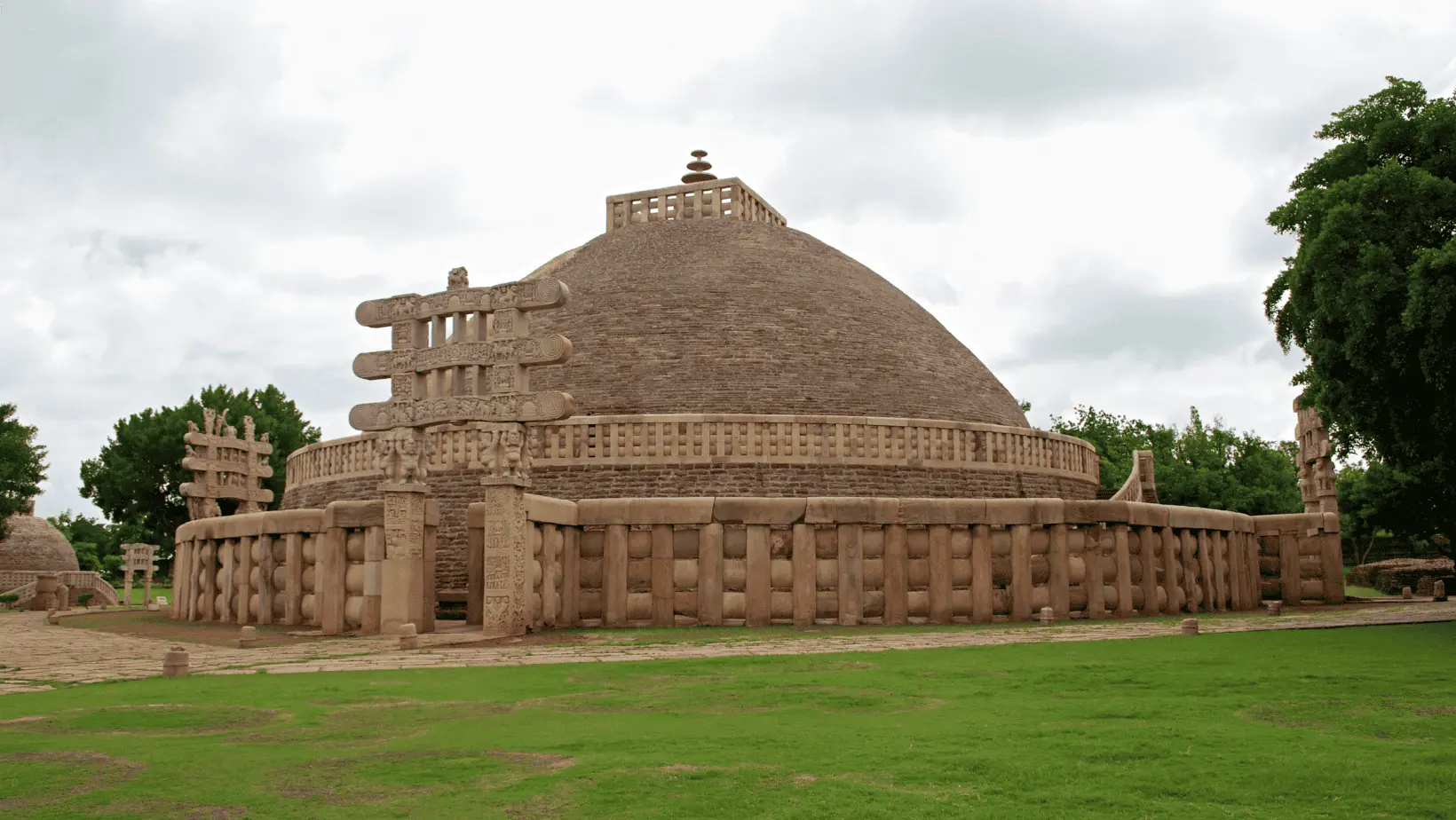
Imagine standing before a dome of honey-coloured sandstone that was already 2,000 years old when your great-grandparents were born. No photograph can prepare you for the moment you first see the Great Stupa of Sanchi rising from its quiet hilltop in Madhya Pradesh, encircled by carved gateways so detailed you could spend an entire day reading their stories.
Sanchi Stupa is one of the oldest surviving stone structures in India. For Buddhist pilgrims, it carries a spiritual weight that few places on earth can match. Emperor Ashoka built it in the 3rd century BCE. Missionaries carried the Dharma from this very hilltop to Sri Lanka, to Myanmar, and eventually to Thailand. In a very real sense, Sanchi is part of why Buddhism is alive in your country today.
At Prime Value Tours, we have been bringing Thai Buddhist groups to India’s sacred sites since 1999. We are a Ministry of Tourism, Government of India — Verified Tour Operator and a proud IATO Member — Indian Association of Tour Operators. Sanchi is one of those places that surprises even the most experienced pilgrims. We have watched people arrive expecting ruins and leave with tears in their eyes. So before you pack your bags, here are the 7 sacred secrets of Sanchi Stupa that every pilgrim must know.
Sanchi Stupa and Its Place in Buddhist History
Sanchi Stupa sits on a gentle hill about 46 kilometres from Bhopal, the capital of Madhya Pradesh. Emperor Ashoka ordered the original construction around 250 BCE, roughly two and a half centuries after the Buddha attained Mahaparinirvana. Ashoka had a personal connection to this place: his wife Devi was from the nearby town of Vidisha, just 10 kilometres away.
What started as a modest brick dome expanded over three centuries into the Great Stupa you see today: a massive sandstone structure standing 54 feet high and 120 feet across, encircled by an ornate railing and 4 magnificent carved gateways. In 1989, UNESCO declared the Sanchi monuments a World Heritage Site, recognising what Buddhist pilgrims from Thailand to Japan had known for centuries.
For groups following our Buddhist Pilgrimage Guide for India and Nepal, Sanchi makes a wonderful extension from the main circuit, especially when combined with a stay in Bhopal.
The 7 Sacred Secrets of Sanchi Stupa
1. Four Ornate Toranas: The Gateways That Tell the Buddha’s Story
The 4 gateways of Sanchi, known as toranas, are among the finest examples of ancient Buddhist art anywhere in the world. Each gateway stands about 35 feet tall and is carved from top to bottom with scenes from the Jataka tales, royal processions, sacred trees, lotus motifs, and animals with deep spiritual symbolism.
Here’s what most visitors miss: the carvings are designed to be read like a book. You begin at the bottom and work upward. The craftsmen who chiselled these scenes in the 1st century BCE were telling the complete story of the Dharma for pilgrims who could not yet read.
The south gateway is the oldest and the most celebrated. It shows the Wheel of Dharma, the first sermon at Sarnath, and the great departure from Kapilavastu. Standing before it at dawn, when the light is soft and golden, is one of those moments a pilgrim carries for the rest of their life.
2. The Sacred Relics Locked Inside the Great Dome
The Great Stupa was never built simply as a monument. Inside the solid stone dome, sealed away from the world, lie sacred relics. Ashoka collected relics of the Buddha from earlier stupas and distributed them to sites across his empire. Sanchi received a precious portion.
Stupa 3, the smaller stupa on the same hilltop, contains an even more personal treasure: the relics of Sariputra and Maudgalyayana, the Buddha’s two most beloved chief disc😎👍es. These relics were discovered in 1851, temporarily moved to London, and finally returned to Sanchi in 1953.
For a Thai Buddhist pilgrim, standing near Stupa 3 with this knowledge changes everything. You are not visiting an archaeological site. You are in the presence of the sangha itself.
3. Buddha Never Appears in Human Form Here
This is perhaps the most fascinating artistic secret of Sanchi. All the carvings at the Great Stupa predate the Greek-influenced Gandhara school of art, which first depicted the Buddha in human form. At Sanchi, the sculptors represented the Buddha only through symbols: a footprint, a wheel, an empty throne, a sacred Bodhi tree, a parasol.
You have to look carefully. Every scene showing a royal procession or a bowing crowd is actually a scene from the Buddha’s life, but the Awakened One is indicated only by a symbol at the center of the action. Walking through Sanchi and learning to recognise these symbols is itself a meditation.
4. Emperor Ashoka’s Personal Bond with Sanchi
Most people know Ashoka as the emperor who converted to Buddhism after the horror of the Kalinga War. But Sanchi is different. His connection here was personal before it was imperial. His first wife Devi came from Vidisha, close to this very hill. Their son Mahinda, who carried Buddhism to Sri Lanka, is believed to have bid farewell to his father at Sanchi before setting sail.
When you stand at the base of Ashoka’s pillar near the south gateway, you are standing where one of history’s most powerful turning points took place: a father, an emperor, a son, and the beginning of international Buddhism — all on this quiet hilltop.
5. Three Stupas, Not One
Most tourists photograph the Great Stupa and move on. But the Sanchi complex holds 3 main stupas and several smaller structures scattered across the hilltop. Each rewards a closer look.
Stupa 2 sits on a lower terrace, slightly away from the main cluster. It is older in certain architectural details than the Great Stupa and contains relics of senior monks from the 3rd century BCE. The carvings on its railing are among the earliest examples of Buddhist decorative art in stone.
In our experience of organizing tours to Sanchi, pilgrims who spend 3 to 4 hours on the hill rather than the usual 90 minutes always leave with a completely different understanding of the site. Give this place time. It rewards patience.
6. The Ashokan Pillar You Can Still See Today
Near the south gateway stands the broken shaft of one of Ashoka’s famous polished stone pillars. The lion capital that once topped it is now displayed in the Sanchi Archaeological Museum. This pillar is the twin of the celebrated four-lion capital at Sarnath, which became the national emblem of independent India.
The inscriptions on the pillar warn against schisms in the Buddhist community, a direct edict from Ashoka to his monks. Reading a translation of those words while standing beside the actual stone column gives you a chill that no photograph can replicate. The man who carved that order stood on this ground.
7. The Archaeological Museum at the Base of the Hill
Many pilgrims walk past the small Archaeological Museum at the Sanchi entrance without going inside. This is a mistake. The museum holds some of the finest Buddhist sculptures in India, including the original lion capital from Ashoka’s pillar, a delicate Yaksha torso, and early symbolic representations of the Buddha from the 1st century BCE.
Plan 30 to 40 minutes in the museum before climbing the hill. The context it gives transforms the experience of the stupa complex completely. You will see the carvings differently once you understand their age and their artistic lineage.
How to Combine Sanchi Stupa with the Buddhist Circuit
Sanchi is located in Madhya Pradesh, placing it slightly outside the main Buddhist circuit of Bihar and Uttar Pradesh. But with good planning, it fits beautifully into a broader India pilgrimage itinerary.
The most natural approach is to fly into Bhopal, spend a full day at Sanchi, and then continue to Varanasi to begin the main pilgrimage circuit. Groups returning from the circuit can also add Sanchi as a cultural stop before their flight home from Bhopal or Delhi.
If your group loves Buddhist heritage and art, our India Cave Heritage Tour covering Ajanta, Ellora and Elephanta pairs perfectly with Sanchi. Both destinations represent India’s most extraordinary Buddhist artistic legacy, separated by about 600 kilometres.
Talk to us at Plan Your Trip with Prime Value Tours and we will design a custom route that fits your group’s time, budget, and spiritual priorities. We have been doing this since 1999, and we take pride in creating journeys that feel like a true pilgrimage rather than a tourist checklist.
Practical Tips: What to Know Before You Visit Sanchi Stupa
Getting there: Sanchi has its own small railway station just 1 km from the main entrance. Bhopal airport is 46 km away (about 1 hour by road). Vidisha town, 10 km from Sanchi, has more frequent train connections from major cities.
Opening hours: The Sanchi Stupa complex is open every day from sunrise to sunset. The Archaeological Museum is open from 9:00 am to 5:00 pm and closed on Fridays.
Entry fees: Indian nationals pay a nominal archaeological survey fee. Foreign visitors pay a slightly higher rate. The museum has a separate entry charge.
Best time to visit: October to March is ideal. The weather in Madhya Pradesh is pleasant and the morning light on the sandstone gateways is beautiful for photography. Avoid May and June, when temperatures can exceed 40 degrees Celsius.
Dress code: There is no strict dress code at Sanchi, but modest clothing is a mark of respect. Many Thai pilgrims choose to wear white, which is appropriate and welcome.
Photography: Photography of the stupas, gateways, and carvings is permitted throughout the complex. Certain sections of the museum prohibit cameras.
Time needed: Plan at least 3 to 4 hours on the hill plus 30 to 40 minutes in the museum. A half-day visit is comfortable. A full day allows for quiet walking, meditation, and deeper study of the carvings.
| Plan Your Trip with Prime Value Tours Ministry of Tourism Approved | IATO Member | Est. 1999 We have been organizing pilgrimage and cultural tours across India since 1999, with a special focus on Buddhist circuit tours for Thai and Southeast Asian groups. Whether you want to add Sanchi to your Buddhist circuit, create a standalone Madhya Pradesh heritage tour, or combine it with Ajanta and Ellora, we are here to design the perfect journey for your group. Contact us today: Phone : +91-542-2500113 WhatsApp : +91-9794122849 Email : info@primevaluetours.com Website : www.primevaluetours.com LINE : https://line.me/ti/p/6QtZRvYpeP
We speak English and are happy to assist Thai-speaking groups. |
The Sanchi Stupa Is Waiting for You
Sanchi Stupa has stood on its quiet hilltop for more than 2,200 years, watching dynasties rise and fall, surviving monsoons and centuries of neglect, and still standing today: patient, magnificent, and alive with meaning.
When you finally stand before the south torana and look up at those carvings, you will understand why Ashoka sent his son from this very hill to carry the Dharma across the ocean. Sanchi does not shout. It speaks quietly, the way all the best sacred places do. And if you listen, it will tell you everything.
Come and see it for yourself. We will take care of everything else.
Frequently Asked Questions About Sanchi Stupa
Q1. Is Sanchi Stupa a UNESCO World Heritage Site?
Yes. UNESCO inscribed Sanchi as a World Heritage Site in 1989, recognising it as one of the finest examples of early Buddhist art and architecture in the world. The inscription covers the Great Stupa, the smaller stupas, the ancient temples, and the monastic complex across the hilltop.
Q2. Can Sanchi Stupa be included in a Buddhist circuit tour?
Yes. Sanchi can be added to a Buddhist circuit tour as an extension, especially for groups travelling through Central India or flying in and out of Bhopal. Prime Value Tours specialises in designing custom itineraries that include Sanchi alongside the main sacred sites in Bihar and Uttar Pradesh.
Q3. What sacred relics are inside Sanchi Stupa?
The Great Stupa is believed to contain relics of the Lord Buddha, placed there by Emperor Ashoka. Stupa 3 on the same hill contains the relics of Sariputra and Maudgalyayana, the Buddha’s two chief disc😎👍es. These were discovered in 1851, temporarily held in London, and returned to Sanchi in 1953.
Q4. How many gateways does the Great Stupa at Sanchi have?
The Great Stupa has 4 gateways, or toranas, facing north, south, east, and west. Each gateway is covered in intricate carvings depicting scenes from the Buddha’s past lives (Jataka tales), his life told through symbols, royal processions, and sacred Buddhist imagery. The south gateway is the oldest and considered the most artistically significant.
Q5. How far is Sanchi Stupa from Bhopal, and how do I reach it?
Sanchi is approximately 46 km from Bhopal city. By road it takes about one hour. Sanchi also has its own small railway station just 1 km from the stupa complex, served by trains from Bhopal and Vidisha. Groups travelling with Prime Value Tours will have private coach transfers fully arranged from Bhopal airport or railway station.