
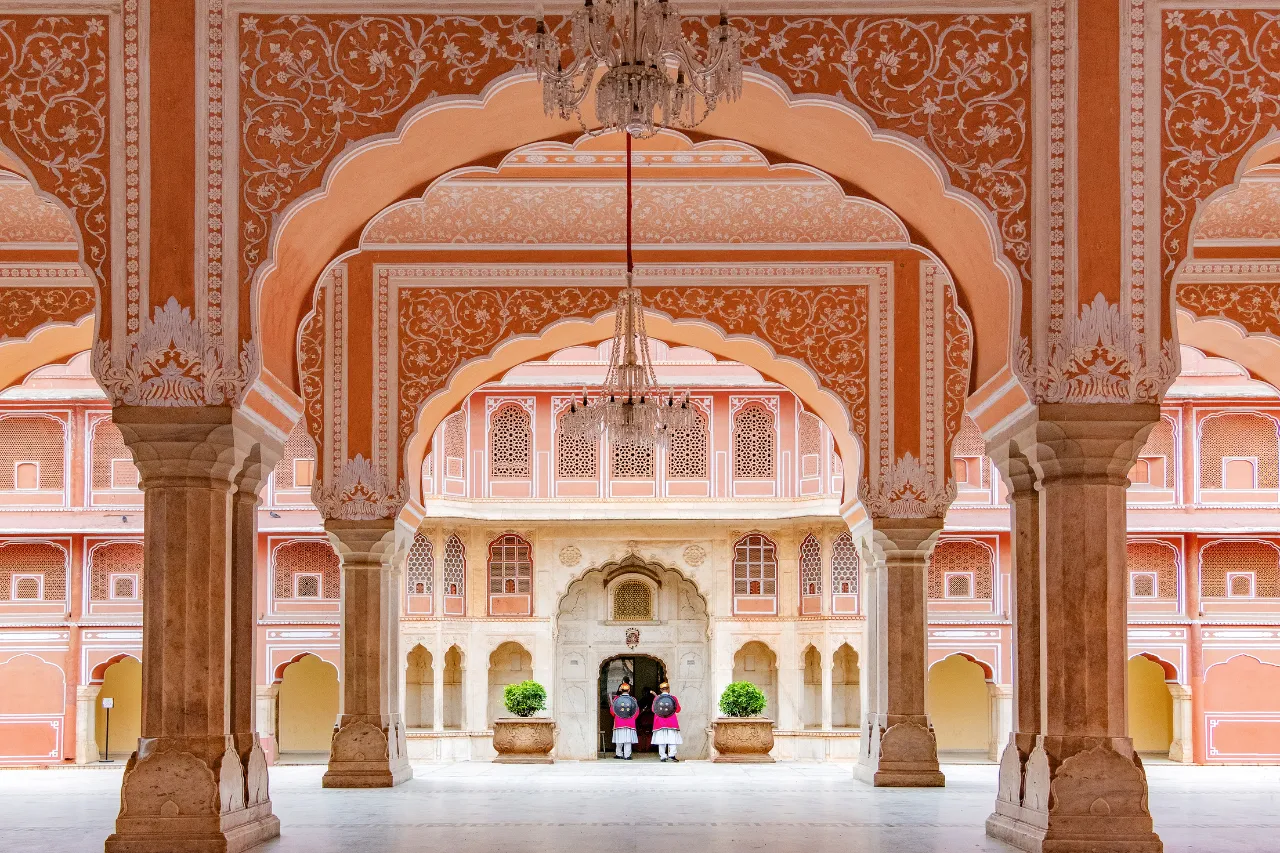
Customize Buddhist Circuit Tour India | Prime Value Tours
Discover the best Buddhist Circuit Tour with Golden Triangle with these 7 smart tips. Explore Bodh Gaya, Sarnath, and Agra with a perfect travel plan.
Buddhist Circuit Tour with Golden Triangle is one of the most enriching travel experiences in India, combining spiritual heritage with iconic destinations like Delhi, Agra, and Jaipur. In this guide, we’ll explore 7 smart ways to plan your journey efficiently.
Add Varanasi, Agra & Jaipur to Your Pilgrimage for the Ultimate India Experience
Imagine this: your Buddhist pilgrimage group has just spent 12 sacred days tracing the footsteps of Lord Buddha across India and Nepal. Bodh Gaya has left everyone deeply moved. Lumbini brought tears. And then, on the final day, someone asks, “Can we also see the Taj Mahal?”
The answer is yes. In fact, with the right plan, you can combine the complete Buddhist circuit with India’s most iconic cultural destinations and turn your pilgrimage into the journey of a lifetime.
At Prime Value Tours, we have been designing customized Buddhist circuit tours for Thai and Southeast Asian groups since 1999. Over the years, one question comes up again and again: “How do we customize Buddhist circuit tour India to include Varanasi, Agra, or Jaipur?” This guide answers that question fully, and gives you a brand-new 16-day route that covers everything.
Why Choose a Buddhist Circuit Tour with Golden Triangle?
The standard Buddhist circuit covers the four main holy sites: Lumbini (birth), Bodh Gaya (enlightenment), Sarnath (first sermon), and Kushinagar (Mahaparinirvana). Most organized tours add Rajgir, Nalanda, Vaishali, and Sravasti for a fuller experience.
But here’s what many travelers from Thailand, Myanmar, Sri Lanka, and Cambodia realize: India has so much more. Varanasi is not just a side trip; it is the spiritual heart of the subcontinent. Agra holds one of the Seven Wonders of the World. And Jaipur, the Pink City of Rajasthan, offers royal heritage unlike anything else in Asia.
The good news is, adding these destinations does not compromise the spiritual quality of your pilgrimage. Done correctly, it deepens it.
We are a proud
We are a proud Ministry of Tourism, Government of India — Verified Tour Operator and a certified
IATO Member — Indian Association of Tour Operators, giving you the assurance of quality and reliability on every tour.
Way 1: Start with Jaipur — The Golden Triangle Opening
Most Buddhist pilgrims fly into Delhi. Instead of heading straight east toward the circuit, start by going southwest to Jaipur first. This small change gives your group a royal cultural introduction before the spiritual journey begins.
What to See in Jaipur (2 nights recommended)
- Amber Fort: A stunning hilltop fortress with Mughal-Rajput architecture
- Hawa Mahal: The iconic “Palace of Winds” — a must-photograph landmark
- City Palace and Jantar Mantar: Royal museum and ancient astronomical observatory
- Local bazaars: Gems, textiles, handicrafts — perfect for group shopping
In our experience, Thai pilgrims love Jaipur. The vibrant colors, the elephant rides, and the street food markets create memories that stay long after the pilgrimage ends. Two nights here is ideal before the journey continues to Agra.
Way 2: Add Agra — See the Taj Mahal on the Way to Varanasi
After Jaipur, the route naturally passes through Agra on the way toward Varanasi. This is where the Taj Mahal waits, and no group traveling through India should miss it.
What to See in Agra (1-2 nights recommended)
- Taj Mahal: The marble monument of love, built in 1632 by Emperor Shah Jahan — a UNESCO World Heritage Site
- Agra Fort: A red sandstone marvel also listed as a UNESCO site
- Fatehpur Sikri: An abandoned Mughal capital just 40 km from Agra, superb for photography
Here’s the thing: the Taj Mahal is one of the most photographed buildings on earth, yet nothing prepares you for seeing it in person. For Thai Buddhist groups, this creates a beautiful contrast between Mughal Islamic heritage and the Buddhist heritage that follows on the circuit.
One important tip: the Taj Mahal is closed on Fridays. Always plan your Agra visit for Thursday or the weekend to avoid disappointment.
Way 3: Make Varanasi a Full 2-Night Experience
Varanasi is already on every Buddhist circuit because it sits just 10 km from Sarnath, where Lord Buddha delivered his first sermon after attaining enlightenment. But most standard tours give Varanasi only half a day. That is a mistake.
What to Do with 2 Nights in Varanasi
- Evening Ganga Aarti at Dashashwamedh Ghat: The most powerful spiritual ceremony in India
- Sunrise boat ride on the Ganges: Watch the holy city wake up — unforgettable
- Sarnath day visit: Dhamekh Stupa, Buddha’s first sermon site, Sarnath Museum, Thai Temple
- Old city walk: Narrow lanes, ancient temples, silk weaving workshops
Varanasi is one of the oldest living cities in the world. As Mark Twain noted, the city feels older than history itself. For Buddhist pilgrims, Varanasi carries dual significance: as the Hindu spiritual capital of India AND as the gateway to Sarnath, where the Wheel of Dharma first turned.
Two nights here allows proper rest between the cultural Golden Triangle segment and the deeper spiritual sites ahead.
Way 4: Give Bodh Gaya the Time It Deserves (Minimum 2 Nights)
After Varanasi and Sarnath, the route moves to Bodh Gaya: the site of Lord Buddha’s enlightenment under the sacred Bodhi Tree. This is the most important stop on any Buddhist pilgrimage in India, and it must never be rushed.
Why Bodh Gaya Needs 2 Full Nights
- Mahabodhi Temple Complex: A UNESCO World Heritage Site — the exact spot of enlightenment
- Sacred Bodhi Tree: A direct descendant of the original tree under which Buddha meditated
- Muchalinda Lake and meditation gardens: Deep, peaceful spaces for quiet reflection
- Thai Temple (Wat Thai Bodhgaya): A beautiful Thai-style temple loved by Thai pilgrims
- Mahakala Caves: Where Buddha practiced austere asceticism for 6 years before the Middle Way
In our 25 years of organizing Buddhist circuit tours for Thai groups, Bodh Gaya is always the emotional climax of the journey. Pilgrims who rush through it in one afternoon often regret it. We always recommend at least 2 nights here, and many groups request 3.
Way 5: Include Rajgir and Nalanda for Deeper History
Just a short drive from Bodh Gaya, Rajgir and Nalanda add immense depth to the Buddhist circuit. These are not optional extras. They are integral to understanding how Buddhism spread across Asia.
- Rajgir: Vulture’s Peak (Griddhakuta Hill) where the Buddha delivered many important teachings, natural hot springs, Vishwa Shanti Stupa
- Nalanda: Ruins of the world’s first residential university (5th century BCE), which once housed 10,000 monks and students from across Asia
For Thai pilgrims, Nalanda holds special significance because Southeast Asian Buddhism was shaped by the scholars who studied and taught here. Walking through the ancient courtyards and meditation halls of Nalanda is a profound experience that cannot be replicated anywhere else in the world.
Way 6: Follow the Complete Northern Arc — Vaishali to Sravasti
Many tour operators skip Vaishali and Sravasti to save time. We never do.
- Vaishali: Where the Buddha first ordained nuns, breaking social barriers 2,500 years ago. The Ananda Stupa and Ashoka’s lion pillar are here. Also the site of the last sermon before Mahaparinirvana.
- Kushinagar: The sacred site where the Buddha attained Mahaparinirvana. The Mahaparinirvana Temple houses a 6.1-meter reclining Buddha statue of extraordinary beauty.
- Lumbini (Nepal): The birthplace of Siddhartha Gautama. The Maya Devi Temple, Ashoka Pillar, and the Sacred Garden make this one of the most moving stops on the entire circuit.
- Sravasti: Where the Buddha spent 25 rainy seasons and performed the famous Twin Miracle. Jetavana Monastery here is peaceful and deeply atmospheric.
This full northern arc, combining Vaishali, Kushinagar, Lumbini, and Sravasti, completes the life story of Lord Buddha from birth to final liberation. Skipping any one of these sites leaves the pilgrimage incomplete.
Way 7: Plan a Logical Exit via Lucknow — Not a Rush Back to Delhi
After Sravasti, most groups face a long journey back to Delhi. A smarter approach is to exit through Lucknow instead. Lucknow is just 2-3 hours from Sravasti, has excellent flight connections to Delhi and major international hubs, and is a fascinating city in its own right.
- Bara Imambara: A stunning 18th-century Nawabi monument with a famous labyrinthine bhulbhulaiya (maze)
- Chota Imambara: Richly decorated with crystal chandeliers and gold-plated fixtures
- Lucknow street food: Galouti kebabs, Tunday kababs, Lucknawi biryani — a farewell feast
Ending the tour in Lucknow allows a relaxed final night with cultural sightseeing, excellent dining, and an early morning flight the next day.
The Grand Buddhist Heritage Circuit: 16-Day Complete Itinerary
Delhi (IN) → Jaipur → Agra → Varanasi/Sarnath → Bodh Gaya → Rajgir/Nalanda → Vaishali/Patna → Kushinagar → Lumbini (NP) → Sravasti → Lucknow → Delhi (OUT)
| Day | Destination | Key Highlights |
| Day 1 | Delhi (Arrival) | Airport welcome, hotel check-in, briefing on pilgrimage journey |
| Day 2 | Jaipur | Drive Delhi to Jaipur (5 hrs): Amber Fort, Hawa Mahal, City Palace, Jantar Mantar |
| Day 3 | Jaipur | Nahargarh Fort, local bazaars, Birla Temple, Pink City evening walk |
| Day 4 | Agra | Drive Jaipur to Agra (4 hrs): Taj Mahal, Agra Fort, Fatehpur Sikri en route |
| Day 5 | Varanasi | Drive/train Agra to Varanasi (7 hrs): Ganga Aarti at Dashashwamedh Ghat |
| Day 6 | Varanasi / Sarnath | Sunrise boat ride on Ganges, Sarnath: Dhamekh Stupa, Buddha’s first sermon site |
| Day 7 | Bodh Gaya | Drive Varanasi to Bodh Gaya (6 hrs): Mahabodhi Temple, Bodhi Tree |
| Day 8 | Bodh Gaya | Bodh Gaya deep: Mahakala Caves, Muchalinda Lake, Thai Temple, meditation |
| Day 9 | Rajgir / Nalanda | Rajgir: Vulture’s Peak, Hot Springs, Nalanda ancient university ruins |
| Day 10 | Vaishali / Patna | Vaishali: Ananda Stupa, Ashoka Pillar, Buddha Relic Stupa, drive to Patna |
| Day 11 | Kushinagar | Drive to Kushinagar: Mahaparinirvana Temple, Ramabhar Stupa |
| Day 12 | Lumbini (Nepal) | Border crossing, Maya Devi Temple, Sacred Garden, Ashoka Pillar |
| Day 13 | Lumbini | World Peace Pagoda, Thai Monastery, Kapilavastu day trip |
| Day 14 | Sravasti | Drive to Sravasti: Jetavana Monastery, Anathapindika’s Park |
| Day 15 | Lucknow | Drive to Lucknow: Bara Imambara, Residency, farewell dinner |
| Day 16 | Departure | Transfer to Lucknow Airport, fly home via Delhi |
This 16-day itinerary is our signature “Grand Buddhist Heritage Circuit” for groups that want the complete experience: the spiritual depth of the full Buddhist pilgrimage combined with the cultural grandeur of the Golden Triangle. For our detailed Buddhist pilgrimage guide covering all 55 sacred sites, visit our
Complete Buddhist Pilgrimage Guide for India and Nepal on our website.
Practical Tips Before You Go
Best Time to Travel
The ideal season for the Grand Buddhist Heritage Circuit is October to March. Temperatures are comfortable (15 to 28 degrees Celsius), skies are clear, and all sites are fully accessible. April to June is very hot, especially in Rajasthan and the plains. Monsoon (July to September) affects road travel in Bihar and Nepal.
Visa Requirements for Thai Travelers
Thai passport holders can apply for India e-Visa online before departure. Nepal does not require a visa for most nationalities at the border crossing, but always confirm current rules before travel. Our team handles all documentation guidance as part of the tour planning process.
Group Size and Transport
Our standard Buddhist circuit groups range from 15 to 45 pax. We use fully air-conditioned private coaches throughout. For groups above 30 pax, we recommend 2 separate vehicles for faster movement between sites. All vehicles are GPS-tracked and our drivers have dedicated Buddhist circuit experience.
Food and Dietary Requirements
Buddhist pilgrims from Thailand typically prefer vegetarian or Buddhist-style meals. We arrange Thai-friendly menus with rice, noodles, tofu, vegetables, and mild Indian flavors at every destination. Please inform us of dietary restrictions at the time of booking.
Start planning your customized tour here and our team will prepare a detailed proposal within 24 hours.
| Plan Your Trip with Prime Value Tours Organizing Buddhist Circuit & Cultural Tours Since 1999 | Ministry of Tourism Approved | IATO Member
Phone : +91-542-2500113 WhatsApp : +91-9794122849 Email : info@primevaluetours.com Website : www.primevaluetours.com LINE : https://line.me/ti/p/6QtZRvYpeP
We speak English and are happy to assist Thai-speaking groups. |
Conclusion
The Buddhist circuit is a sacred journey. But the best journeys are the ones that stay with you forever, and that means combining deep spiritual meaning with breathtaking cultural experiences.
When you customize Buddhist circuit tour India to include Varanasi, Agra, and Jaipur, you create something extraordinary: a 16-day adventure that moves through 2,500 years of history, across 2 countries, and through experiences that change the way you see the world.
Prime Value Tours has been creating this kind of extraordinary journey for Thai and Southeast Asian pilgrims since 1999. Let us build yours. We are ready when you are.
For more inspiration and detailed destination guides, also explore our
India Cave Heritage Tour covering Ajanta and Ellora — another popular extension that Buddhist groups add to their India journey.
Frequently Asked Questions
Q1: Can I add Agra and Jaipur to any Buddhist circuit tour package?
Yes. Agra and Jaipur work best as a pre-circuit extension, visited at the start of your tour before heading east toward Varanasi and Bodh Gaya. We can customize any base Buddhist circuit to include these cities based on your group’s travel dates and budget.
Q2: How many extra days are needed to add Varanasi, Agra, and Jaipur?
Adding all 3 cities properly requires 5 to 6 extra days: 2 for Jaipur, 1 to 2 for Agra, and Varanasi is already part of the circuit (we recommend extending from 1 night to 2 nights). Our 16-day Grand Buddhist Heritage Circuit covers the complete experience.
Q3: Is the Taj Mahal relevant for Buddhist pilgrims?
The Taj Mahal is a cultural landmark rather than a Buddhist site, but it represents one of the greatest achievements of human civilization and is deeply meaningful for any traveler. Many of our Thai pilgrimage groups request it specifically, and it creates a beautiful contrast with the simplicity and peace of the Buddhist circuit sites.
Q4: What is the significance of Sarnath near Varanasi for Buddhist tourists?
Sarnath, located just 10 km from Varanasi, is where Lord Buddha delivered his very first sermon (Dhammachakkappavattana Sutta) to his 5 disc😎👍es after attaining enlightenment. The Dhamekh Stupa here marks the exact spot. For Theravada Buddhist pilgrims from Thailand, this is one of the most sacred sites in the entire circuit.
Q5: Does Prime Value Tours offer full-board packages for group Buddhist circuit tours?
Yes. We offer full-board group packages that include accommodation, all meals, private AC transport, licensed English-speaking guides, monument entry fees, and all required documentation support. Contact us to receive a detailed quotation for your group size and travel dates.