
Photography Etiquette at Buddhist Sites in India: 7 Essential Tips
It is 5:30 a.m. at the Mahabodhi Temple. A Thai pilgrim raises her phone to capture the first golden light on the Bodhi Tree, and a soft voice behind her says, “Madam, please, no photo here.” She lowers the phone with quiet embarrassment. In our 25 years of leading Buddhist groups, we have seen this moment a thousand times. The truth is, nobody told her the rules. That is exactly why we wrote this guide.
Photography on a Buddhist pilgrimage is a beautiful thing. A single frame can hold a lifetime of devotion. But every sacred site in India has its own quiet rules, and most first-time visitors learn them the hard way. This Buddhist photography guide India pulls together the seven things we wish every pilgrim knew before they pressed the shutter for the first time. You can read the full pilgrimage context on our Buddhist Pilgrimage Guide page, which pairs perfectly with this article.
Prime Value Tours is a Ministry of Tourism, Government of India — Verified Tour Operator, and an IATO Member — Indian Association of Tour Operators. Every tip below comes from real pilgrimages we have led, not from a textbook.
Why Photography Rules Matter at Buddhist Sacred Sites
Here is the thing most travel blogs miss. The Buddhist sites in India are not museums. They are living places of worship. At Bodh Gaya, monks come to chant from 4 a.m. At Sarnath, the spot where the Buddha gave his first sermon is still treated as sacred ground. Standing there with a flashing camera is a small disturbance, but for someone deep in prayer, it is a real one.
And the rules are not just about politeness. The Archaeological Survey of India, temple committees, and individual monasteries each have their own photography policies. Some are written. Some are simply understood. In our experience leading 500+ Thai groups, we have learned that respect always comes before the perfect shot. When you respect the site, the site rewards you with quieter moments and better light.
Tip 1: Check the Photography Policy at Every Site
Every major Buddhist site in India has a different rule, and you will see signboards at the entry gate. Some places allow free photography. Some charge a camera fee. Some ban photography inside the sanctum entirely. A quick check at the ticket counter saves a lot of trouble later.
Quick reference for the main Buddhist circuit sites
| Site | Photography Allowed | Special Note |
| Mahabodhi Temple, Bodh Gaya | Outside yes, inside sanctum no | Phones must be deposited at gate during peak hours |
| Dhamek Stupa, Sarnath | Yes, all areas | No tripods without permit |
| Mahaparinirvana Temple, Kushinagar | Outside yes, inside limited | No flash near reclining Buddha statue |
| Lumbini Garden, Nepal | Yes, but no photo of monks praying | Marker Stone area is restricted |
| Sravasti, Jetavana | Yes, all areas | Be quiet during meditation hours |
| Nalanda Ruins | Yes, no drones | ASI ticket includes camera fee |
Plus, the rules can change with the season. During Tibetan New Year or major Buddhist festivals, even normally open temples will restrict photography for a few hours. Our local team checks every morning before we move a group. You can do the same by asking your guide or simply looking for the signboard.
Tip 2: Never Use Flash Near Statues or Murals
This one is non-negotiable. Many Buddha statues in India are hundreds of years old, and the painted murals in Ajanta caves are even older. Camera flash damages pigment over time. That is why the Archaeological Survey of India strictly bans flash photography in places like the Ajanta and Ellora caves.
If you are visiting cave temples as part of an extended India trip, plan your camera settings before you enter. Increase ISO, open the aperture, and steady yourself against a wall. We share more on cave-temple visits on our Cave Heritage Tour (Ajanta-Ellora) page, which covers exactly which caves allow what kind of photography.
And honestly, flash flattens the image. The warm oil-lamp glow inside a Buddhist sanctum is one of the most beautiful natural lights you will ever shoot in. Embrace it, do not erase it.
Tip 3: Ask Before Photographing Monks and Pilgrims
This is the single most important rule of respectful pilgrimage photography. A monk in deep meditation, a grandmother prostrating before the Bodhi Tree, a young novice receiving alms, these are sacred private moments. They are not photo opportunities until the person says they are.
How do you ask without breaking the silence of a holy site? Just a smile, hands joined in a soft wai or namaste, and a small lift of the camera toward them. A nod means yes. A turned shoulder means no. Respect that answer either way.
In our years of leading Thai groups, we have noticed that Bhante-led pilgrimages often have one designated photographer for the whole group, which keeps the spiritual atmosphere undisturbed. If you are traveling solo, consider being your own designated moment-keeper, not a constant clicker.
Tip 4: Dress Right Before You Even Pick Up the Camera
This may sound strange in a photography guide, but how you dress affects how welcome your camera is. Sacred sites in India expect shoulders and knees covered. Many require shoes off. If a temple committee sees you walking in with bare shoulders, hot pants, and a big camera, they may simply say no photography for you, even if the rule says yes for others.
A simple respectful-photographer dress code
- Long loose trousers or a long skirt below the knee
- Shoulders covered, no sleeveless tops or vests
- Easy-off shoes or sandals (you will be removing them often)
- A light scarf for women, useful at certain shrines
- Avoid bright reds and blacks inside main sanctums where saffron and white are preferred
Plus, comfortable clothing means you can crouch, kneel, and wait for the right light without fidgeting. The best photographs at Buddhist sites come from patience, not posture.
Tip 5: Master the Golden Hours at Each Sacred Site
The light at Buddhist sites in India is famously kind to photographers. But each site has its own perfect window, and we have learned these the hard way.
The best light times we have learned over 25 years
- Mahabodhi Temple, Bodh Gaya: 5:30 to 6:30 a.m. when the first sun hits the spire and the chanting begins
- Dhamek Stupa, Sarnath: 4:30 to 5:30 p.m. when the brick warms to honey gold
- Mahaparinirvana Stupa, Kushinagar: just after sunrise, the white dome glows softly
- Lumbini sacred garden: blue hour around 5:00 a.m. is magical, especially in winter
- Nalanda ruins: late afternoon, 3:30 to 5:00 p.m., for shadow play on the brick walls
Most regular tour buses arrive at 9 or 10 a.m., right in the harshest light. That is why we plan our Buddhist pilgrimage itineraries with overnight stays close to each site, so our groups can step out at first light, finish the spiritual practice early, and have the perfect golden hour to themselves.
Tip 6: Be Smart About Drones, Tripods, and Big Lenses
Here is something most photography blogs do not tell you. India has strict rules on drones, and Buddhist sites have even stricter ones. Flying a drone over the Mahabodhi Temple or Sarnath archaeological zone is a serious offence. The fine is real, and confiscation is normal.
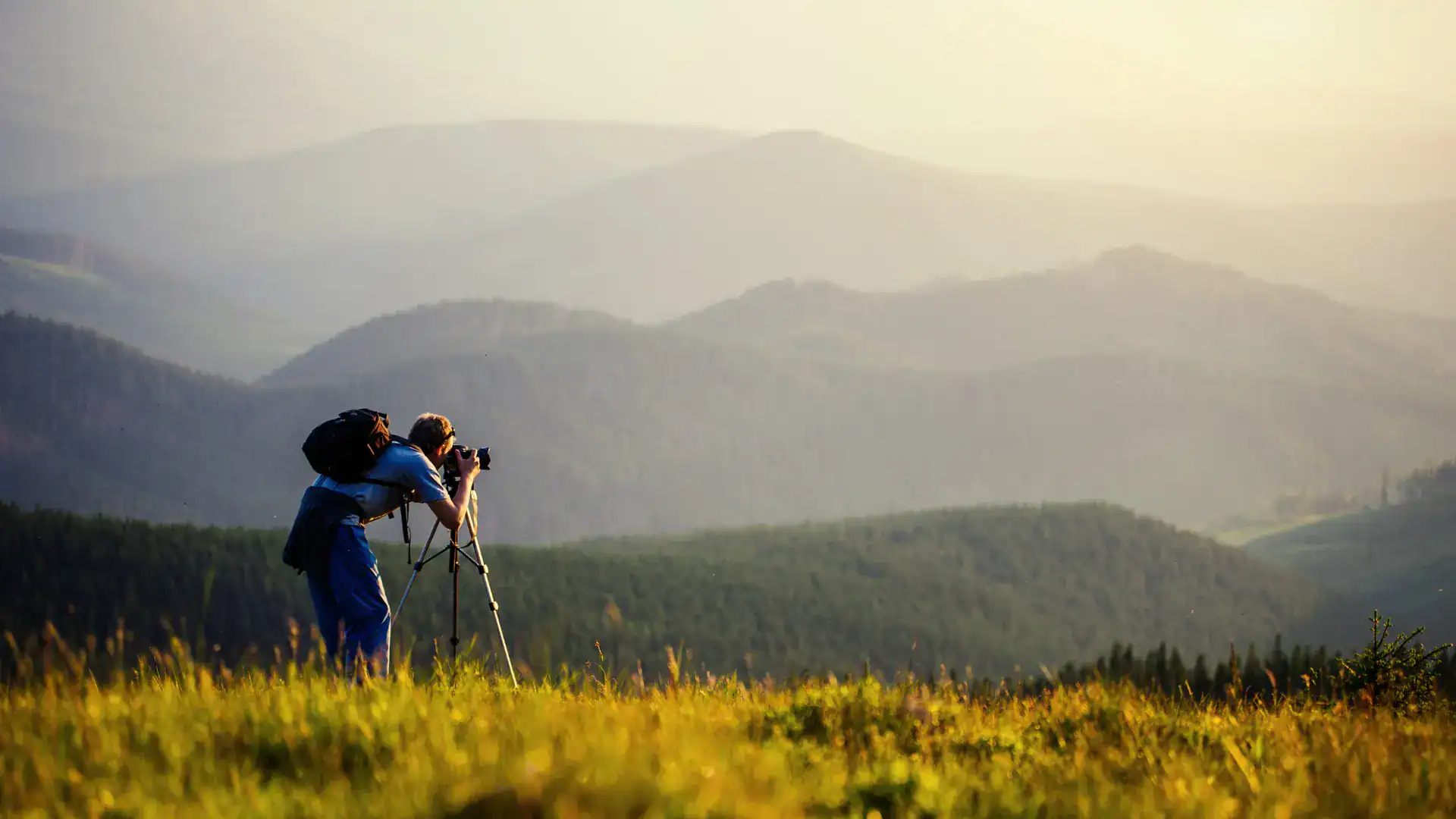
Tripods are usually fine in open areas but need a permit inside ASI monuments. The simplest rule is, if it stands on three legs, ask first. The same goes for very large lenses. A 70-200mm zoom looks like a paparazzi setup to a temple guard, and you may be asked to put it away. A smaller 24-70mm or even your phone draws far less attention and often gets you better access.
If you really want sweeping landscape shots, the high Himalayan regions are far more drone-friendly than the Buddhist circuit plains. Take a look at our Leh Ladakh tour packages or Bhutan tour packages if dramatic mountain photography is part of your dream India trip.
Tip 7: Capture the Devotion, Not Just the Monument
This is the final tip, and honestly the most important. The Buddhist circuit is not about brick and stone. It is about 2,600 years of devotion still flowing through these sites. The single best photograph from any pilgrimage is rarely a perfect temple facade. It is a small moment: a candle being lit, a forehead touching the cool marble floor, a Thai monk smiling at a Sri Lankan one across a sea of orange robes.
Look for the human side. Stand back. Wait. Let the moment come to you. We tell every group we lead, “Take one shot for the album, and ten shots in your heart.” That is the real Buddhist photography guide India lesson nobody else will give you.
What to Know Before You Go: A Practical Checklist
- Carry a small cloth bag for your camera (zip-up bags get hot in summer)
- Bring spare batteries, charging points inside temples are non-existent
- Memory cards twice what you think you need, the circuit is visually overwhelming
- A polariser filter helps cut glare on white stupa walls
- Wet wipes for lens cleaning, dusty plains travel is real
- Backup to cloud or external drive every evening, never trust one card
- Always ask your tour leader before posting photos of group members on social media
And one human note. Some Thai families prefer that photos of elderly relatives praying not be shared online. Always check before you post. A pilgrimage is personal, and what feels like a sweet memory to you may feel exposed to someone else. We address this in every pre-tour briefing for our Thai groups.
Plan Your Buddhist Pilgrimage with Prime Value Tours
If you want to experience the Buddhist circuit with someone who knows where to stand, when to shoot, and when to simply put the camera down, we would love to help. Our Thai-speaking guides understand pilgrimage etiquette deeply, and our 25-year track record means every site, every gate, every quiet corner is already mapped in our team’s memory. You can start by exploring our homepage or by browsing our most popular tour formats including our India Business Discovery Tour for corporate Buddhist groups.
| Plan Your Buddhist Photography Pilgrimage with Prime Value Tours We have been organizing pilgrimage and cultural tours across India since 1999, with a special focus on Buddhist circuit tours for Thai and Southeast Asian groups. We are a Ministry of Tourism approved operator and proud IATO member. Our Thai-speaking guides know exactly where photography is welcome and where it is not. Contact us today to design your photography-friendly itinerary: 📞 Phone: +91-542-2500113 📱 WhatsApp: +91-9794122849 📧 Email: info@primevaluetours.com 🌐 Website: www.primevaluetours.com 📲 LINE: https://line.me/ti/p/6QtZRvYpeP We speak English and are happy to assist Thai-speaking groups. |
A great photograph from a Buddhist pilgrimage is never about the camera. It is about you, slowing down enough to see. We hope these seven expert tips help you bring home not just pictures, but the deeper peace of the journey itself. May your shutter be steady, your heart open, and your memory cards full.
Frequently Asked Questions
Is photography allowed inside the Mahabodhi Temple, Bodh Gaya?
Photography is allowed outside and in the courtyard around the Bodhi Tree, but the inner sanctum where the main Buddha statue sits is restricted. During peak chanting hours, phones must be deposited at the gate. Our guide will tell you exactly when the rule applies that day.
Do I need a special permit for camera use at Indian Buddhist sites?
Most ASI-managed sites like Sarnath, Nalanda, and Kushinagar include a small camera fee in the ticket. Video cameras and tripods need a separate permit. Drones are banned at all major Buddhist circuit sites without prior government clearance.
Can I take photos of monks during prayer?
Always ask first with a polite gesture. Many monks will smile and nod, but some prefer not to be photographed during meditation or chanting. Never use flash, and never block their movement. Quiet, respectful distance is the best approach for any pilgrim photography in India.
What is the best camera or phone for a Buddhist pilgrimage tour?
A modern smartphone is more than enough. If you prefer a dedicated camera, a small mirrorless body with a 24-70mm lens is ideal. It draws less attention than big DSLR setups and is faster to carry across the long days of the Buddhist circuit.
Are drones allowed at Buddhist sites in India?
No. Drones are prohibited at Bodh Gaya, Sarnath, Kushinagar, and all major Buddhist monuments without explicit Ministry of Civil Aviation clearance. The fines are heavy. For drone-friendly landscape photography in India, we recommend Ladakh and Bhutan instead.