
Lesser-Known Buddhist Sacred Spots in India: Beyond the Main Pilgrimage Circuit
Most Buddhist pilgrims who travel to India walk a well-worn path—Bodh Gaya, Sarnath, Kushinagar, and Lumbini. These four sacred cities are deeply important, and rightly so. But India holds dozens more lesser-known Buddhist sacred spots where the Dhamma still breathes quietly, away from large tourist crowds.
These hidden sites carry the same spiritual weight. Some are where the Buddha taught for years. Some are where ancient monasteries once shaped the course of world Buddhism. All of them deserve a place on every sincere pilgrim’s itinerary.
In this guide, we explore the most significant Buddhist sacred spots in India beyond the main pilgrimage circuit — places that can truly deepen your journey.
- Vaishali — Where the Buddha Preached His Last Sermon
Tucked away in northern Bihar, Vaishali is one of the most historically significant yet overlooked Buddhist pilgrimage sites in India.
This ancient city holds a unique position in Buddhist history. It is here that the Lord Buddha delivered his last public sermon before making the final journey to Kushinagar. He announced his Parinirvana at Vaishali—a moment of profound tenderness and spiritual courage.
What to See in Vaishali
The Ashoka Pillar at Kolhua is the most iconic landmark — a polished sandstone column topped with a roaring lion, erected by Emperor Ashoka to mark the sacred spot. Nearby, the Relic Stupa of the Licchavis holds a portion of the Buddha’s relics, making it a deeply moving destination for any devoted pilgrim.
The coronation tank (Abhishek Pushkarini) adds historical grandeur to the visit. Many Thai Buddhist pilgrims find Vaishali especially moving because of its direct connection to the Buddha’s final human days.
Practical Tip: Vaishali is approximately 55 km from Patna. Best visited between October and March. Combine with Nalanda and Rajgir for a complete Bihar Buddhist circuit.
📷 Suggested Image: Ashoka Pillar at Kolhua, Vaishali Caption: “The Ashoka Pillar at Vaishali marks the site of the Buddha’s last public sermon—a must-visit lesser-known Buddhist sacred spot in India.” Alt Text: “Ashoka Pillar at Vaishali, India, a Buddhist pilgrimage site”
- Shravasti — Where the Buddha Performed the Great Miracle
Shravasti in Uttar Pradesh was the capital of the ancient Kosala Kingdom and one of the six great cities of ancient India. The Buddha spent 24 rainy seasons here—more than at any other place.
For any pilgrim seeking to understand the important Buddhist sites in India, Shravasti is essential. This is where the Miracle of Shravasti took place—the famous multiplication of the Buddha’s image, performed to silence rival teachers.
Jetavana Monastery
The ruins of Jetavana Monastery still stand here. Anathapindika, a wealthy merchant and devoted follower, gifted this garden to the Sangha — reportedly buying the land by covering it entirely with gold coins.
Walking through Jetavana today, even in its ruined state, pilgrims often feel a powerful spiritual stillness. The Ananda Bodhi Tree, grown from a cutting of the original Bodhi Tree in Bodh Gaya, still blooms in the compound.
Practical Tip: Shravasti is 175 km from Lucknow. The best time to visit is October to February. It can be combined with Kushinagar in a 2-day itinerary.
📷 Suggested Image: Ruins of Jetavana Monastery, Shravasti Caption: “The ruins of Jetavana Monastery in Shravasti—where the Buddha resided for 24 monsoon seasons during his ministry.” Alt Text: “Jetavana Monastery ruins, Shravasti, Buddhist pilgrimage India”
- Rajgir — Where the Buddha Taught for Years in the Hills
Rajgir in Bihar is surrounded by five forested hills and was one of the most important cities during the Buddha’s lifetime. The Magadha kingdom — politically and spiritually central to early Buddhism — had its capital here.
The Buddha spent several rainy seasons at Vulture’s Peak (Griddhakuta Hill) in Rajgir, where he delivered some of his most profound teachings, including the Heart Sutra and Lotus Sutra (according to Mahayana tradition).
Griddhakuta Hill and Venuvana
The climb to Griddhakuta Hill is itself a meditation—a slow, mindful ascent through forest paths used by the Buddha himself. At the summit, pilgrims light incense and sit in silence, facing the same horizon the Buddha once gazed upon.
Venuvana (Bamboo Grove), gifted to the Buddha by King Bimbisara, is a serene garden lower in the valley. The gentle bamboo rustling in the wind creates a natural meditative atmosphere that many pilgrims find deeply calming.
Practical Tip: Rajgir is 100 km from Patna and 12 km from Nalanda. A ropeway (cable car) is available to Griddhakuta Hill for elderly or mobility-challenged pilgrims.
📷 Suggested Image: View from Griddhakuta Hill, Rajgir Caption: “Griddhakuta (Vulture’s Peak) in Rajgir—where the Buddha delivered teachings that shaped world Buddhism for centuries.” Alt Text: “Griddhakuta Hill, Rajgir, Buddhist sacred site India”
- Nalanda — The Oxford of Ancient Buddhism
Nalanda needs no introduction in the world of Buddhist scholarship, yet it remains undervisited on pilgrimage tours. This ancient Buddhist monastery in India was the world’s first residential university and the greatest center of Buddhist learning from the 5th to 12th centuries CE.
Scholars from China, Korea, Japan, Sri Lanka, Indonesia, and Tibet came to study here. At its peak, Nalanda housed 10,000 students and 2,000 teachers.
What Pilgrims Experience at Nalanda
The Nalanda Archaeological Site is a sprawling campus of red brick ruins, temples, monasteries, lecture halls, and meditation cells. Walking through these corridors, one feels the intellectual and spiritual legacy of Buddhism at its zenith.
The Nalanda Museum holds sculptures, manuscripts, and artifacts that bring the ancient campus to life. A nearby New Nalanda Mahavihara continues the tradition of Buddhist education today.
For Thai Buddhist pilgrims, Nalanda represents the living transmission of Theravada and Mahayana scholarship to Southeast Asia a deeply meaningful connection.
Practical Tip: Nalanda is 88 km from Patna and 12 km from Rajgir. Allocate 3–4 hours for a proper visit. Combine with Rajgir and Vaishali for a complete circuit.
📷 Suggested Image: Red brick ruins at Nalanda University Caption: “The ancient ruins of Nalanda — once the world’s largest Buddhist university and a beacon of Dhamma scholarship for over 700 years.” Alt Text: “Nalanda ancient university ruins Buddhist pilgrimage Bihar India”
- Kaushambi: The Forgotten City of the Dharma
Kaushambi, near Allahabad (Prayagraj) in Uttar Pradesh, is perhaps the most overlooked of all important Buddhist places in India. Yet this city was sacred enough for the Buddha to visit multiple times.
The Ghoshitarama Monastery here was one of the major places where the Buddha stayed and taught during his long ministry. Emperor Ashoka erected a pillar here too — its inscription still partially visible — marking the site’s profound importance.
The ruins of Ghoshitarama are evocative and largely undisturbed. Pilgrims often have the site almost entirely to themselves, a rare blessing in India’s most sacred landscape.
Practical Tip: Kaushambi is 50 km from Prayagraj. It’s best visited when combined with Sarnath (200 km away) or Shravasti as part of a Uttar Pradesh Buddhist circuit.
📷 Suggested Image: Ashoka Pillar at Kaushambi Caption: “The Ashoka Pillar at Kaushambi — a silent guardian of one of India’s most forgotten yet significant Buddhist sacred sites.” Alt Text: “Ashoka Pillar Kaushambi Buddhist site Uttar Pradesh India”
- Sankisa — Where the Buddha Descended from Heaven
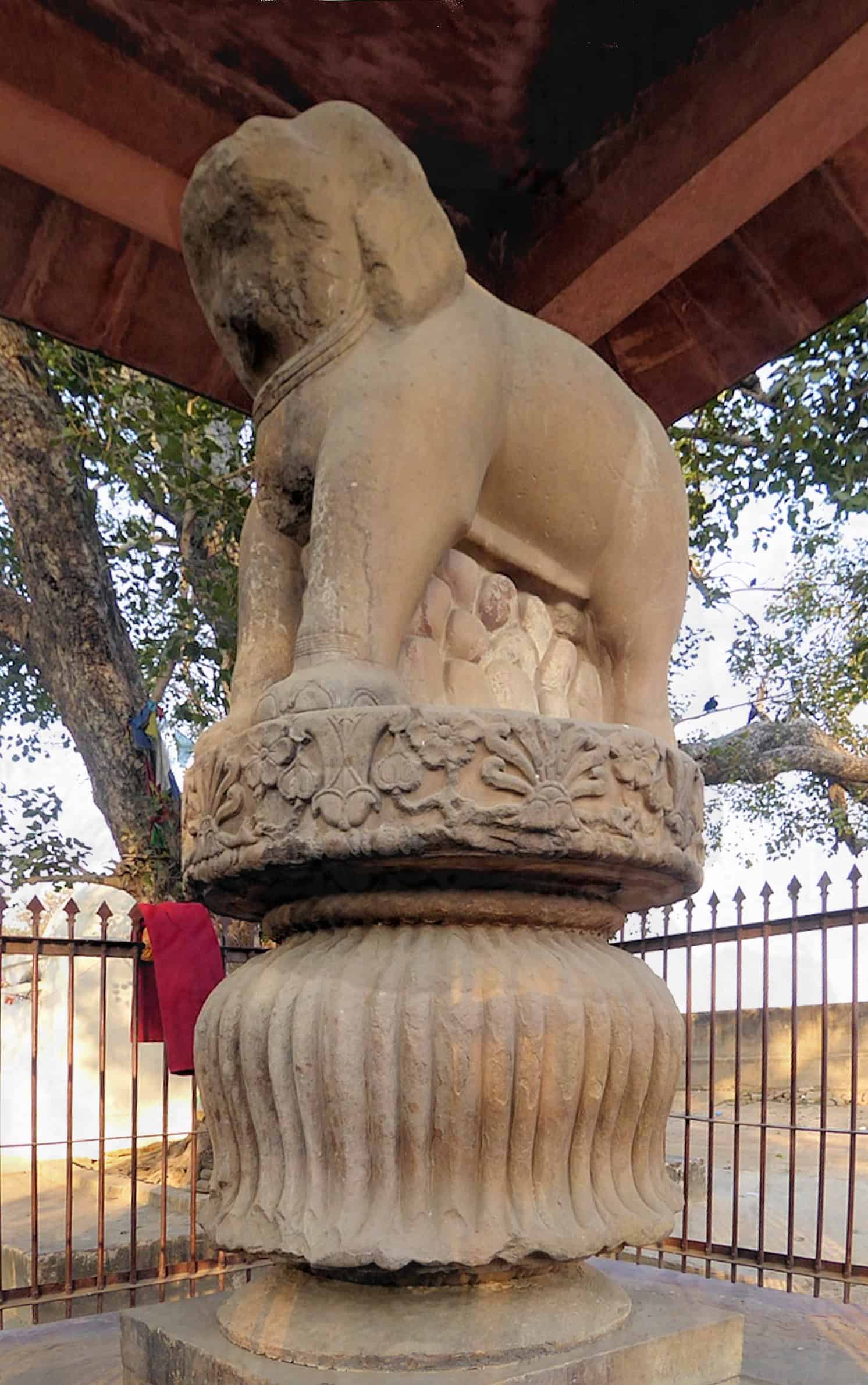
Sankisa in Uttar Pradesh marks one of the Eight Great Places of Buddhist pilgrimage. According to tradition, after spending a rainy season in the Trayastrimsha heaven teaching his mother, Mayadevi, the Dhamma, the Buddha descended back to earth at Sankisa via a triple staircase symbolized by the elephant capital of an Ashoka Pillar that still stands here.
This site is especially revered in Theravada Buddhism. Thai Buddhist monks and pilgrims recognize Sankisa as one of the Eight Holy Places (Atthamahasthana), making it spiritually mandatory on a complete Buddhist pilgrimage to India.
Practical Tip: Sankisa is 47 km from Farrukhabad and best reached by private vehicle. It is best combined with Shravasti and Kaushambi in a Uttar Pradesh Buddhist circuit.
📷 Suggested Image: Elephant Pillar at Sankisa Caption: “The Elephant Capital of Sankisa — marking the sacred spot where the Buddha descended to earth after teaching in the heavenly realm.” Alt Text: “Sankisa Buddhist pilgrimage site elephant pillar Uttar Pradesh”
Why Plan a Complete Buddhist Circuit with Prime Value Tours
The sites above are real, spiritually profound, and deeply rewarding. But they also require careful planning — many are in remote locations, with limited English signage and transport options.
This is where experience matters. Prime Value Tours has been guiding Buddhist pilgrims across India and Nepal for over 25 years. With Thai-speaking guides, Government of India recognition, and deep knowledge of both the main circuit and the hidden sacred sites, they offer pilgrimage experiences that go far beyond standard tourism.
Explore the full range of Buddhist tour packages in India designed for groups and individual pilgrims alike. Or use the comprehensive Buddhist pilgrimage guide for India and Nepal to begin planning your own journey.
Frequently Asked Questions
Q: Which lesser-known Buddhist sites in India are best for first-time pilgrims? A: Vaishali, Rajgir, and Nalanda are the most accessible and historically rewarding starting points beyond the main circuit. Each is within easy reach of Patna and Bodh Gaya. You can view suggested itineraries at Prime Value Tours.
Q: Are these lesser-known Buddhist sites suitable for elderly or mobility-limited pilgrims? A: Most sites are accessible, though some—like Griddhakuta Hill in Rajgir—involve gentle climbing. A ropeway is available at Rajgir. Prime Value Tours plans all logistics with pilgrim comfort in mind. See their FAQ page for more details.
Q: Can Thai Buddhist groups visit these hidden sites with a Thai-speaking guide? A: Yes. Prime Value Tours provides experienced Thai-speaking guides for Buddhist pilgrimage groups. Contact them via Plan. Your trip to discuss your group’s needs.
Q: What is the best time of year to visit these lesser-known Buddhist sacred spots? A: October to March is ideal for most sites across Bihar and Uttar Pradesh. Summers are very hot, and monsoons (July–September) can make some rural sites difficult to access.
Q: How many days are needed to cover the off-beat Buddhist circuit in India? A: A focused tour covering Vaishali, Rajgir, Nalanda, Shravasti, Sankisa, and Kaushambi — alongside the main circuit — typically requires 10 to 14 days. The pilgrimage guide on Prime Value Tours offers detailed day-by-day planning support.
Begin Your Sacred Journey
If this guide has stirred something in your heart, perhaps the time is right. At Prime Value Tours, we have been walking alongside Buddhist pilgrims for over 25 years—from the Bodhi Tree in Bodh Gaya to the quiet ruins of Vaishali and Nalanda.
We would be honored to plan your pilgrimage, whether you are a first-time visitor or a returning devotee seeking deeper India.
Reach out to us — there is no obligation, only a conversation about what your journey could look like.