
India’s 10 Most Visited Buddhist Destinations: Annual Pilgrim Numbers and Best Seasons
India holds the very heart of Buddhism within its ancient soil. Every year, millions of pilgrims from Thailand, Sri Lanka, Japan, Myanmar, South Korea, and across India travel to these sacred sites—walking where the Buddha walked, meditating beneath the Bodhi Tree, and offering prayers where the Enlightened One passed into Parinirvana.
But which Buddhist destinations in India attract the most pilgrims? And what is the best time of year to visit each site? Whether you are planning your first pilgrimage or your tenth, this comprehensive guide provides clear data — annual visitor numbers, seasonal travel advice, and practical tips — for India’s 10 most visited Buddhist destinations.
At the end of this guide, you will find a complete quick-reference table and a month-by-month travel calendar. Let us begin with India’s four most sacred sites—the Mahasthanas.
India’s 4 Most Sacred Buddhist Sites — The Mahasthanas
These four destinations are directly connected to the life of Gautama Buddha. They form the core of every Buddhist pilgrimage circuit in India and consistently draw the highest number of visitors every year.
1. Bodh Gaya, Bihar — The Most Visited Buddhist Site in India
Annual Visitors: Approximately 2.5 to 3 million | Best Season: October to March
Bodh Gaya is the holiest of all Buddhist pilgrimage destinations in India — and one of the most visited Buddhist sites in the world. It is here, beneath the sacred Bodhi Tree, that Prince Siddhartha attained enlightenment and became Gautama Buddha over 2,500 years ago. The Mahabodhi Temple, a UNESCO World Heritage Site, rises 55 metres above the exact spot of enlightenment and remains the most revered structure in the Buddhist world.
Thai Buddhist groups form one of the largest international pilgrim contingents at Bodh Gaya. The city has a thriving community of Thai monasteries, including Wat Thai Buddhagaya, which offers accommodation and vegetarian meals for Thai pilgrims. The annual Kalachakra Initiation — when held here — draws over 100,000 pilgrims in a single event.
Peak season runs October to March. December and January see the highest international footfall. Book accommodation at least 3 months in advance for this window. Arrive at the Mahabodhi Temple before 5:30 AM for sunrise prayers — the spiritual atmosphere at dawn is extraordinary.
2. Sarnath, Uttar Pradesh — Where the Dhamma Wheel First Turned
Annual Visitors: Approximately 1.5 to 2 million | Best Season: October to February
Just 13 kilometres from Varanasi, Sarnath is where the Buddha delivered his first sermon — the Dhammacakkappavattana Sutta — to his five companions in the Deer Park. This event, known as the Setting in Motion of the Wheel of Dhamma, marks the birth of the Buddhist Sangha (community of monks).
The Dhamek Stupa (5th–6th century CE), the Ashoka Pillar, and the Mulagandhakuti Vihara are the principal pilgrimage points. The Sarnath Archaeological Museum houses the iconic Lion Capital of Ashoka — India’s national emblem — which remains one of the finest examples of ancient Indian sculpture. Visiting Sarnath on a full-moon day (Purnima) is especially auspicious, with thousands gathering for candlelit circumambulation and evening chanting.
3. Kushinagar, Uttar Pradesh — The Sacred Site of Parinirvana
Annual Visitors: Approximately 800,000 to 1 million | Best Season: November to February
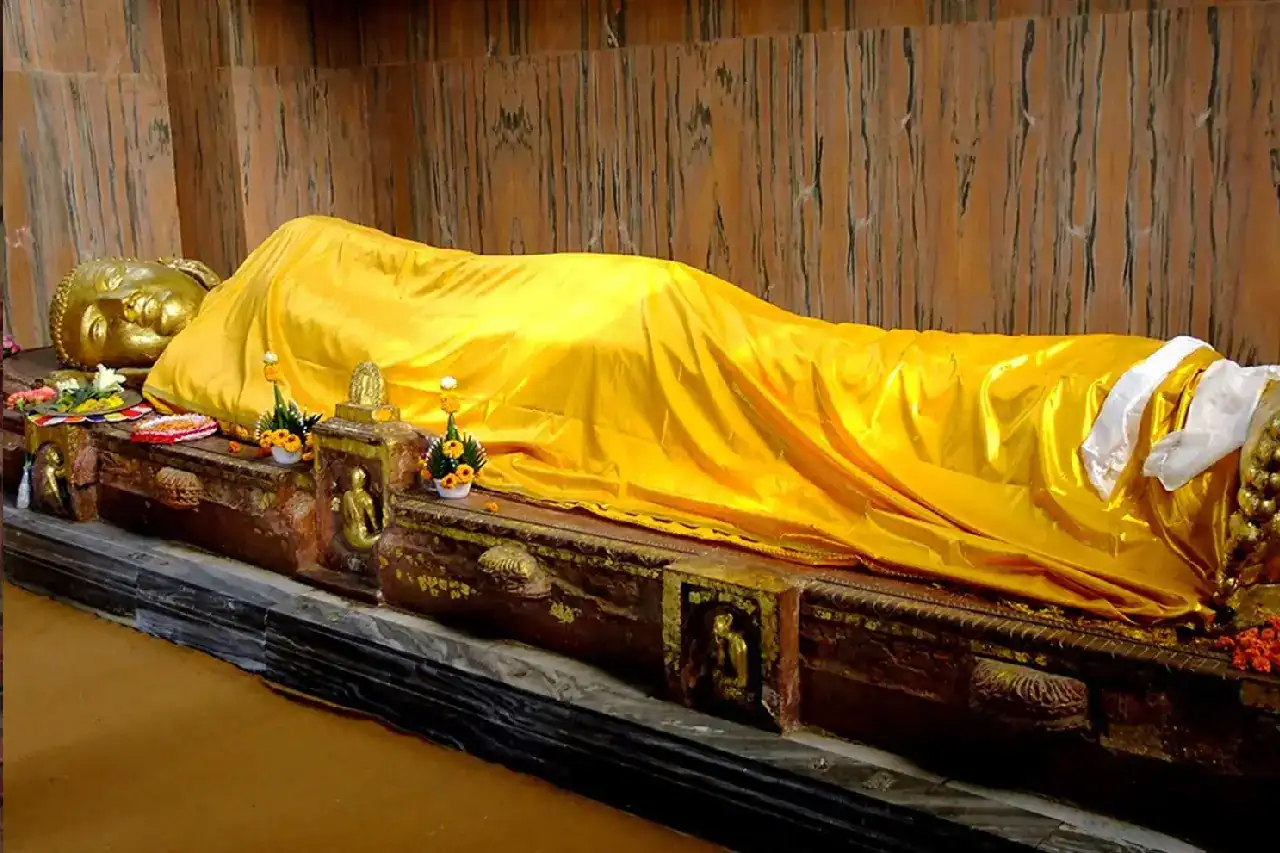
Kushinagar is where Gautama Buddha entered Mahaparinirvana—his final passing—around 483 BCE. The Mahaparinirvana Temple houses a magnificent 5th-century reclining Buddha statue stretching 6.1 meters. The Ramabhar Stupa, 1.5 km away, marks the cremation site.
Kushinagar draws fewer visitors than Bodh Gaya or Sarnath, but it holds a profound solemnity that stays with pilgrims long after they leave. Many describe it as the most emotionally moving stop on the entire circuit. Parinirvana Day (February 15) is observed with special prayers and processions attended by thousands of Southeast Asian pilgrims.
4. Varanasi (Kashi), Uttar Pradesh — The Sacred Gateway City
Annual Visitors: Approximately 3 to 4 million (all visitors) | Best Season: October to March
Varanasi is one of the world’s oldest continuously inhabited cities and the closest major hub to Sarnath. While primarily a Hindu holy city, Varanasi holds deep meaning for Buddhist pilgrims — it was home to many prominent lay disciples of the Buddha and is the ideal base for day trips to Sarnath (just 30 minutes away).
The Ganga Aarti ceremony at Dashashwamedh Ghat — held every evening at sunset — is one of India’s most spiritually charged experiences. Varanasi also offers the best flight connections in the region, making it the standard arrival and departure point for most Buddhist circuit tours.
Six More Sacred Destinations on India’s Buddhist Circuit
Beyond the four great Mahasthanas, these six destinations complete the full Buddhist pilgrimage circuit in India. Each site holds unique historical and spiritual significance and rewards those who make the journey.
5. Rajgir, Bihar — The Buddha’s Beloved Mountain Retreat
Annual Visitors: Approximately 500,000 to 700,000 | Best Season: October to February
Rajgir was one of the Buddha’s most favored retreats. He spent several rainy seasons teaching here, particularly on Griddhakuta Hill (Vulture’s Peak), where some of the most significant Mahayana sutras are believed to have been delivered. The Vishwa Shanti Stupa—one of Japan’s Nipponzan-Myohoji peace pagodas—offers panoramic views from the hilltop, accessible by cable car. Rajgir is almost always visited together with Nalanda in a single-day excursion.
6. Nalanda, Bihar — Ruins of the World’s First University
Annual Visitors: Approximately 400,000 to 600,000 | Best Season: October to March
Located just 12 km from Rajgir, Nalanda was once the greatest center of Buddhist learning in the world. From the 5th to the 12th centuries CE, over 10,000 students studied under 2,000 scholars here—drawn from China, Tibet, Korea, and Central Asia. The archaeological ruins are a UNESCO World Heritage Site, and the Nalanda Multimedia Museum brings the ancient university vividly to life.
7. Shravasti, Uttar Pradesh — Site of the Buddha’s Twin Miracles
Annual Visitors: Approximately 200,000 to 350,000 | Best Season: November to February
Shravasti is where the Buddha is said to have performed the Twin Miracles and spent 25 rainy seasons—more time than at any other single location. The Jetavana Grove, donated by the merchant Anathapindika, remains a place of extraordinary serenity for meditation and reflection. Several international Buddhist monasteries now surround the ancient site.
8. Vaishali, Bihar — Cradle of Democracy and the Nuns’ Order
Annual Visitors: Approximately 150,000 to 250,000 | Best Season: October to February
Vaishali is associated with the world’s first democratic republic and was where the Buddha established the first order of Buddhist nuns (Bhikkhuni Sangha). An Ashokan pillar with a lion capital stands as the centerpiece of the ancient city. Vaishali is typically combined with Patna (Pataliputra) and Kesariya in a single-day excursion from Bodh Gaya.
9. Sankasia (Sankissa), Uttar Pradesh — Where the Buddha Descended from Heaven
Annual Visitors: Approximately 80,000 to 150,000 | Best Season: October to March
Sankasia marks the spot where the Buddha descended from Tushita Heaven after spending three months teaching the Abhidhamma to his mother. The site is especially revered by Theravada Buddhists from Thailand, Sri Lanka, and Myanmar. One of the more peaceful and less commercialized sites on the circuit, Sankasia offers a deeply contemplative experience.
10. Kesariya, Bihar — Home to the World’s Largest Buddhist Stupa
Annual Visitors: Approximately 100,000 to 200,000 | Best Season: November to February
The Kesariya Stupa is believed by many archaeologists to be the world’s largest Buddhist stupa—it once stood over 30 meters high. Archaeological excavations have revealed five successive stupa construction phases. According to Buddhist tradition, this marks the spot where the Buddha left his begging bowl before his final journey to Kushinagar.
Quick Reference: India’s Top 10 Buddhist Sites at a Glance
| Buddhist Site | State | Annual Visitors | Best Season |
| Varanasi | Uttar Pradesh | 3–4 million (all) | October–March |
| Bodh Gaya | Bihar | 2.5–3 million | October–March |
| Sarnath | Uttar Pradesh | 1.5–2 million | October–February |
| Kushinagar | Uttar Pradesh | 800K–1 million | November–February |
| Rajgir | Bihar | 500K–700K | October–February |
| Nalanda | Bihar | 400K–600K | October–March |
| Shravasti | Uttar Pradesh | 200K–350K | November–February |
| Vaishali | Bihar | 150K–250K | October–February |
| Kesariya | Bihar | 100K–200K | November–February |
| Sankasia | Uttar Pradesh | 80K–150K | October–March |
When to Plan Your Buddhist Pilgrimage to India
October to March is the ideal window for Buddhist pilgrimage travel across India. The weather is cool and dry (10°C to 28°C) across Bihar and Uttar Pradesh — perfect for outdoor temple visits, walking tours, and long travel days between destinations.
Key Pilgrimage Dates to Plan Around:
- Buddha Purnima (April–May): The most auspicious Buddhist festival, celebrated at all sites with processions, prayers, and cultural events.
- Kalachakra Initiation (Bodh Gaya, dates vary): The largest Buddhist gathering — over 100,000 pilgrims when held in Bodh Gaya.
- Parinirvana Day — February 15 (Kushinagar): Special prayers and offerings at the Mahaparinirvana Temple.
- Asalha Puja (July–August): Full-moon day commemorating the Buddha’s first sermon, celebrated at Sarnath.
Seasons to Avoid:
April to June brings extreme heat (40°C–45°C) across the Gangetic plains. From July to September is the monsoon season—roads can flood, and some rural sites become difficult to access. If travel during these months is unavoidable, a trusted tour operator with local expertise is essential.
For full trip planning guidance, visit our dedicated Buddhist Pilgrimage Guide for India and Nepal.
Frequently Asked Questions
Q: What is the most visited Buddhist destination in India?
A: Bodh Gaya in Bihar attracts approximately 2.5 to 3 million pilgrims per year — making it the most visited Buddhist destination in India. Explore our Buddhist tour packages in India for itineraries that begin in Bodh Gaya.
Q: What is the best time to visit Buddhist sites in India?
A: October to March is the best time. The weather is cool and dry — ideal for travel, outdoor temple visits, and meditation. December and January are peak seasons for international Buddhist pilgrim groups from Thailand, Sri Lanka, and Japan.
Q: How many days does a full Buddhist circuit tour take?
A: A comprehensive circuit covering Bodh Gaya, Sarnath, Kushinagar, Rajgir, Nalanda, and Varanasi takes 8 to 12 days. We offer flexible options from 5-day highlights tours to 14-day extended circuits. See all options at our Buddhist Tour Packages India page.
Q: Are Thai-speaking guides available at India’s Buddhist pilgrimage sites?
A: Yes. Prime Value Tours provides professional Thai-speaking guides at all major Buddhist circuit destinations in India. Our team has supported Thai Buddhist pilgrim groups for over 25 years. Learn more about Why Choose Prime Value Tours.
Q: How do I plan and book a Buddhist pilgrimage to India?
A: Start with our step-by-step Plan Your Trip page, where you can share your travel dates, group size, and preferences. Our specialists will create a fully customized itinerary for your group at no obligation.