
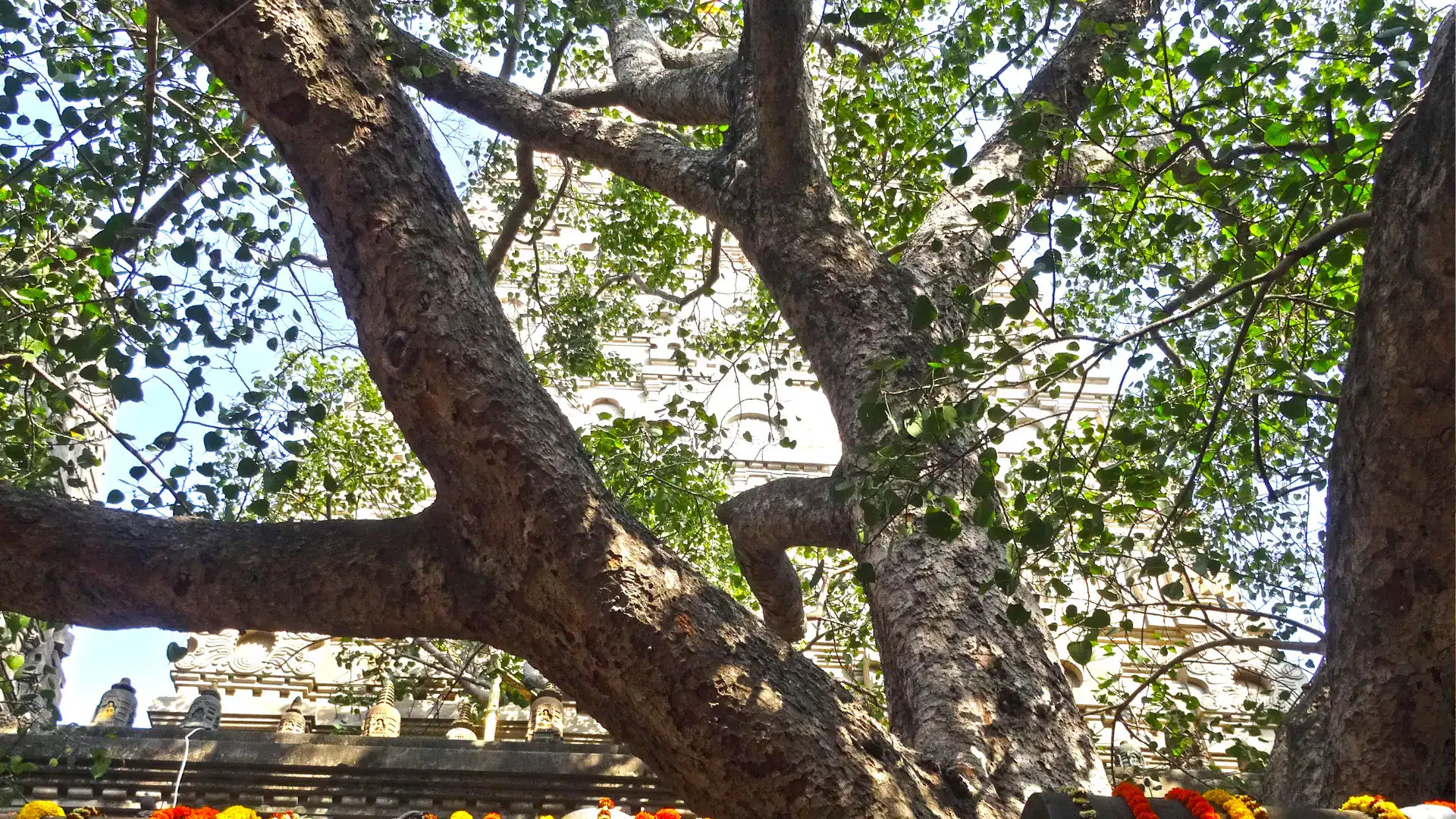
The Sacred Bodhi Tree at Bodh Gaya: 7 Incredible Facts Every Buddhist Must Know
There is a tree in India that changed the world.
It stands quietly in the garden of the Mahabodhi Temple, in a small town called Bodh Gaya in the state of Bihar. It is not the tallest tree, nor the oldest. But beneath its shade, more than 2,500 years ago, a man named Siddhartha Gautama sat down—and did not rise again until he had seen through the veil of suffering and touched the deepest truth of existence.
He became the Buddha. And that tree became sacred.
For millions of Buddhist pilgrims from Thailand, Myanmar, Sri Lanka, Japan, Tibet, and beyond, visiting the Bodhi Tree is not simply a sightseeing trip. It is a homecoming. It is a moment of silence in a noisy life. It is a conversation across centuries with the teacher who showed the world a path out of suffering.
In this guide, we share 7 incredible facts about the Sacred Bodhi Tree — facts that will deepen your reverence, enrich your visit, and perhaps stir something quiet within you.
Fact 1: The Original Tree No Longer Exists — But Its Descendant Does
Here is something many pilgrims do not know: the tree that stands in Bodh Gaya today is not the exact tree under which the Buddha sat.
The original Bodhi Tree—a Ficus religiosa, or sacred fig—was destroyed several times over the centuries. Ancient texts record that Emperor Ashoka’s queen, Tissaraksha, was so jealous of the king’s devotion to the tree that she had it poisoned. Later invasions and the passage of time took further toll.
But here is the miracle: before the tree was destroyed the first time, a cutting was taken. Emperor Ashoka’s daughter, Sanghamitta Theri, carried a sapling from the original Bodhi Tree to Sri Lanka in the 3rd century BCE. That tree—planted in Anuradhapura—still stands today and is believed to be the oldest documented tree in human history.
From that Sri Lankan tree, a cutting was returned to Bodh Gaya. So the tree you see today is a direct biological descendant of the tree under which the Buddha attained enlightenment.
The lineage was never broken. Only passed on — like the Dhamma itself.
📷 Suggested Image: Close-up of the Bodhi Tree’s sacred roots and hanging branches at dusk Caption: “The Sacred Bodhi Tree at Bodh Gaya — a living descendant of the tree that witnessed the Buddha’s enlightenment.” Alt Text: “Sacred Bodhi Tree at Bodh Gaya Mahabodhi Temple India”
Fact 2: The Tree Is Over 2,500 Years Old in Spirit — and Still Grows
The Bodhi Tree is a Ficus religiosa—the same species of tree that the Buddha chose to sit beneath. This variety is known for its heart-shaped leaves with long, tapering tips. On a still morning, its leaves shimmer and tremble even without wind — a phenomenon that has enchanted pilgrims for centuries.
In Buddhist tradition, this trembling is sometimes described as the tree “breathing”—as if it remained aware, even now, of the weight of what happened beneath it.
The tree grows vigorously. Its roots spread. New shoots emerge from ancient bark. Pilgrims often collect fallen leaves from beneath it—a simple, sacred keepsake carried home to temples in Bangkok, Chiang Mai, Colombo, and Kathmandu.
🌿 Pilgrim’s Tip: Visit the Bodhi Tree in the early morning, before the crowds arrive. The light is soft, the air is cool, and the silence beneath the branches is unlike anything you will find anywhere else.
📷 Suggested Image: A single heart-shaped Bodhi leaf resting on a pilgrim’s palm Caption: “The trembling leaves of the Bodhi Tree—each one a quiet reminder of impermanence and peace.” Alt Text: “Bodhi Tree leaf Bodh Gaya Buddhist pilgrimage”
Fact 3: The Vajrasana—The Diamond Throne—Sits Beneath the Tree
Directly beneath the Sacred Bodhi Tree, there is a stone platform. It is called the Vajrasana—the Diamond Throne, or the Throne of Enlightenment.
This is said to be the exact spot where the Buddha sat on the night of his enlightenment, facing east, his resolve unshakeable.
The Vajrasana is one of the oldest surviving structures in Buddhism. Emperor Ashoka, who visited Bodh Gaya around 260 BCE, is credited with enshrining the site. He reportedly wept when he first saw it, overcome with devotion.
Today, the Vajrasana is draped in gold cloth and surrounded by offerings of flowers, incense, and butter lamps. Pilgrims kneel before it in silence, or chant softly, or simply sit—as if trying to share, for just a moment, the quality of stillness that the Buddha found there.
For many Thai Buddhist pilgrims who visit with Prime Value Tours, sitting near the Vajrasana for meditation is among the most emotionally transformative experiences of their spiritual lives.
📷 Suggested Image: The Vajrasana (Diamond Throne) at dawn with offerings of marigolds and incense Caption: “The Vajrasana — the Diamond Throne — marks the exact spot of the Buddha’s enlightenment beneath the Bodhi Tree.” Alt Text: “Vajrasana Diamond Throne Bodh Gaya Bodhi Tree enlightenment”
Fact 4: Pilgrims from 100+ Countries Come Here Every Year
Bodh Gaya is one of the most international sacred sites in the world. Every year, hundreds of thousands of pilgrims arrive from more than 100 countries — making it a rare meeting place where the entire Buddhist world converges in one quiet town in Bihar.
You will see Thai monks in saffron robes, Tibetan lamas in burgundy, Sri Lankan pilgrims in white, Japanese Zen practitioners in black, and Theravada devotees from Myanmar prostrating on the stone courtyard.
Around the Mahabodhi Temple complex, you will find temples built and maintained by Buddhist communities from Thailand, Japan, China, Vietnam, Bhutan, and many other nations — each one a living expression of gratitude for what happened in this place.
This diversity is one of Bodh Gaya’s great gifts. You come seeking your own connection to the Dhamma, and you discover you are part of a vast, living family of seekers.
🌍 Practical Note: The best season to visit Bodh Gaya is from October to March, when temperatures are mild and pilgrimage activity is at its peak. Avoid the monsoon months (July–September) when the site can be crowded and humid.
Learn more about planning your visit in our complete Buddhist Pilgrimage Guide for India and Nepal.
📷 Suggested Image: A panoramic view of international pilgrims gathered at the Mahabodhi Temple complex. Caption: “Pilgrims from across the world gather at Bodh Gaya—the sacred birthplace of enlightenment.” Alt Text: “International Buddhist pilgrims Bodh Gaya Mahabodhi Temple India”
Fact 5: Seven Sacred Spots Surround the Bodhi Tree
Most pilgrims know the Bodhi Tree. Fewer know that there are seven sacred spots within and around the Mahabodhi Temple, each associated with a different week the Buddha spent at Bodh Gaya after his enlightenment.
Here are a few of the most significant:
- Animesh Lochana Chaitya: The spot where the Buddha stood and gazed at the Bodhi Tree for an entire week—without blinking—out of gratitude for the shelter it had given him during his meditation.
- Chankramana: The walking meditation path where the Buddha paced during the third week. Lotus flowers are said to have bloomed beneath his feet. Today, stone lotus flowers mark the path.
- Muchalinda Lake: A quiet pond nearby where, according to tradition, the serpent king Muchalinda sheltered the Buddha from a storm with his hood during the sixth week of meditation.
Each of these spots carries its own story, its own quality of presence. A knowledgeable guide makes all the difference—helping you understand not just where you are standing, but what happened there and why it matters.
This is why pilgrims traveling with Prime Value Tours always receive expert, spiritually informed guidance from our experienced team. See why pilgrims trust us.
📷 Suggested Image: The stone lotus path of Chankramana at golden hour Caption: “The Chankramana walking meditation path — where the Buddha is said to have walked in contemplation after his enlightenment.” Alt Text: “Chankramana walking meditation path Bodh Gaya Buddhist pilgrimage”
Fact 6: The Mahabodhi Temple Is a UNESCO World Heritage Site
The Mahabodhi Temple, which stands beside the Sacred Bodhi Tree, was designated a UNESCO World Heritage Site in 2002—one of the earliest Buddhist heritage sites to receive this honor.
The temple’s history stretches back to the time of Emperor Ashoka, who built the first shrine here in the 3rd century BCE. The current temple structure is believed to date largely from the 5th–6th century CE, though it has been restored and renovated many times since.
Its architecture is extraordinary—a towering pyramidal spire rising 55 meters into the sky, with intricate carvings of the Buddha and Bodhisattvas on every surface. The inner sanctum contains a gilded image of the Buddha in the bhumisparsha mudra—the Earth-touching gesture he made at the moment of enlightenment, calling the Earth to witness his victory over Mara.
To stand before this image, in this place, is to feel the weight of 2,500 years pressing gently upon your shoulders—not as a burden, but as a blessing.
📷 Suggested Image: The Mahabodhi Temple spire rising above the treetops at sunrise Caption: “The Mahabodhi Temple — a UNESCO World Heritage Site and one of the most sacred Buddhist monuments in the world.” Alt Text: “Mahabodhi Temple Bodh Gaya UNESCO World Heritage Site India”
Fact 7: Simply Sitting Beneath the Tree Is Considered a Profound Act of Merit
In Buddhist tradition, merely being present beneath the Bodhi Tree — sitting, breathing, allowing the mind to grow still — is considered a meritorious act of the highest order.
You do not need to be a monk. You do not need to know the Pali canon. You do not need to have meditated for years.
You simply need to come, sit, and be still.
Pilgrims from Thailand often describe this moment as the one they have been preparing for their entire lives. Some weep quietly. Some sit in perfect silence for hours. Some feel, for the first time, what it might mean to be fully present—fully awake.
The tree does not ask anything of you. It simply stands, as it has stood for centuries, offering shade and silence and the memory of what is possible when a human being stops running and simply sits.
That is the gift of the Bodhi Tree. It is available to every pilgrim who comes.
Frequently Asked Questions
Q: How do I get to Bodh Gaya from Varanasi? A: Bodh Gaya is approximately 250 km from Varanasi and is easily reached by road in 4–5 hours or by train to Gaya Junction (about 13 km from Bodh Gaya). Prime Value Tours arranges comfortable, air-conditioned transfers for all pilgrims—see our Buddhist Tour Packages for full itinerary details.
Q: What is the best time to visit the Bodhi Tree? A: October to March is ideal — temperatures are mild, skies are clear, and the spiritual energy of the site feels particularly alive. Buddha Purnima (the full moon in April/May) draws the largest international gatherings if you wish to experience the temple at its most vibrant.
Q: Is meditation allowed near the Bodhi Tree? A: Yes. Meditation is actively encouraged throughout the Mahabodhi Temple complex. Many pilgrims sit beneath the Bodhi Tree or near the Vajrasana for extended periods. Come with an open heart and comfortable clothing.
Q: Are Thai-speaking guides available in Bodh Gaya? A: Yes. Prime Value Tours has served Thai Buddhist pilgrims for over 25 years and provides Thai-speaking guides who understand both the spiritual significance and the cultural sensitivities of our guests. Learn more about us here.
Q: How many days should I spend in Bodh Gaya? A: We recommend at least 2 full days—one to visit the Mahabodhi Temple complex and the seven sacred spots and one for quiet reflection, visiting nearby museums, and the Thai monastery. Many pilgrims find they wish they had stayed longer. Visit our FAQ page for more practical information.
Begin Your Sacred Journey
If this guide has stirred something in your heart, perhaps the time is right.
At Prime Value Tours, we have been walking alongside Buddhist pilgrims for over 25 years—from the Sacred Bodhi Tree in Bodh Gaya to the peaceful gardens of Lumbini, from the Deer Park at Sarnath to the ancient stones of Kushinagar.
We are recognized by the Ministry of Tourism, Government of India, and proud members of IATO—the Indian Association of Tour Operators. Your pilgrimage is in experienced, respectful hands.
We would be honored to plan your journey to the Bodhi Tree.
Reach out to us — there is no obligation, only a conversation about what your journey could look like.