
Buddhism in India: Complete History from Enlightenment to the Sacred Circuit Today
A Buddhist pilgrimage tour India is more than a holiday it is a journey through the living history of a faith that began under a single tree in Bihar and spread across the world. Understanding this history transforms every step you take along the sacred circuit. At Prime Value Tours, we have guided Thai and international pilgrims for over 25 years, and we have found that the travellers who know the story arrive at each site with deeper reverence. This guide traces Buddhism in India from the night of enlightenment to the carefully connected circuit of sacred sites you can walk today.
The Enlightenment at Bodh Gaya: Where It All Began
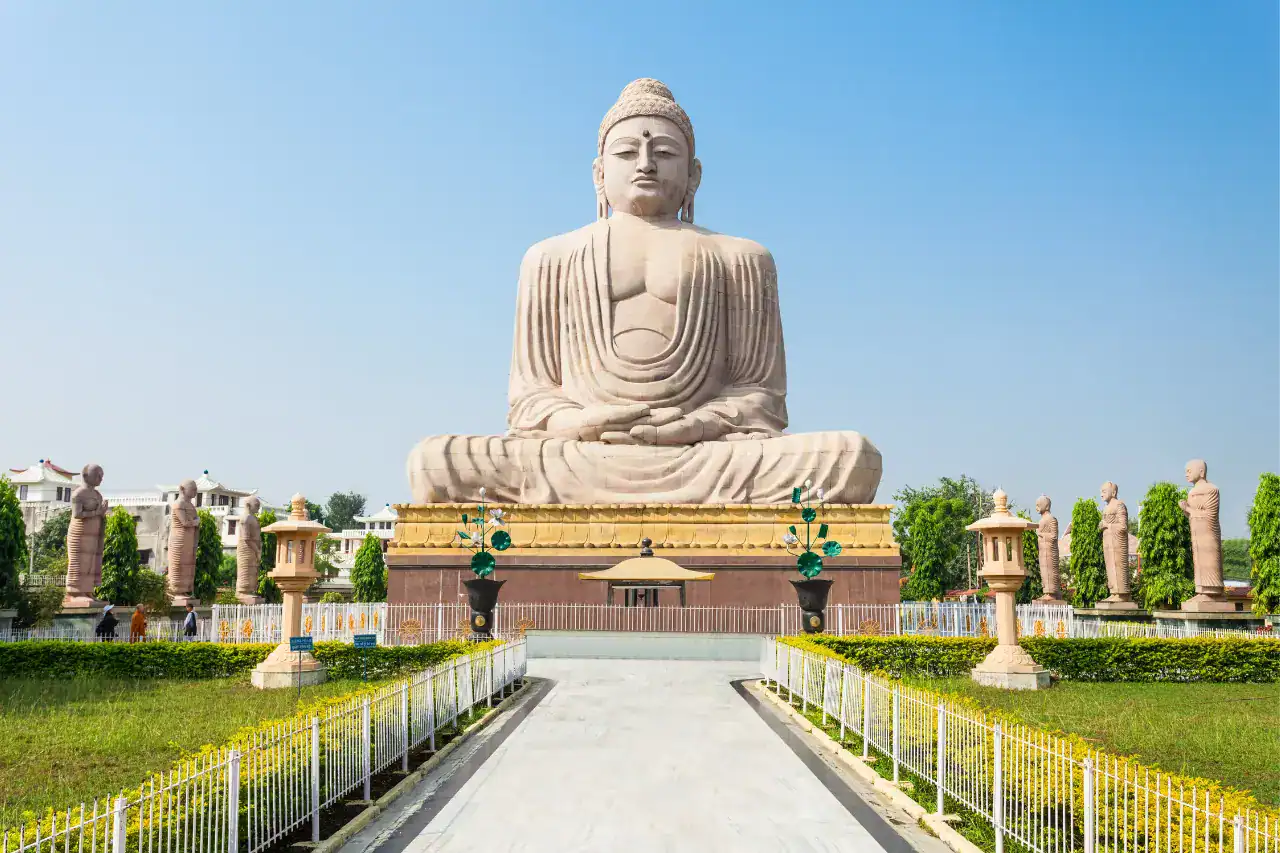
Around the 6th–5th century BCE, Prince Siddhartha Gautama renounced his royal life in search of an end to human suffering. After years of austerity, he settled beneath a Bodhi tree on the banks of the Niranjana River at what is now Bodh Gaya. There, in deep meditation, he attained complete awakening and became the Buddha the Awakened One. This single event is the spiritual heart of every pilgrimage. The Mahabodhi Temple complex that now marks the spot is a UNESCO World Heritage Site, and for most pilgrims it is the emotional climax of the entire journey.
Sarnath and the First Teaching
From Bodh Gaya, the Buddha travelled to the deer park at Sarnath, near Varanasi, where he delivered his first sermon and set in motion the Wheel of Dharma. Here the foundational teachings the Four Noble Truths and the Eightfold Path — were spoken aloud for the first time, and the earliest community of monks was formed. Sarnath’s Dhamek Stupa still rises above the ruins, a serene reminder that the faith which would touch billions began as a quiet conversation among a handful of seekers.
Ashoka and the Spread Across a Continent
Three centuries later, the Mauryan Emperor Ashoka embraced Buddhism after the bloodshed of the Kalinga war. His patronage changed everything. Ashoka erected stone pillars and stupas across the subcontinent, sent missionaries as far as Sri Lanka and Southeast Asia, and turned a regional teaching into a world religion. The roots of the Buddhism practised in Thailand today reach directly back to this era of expansion one reason Thai pilgrims feel such a powerful connection when they walk these grounds.
Decline and Revival in the Land of Its Birth
By the medieval period, Buddhism had declined across much of India for a complex mix of reasons shifting royal patronage, the resurgence of other traditions, and the destruction of great monastic universities such as Nalanda. Yet the sacred geography was never lost. In the 19th and 20th centuries, archaeological rediscovery, the restoration of key temples, and a modern revival movement brought pilgrims flowing back. Today the circuit thrives again, welcoming devotees from Thailand, Sri Lanka, Myanmar, Japan, and the wider world.
The Eight Great Sacred Sites
Tradition recognises eight places associated with the Buddha’s life that form the spiritual backbone of any serious pilgrimage:
- Lumbini (Nepal) — his birthplace
- Bodh Gaya — site of enlightenment
- Sarnath — the first teaching
- Kushinagar — his final passing into Mahaparinirvana
- Rajgir, Vaishali, Shravasti, and Sankassa — sites of teaching and miracles
Buddhist pilgrimage packages from India.
The Sacred Circuit Today: How to Experience It
Prime Value Tours designs each itinerary around your group’s needs, language, and spiritual priorities.
Frequently Asked Questions
How many days are needed for a complete Buddhist pilgrimage in India?
Most complete circuits take 7 to 13 days, depending on whether you include Lumbini in Nepal and additional sites like Rajgir and Nalanda. A guided tour ensures the pacing suits both devotion and comfort.
Is the Buddhist circuit suitable for Thai pilgrims specifically?
Yes. The teachings practiced in Thailand trace directly to these Indian sites. Prime Value Tours provides Thai-speaking, dhamma-literate guides who make the experience deeply meaningful for Thai groups.
What is the best time of year to visit?
October to March offers the most comfortable weather across the plains of Bihar and Uttar Pradesh, making it the peak pilgrimage season.
Why book a guided tour instead of travelling independently?
A guided circuit handles cross-border logistics, reliable transport, vetted hotels, and ritual arrangements at each site—removing stress so pilgrims can focus on their spiritual journey.
Begin Your Journey
The history of Buddhism in India is not locked in museums — it is alive in the temples, stupas, and quiet meditation spots that pilgrims still visit every day. To walk this sacred path with experienced guidance, explore our Buddhist circuit tour packages or contact Prime Value Tours to design a pilgrimage tailored to your group. Twenty-five years of expertise stand behind every journey we arrange.