
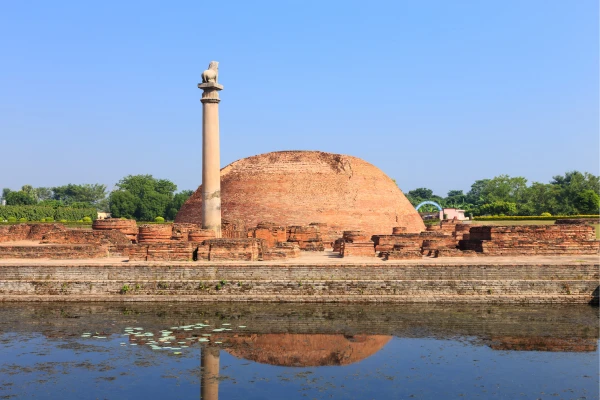
10-Day Buddhist Circuit India: Daily Schedule | Prime Value Tours
Explore a 10-day Buddhist circuit in India: daily schedule, sacred sites & insider tips. Book with Prime Value Tours – specialists since 1999.
Imagine waking up before sunrise in Bodh Gaya, the sound of monks chanting filling the cool morning air. The smell of incense drifts from the Mahabodhi Temple, and you realize: this is the exact spot where the Buddha attained enlightenment more than 2,500 years ago. For Buddhist pilgrims traveling from Thailand and across Southeast Asia, this moment is the reason they came to India.
A 10-day Buddhist circuit India tour gives you enough time to visit all the major sacred sites without feeling rushed. At Prime Value Tours, we have been organizing this journey for Thai and Southeast Asian pilgrimage groups since 1999, and every time, we see the same thing: people arrive as tourists and leave as genuinely changed human beings.
This guide walks you through a complete day-by-day itinerary on our R4 Extended Buddhist Circuit, so you know exactly what to expect, what you will see, and how to prepare.
The Route: (DEL/CCU/BOM- or
any other destination)-Bodh Gaya → Rajgir → Nalanda → Varanasi → Kushinagar → Lumbini → Sravasti → Lucknow- (DEL/CCU/BOM or any other destination)
This is our most complete Buddhist circuit tour India, covering all the sacred places connected to the life and teachings of the Buddha. You begin at Bodh Gaya, the site of enlightenment, travel through ancient kingdoms and holy cities, and finish at Lucknow for your return flight.
Day 1: Arrive in Bodh Gaya, First Blessings
Most groups arrive at Gaya Airport or by overnight train. After check-in at your hotel, the first stop is the Mahabodhi Temple Complex, a UNESCO World Heritage Site and the most sacred Buddhist place of worship in India.
The Bodhi Tree inside the complex is a direct descendant of the original tree under which the Buddha meditated. You will see pilgrims from Thailand, Sri Lanka, Myanmar, and Tibet all sitting together in silence, meditating, or offering flowers. In our experience organizing Buddhist tours, this first evening is often the most emotional moment of the entire trip.
Recommended time to visit: after 5 PM, when crowds thin and the atmosphere becomes deeply peaceful. Many groups hold a candlelight meditation ceremony around the Bodhi Tree.
Day 2: Bodh Gaya in Depth, Temples of Many Nations
Bodh Gaya has temples built by Buddhist nations from around the world. On Day 2, you explore the Thai Temple (Wat Thai Bodh Gaya) with its beautiful Thai-style architecture, the Japanese Temple with its 80-foot Giant Buddha Statue, the richly decorated Tibetan Monastery, and the Royal Bhutan Monastery. Each feels like a different expression of the same devotion.
You also visit the Dungeshwari Cave Temples, about 12 km from town, where the Buddha practiced severe asceticism before choosing the Middle Path. This cave is is raw, unpolished, and genuinely moving.
Day 3: Rajgir, Where the Buddha Taught
After breakfast, drive to Rajgir (about 75 km from Bodh Gaya). Rajgir was the capital of the Magadha Kingdom and one of the Buddha’s favorite teaching spots.
Key Sites in Rajgir:
- Griddhakuta (Vulture’s Peak): The hill where the Buddha delivered many important discourses. You take a ropeway to reach the top. The panoramic view of the valley is stunning.
- Venuvan (Bamboo Grove): The first monastery donated to the Buddha by King Bimbisara. A quiet, shaded spot perfect for meditation.
- Vishwa Shanti Stupa: One of the most beautiful Japanese peace pagodas in India, brilliant white against green hills.
Rajgir is also known for its natural hot springs, which your group can visit in the morning before the main temple circuit.
Day 4: Nalanda, the World’s First University, Then Onward to Varanasi
Nalanda is just 12 km from Rajgir. This was the greatest center of Buddhist learning in the ancient world, attracting scholars from China, Korea, and Central Asia for over 700 years. The archaeological ruins are a UNESCO World Heritage Site.
What You Will See at Nalanda:
- Excavated monasteries and lecture halls dating back to the 5th century
- The Nalanda Archaeological Museum with ancient manuscripts and sculpture
- The Nalanda Multimedia Museum offering a virtual reconstruction of the ancient university
After lunch, begin the drive toward Varanasi (approximately 6-7 hours), or take an overnight train. Varanasi is the spiritual capital of India and home to Sarnath, where the Buddha gave his first sermon.
Day 5: Sarnath, Where It All Began
Sarnath, just 10 km from Varanasi, is one of the four most sacred Buddhist pilgrimage sites in India. This is where the Buddha turned the Wheel of Dharma for the first time, teaching the Five Monks who became his first disciples.
Must-See Sites in Sarnath:
- Dhamek Stupa: Built by Emperor Ashoka, this 43-meter-tall stupa marks the exact spot of the first sermon. One of the most important Buddhist sacred sites in India.
- Deer Park (Mulagandhakuti Vihara): The original garden where the Buddha stayed. Beautiful, quiet, and full of birdsong.
- Sarnath Archaeological Museum: Houses the famous Lion Capital of Ashoka, now India’s national emblem.
Evening in Varanasi: Join the Ganga Aarti at Dashashwamedh Ghat. This nightly fire ceremony on the banks of the Ganges is one of the most spectacular religious rituals in India. Even non-Hindu pilgrims find it deeply moving.
Day 6: Varanasi Morning Boat Ride, Then Drive to Kushinagar
Take an early morning boat ride on the Ganges. In soft morning light, you drift past ancient ghats, see pilgrims bathing, and watch the city come alive. It is a scene unlike anything else in the world.
After breakfast and check-out, drive to Kushinagar (approximately 4-5 hours). Kushinagar is where the Buddha attained Mahaparinirvana, his final passing from this world.
Day 7: Kushinagar, the Place of the Final Passing
Kushinagar is one of the four main Buddhist pilgrimage places and one of the most emotionally significant stops on the entire circuit.
Key Sites in Kushinagar:
- Mahaparinirvana Temple: Houses a magnificent 6-meter-long reclining Buddha statue in the exact pose of the Buddha at his final moment. The statue dates to the 5th century CE. This is a deeply emotional experience for all pilgrims.
- Ramabhar Stupa: The cremation site of the Buddha. A simple but profoundly moving monument, surrounded by ancient trees.
- Mathakuar Shrine: An ancient site with a beautiful seated Buddha statue.
In our years of organizing Buddhist circuit tours, we always plan extra time here. Many pilgrims spend a long time at Kushinagar in quiet reflection. That is completely expected, and we make space for it.
Day 8: Kushinagar to Lumbini, Birthplace of the Buddha
Cross into Nepal to reach Lumbini, the birthplace of Siddhartha Gautama, who would become the Buddha. Lumbini is a UNESCO World Heritage Site and one of the holiest Buddhist places on earth.
Key Sites in Lumbini:
- Maya Devi Temple: Built over the exact spot where Queen Maya Devi gave birth to the Buddha. It includes the sacred Puskarini Pond where Maya Devi bathed before the birth.
- Ashoka Pillar: Erected by Emperor Ashoka in 249 BCE to mark the birthplace. Still standing today, over 2,200 years later.
- The Monastic Zone: Temples built by Buddhist nations including Thailand, Myanmar, China, Korea, and Germany. The Thai monastery here is particularly beautiful.
Lumbini has a quiet, contemplative atmosphere very different from the busier sites in India. Most pilgrims say it feels deeply pure and unhurried.
Day 9: Lumbini to Sravasti, the Teaching Forest
Drive back into India to Sravasti (approximately 4-5 hours). Sravasti was the city where the Buddha spent the most rainy seasons of his teaching life, passing 25 monsoons here. Many of the most important Buddhist sutras were taught at Sravasti.
Key Sites in Sravasti:
- Jetavana Monastery: Donated to the Buddha by the merchant Anathapindika. A large archaeological park with ruins of ancient monasteries and meditation cells.
- Ananda Bodhi Tree: A direct descendant of the original Bodhi Tree at Bodh Gaya, planted by Ananda, the Buddha’s devoted attendant.
- Shravasti Archaeological Museum: Artifacts from the site, including ancient coins, seals, and sculpture.
Sravasti is less visited than the main four pilgrimage sites, but for serious Buddhist pilgrims, it holds extraordinary significance. Walking through Jetavana at dusk is an experience you will not forget.
Day 10: Sravasti to Lucknow, Farewell
Morning: Final prayers and reflection at Jetavana Monastery. Transfer to Lucknow (approximately 4-5 hours). Lucknow Airport has excellent flight connections to Delhi, from where most international groups depart.
This final drive through the Uttar Pradesh countryside gives everyone time to process what they have experienced. Most people are quiet. Some are writing in their journals. This is completely natural, and we consider it a sign that the pilgrimage has done what it is meant to do.
What to Know Before You Go
- Best time to travel: October to March. Avoid June to August (monsoon season).
- Dress code: Carry a light shawl or scarf for all temple visits. Modest clothing is always recommended.
- Currency: India uses INR. Nepal uses NPR. Keep both after Day 7 for Lumbini.
- Visa: Indian e-Visa available for Thai nationals. Nepal has a visa on arrival for most nationalities.
- Meals: We arrange full-board vegetarian meals for all Buddhist groups. Inform us of dietary needs in advance.
- Health: Bottled water only throughout the tour. Carry basic medicines. Avoid raw street food.
Plan Your Buddhist Circuit Tour with Prime Value Tours
We have been organizing Buddhist circuit tours for Thai and Southeast Asian groups since 1999. We handle everything: airport transfers, hotels, experienced guides, all meals, Nepal crossing permits, and complete on-ground support.
Contact us today to design your perfect itinerary:
Phone: +91-542-2500113
WhatsApp / LINE: +91-9794122849
Email: info@primevaluetours.com
Website: www.primevaluetours.com
We speak English and are happy to assist Thai-speaking groups with all arrangements.
Frequently Asked Questions
Q: How many km does this 10-day Buddhist circuit cover?
A: The R4 Extended circuit covers approximately 1,200-1,400 km by road. We use comfortable air-conditioned vehicles throughout the tour.
Q: Is this tour suitable for elderly pilgrims and Buddhist monks?
A: Yes. We design all our Buddhist circuit tours with elderly and mobility-limited pilgrims in mind. Ropeway access is available at Rajgir, and we always move at a comfortable, unhurried pace.
Q: Can we add a Taj Mahal visit or Kathmandu extension to this tour?
A: Yes. We can add an Agra extension or a Kathmandu extension at the end of the circuit. Contact us to customize your itinerary for your group.
Q: What type of hotels do you use on the Buddhist circuit?
A: We use comfortable 3-star and 4-star properties in major cities. At smaller sites like Kushinagar and Sravasti, we use the best available clean and comfortable local options.
Q: Do you have Thai-speaking guides for the Buddhist circuit?
A: We work with experienced Buddhist circuit guides and can arrange Thai-language assistance. Contact us at +91-9721122849 via WhatsApp or LINE to discuss your group’s specific needs.