
Kaushambi: 5 Sacred Reasons Thai Buddhist Pilgrims Must Visit
A complete Kaushambi Buddhist pilgrimage guide for Thai travelers and Southeast Asian groups visiting India
Most Thai Buddhist pilgrims who travel to India visit the famous four sacred sites: Bodh Gaya, Sarnath, Kushinagar, and Lumbini. That is a beautiful journey. But there is one place—just 60 kilometers from Prayagraj—that the Buddha himself returned to not once but twice, delivered some of his most powerful teachings, and where three of his wealthiest disciples built entire retreat monasteries just to host him.
Almost nobody goes there.
The place is Kaushambi. And in our 25 years of organizing Buddhist pilgrimage tours from Varanasi, we consider it one of the most genuinely sacred and most deeply overlooked sites on the entire Indian subcontinent. This guide explains exactly why—and how you can include it in your Thailand-to-India pilgrimage itinerary.
What Is Kaushambi? A Quick Introduction
Kaushambi was the capital of the ancient Vatsa Kingdom—one of the sixteen great Mahajanapadas of northern India, established around 600 BCE. At its peak, it was one of the most prosperous trading cities in the subcontinent, connecting routes from the Gangetic plain north to south and east to west.
For Buddhism, its importance is direct and documented. The Pali Canon—the earliest collection of Buddhist texts—records multiple visits by the Buddha to Kaushambi. He delivered important discourses here, converted key followers here, and spent extended monsoon retreats (varshavasas) here during the 6th and 9th years after his enlightenment.
Today, the site near the modern village of Kosam in Uttar Pradesh holds the ruins of the Ghositarama Monastery, an Ashokan pillar inscription, and ancient fortification walls that still stand over 2,000 years after they were built. It is a Ministry of Tourism-listed heritage site—and it receives a tiny fraction of the visitors it deserves.
| 1 | The Buddha Personally Spent Two Varshavasas Here |
This is the single most important fact about Kaushambi for serious Buddhist pilgrims.
The Buddha’s 6th and 9th varshavasas—the three-month monsoon retreats that monks observe each year—were spent at Kaushambi. During a varshavasa, the Buddha stayed in one place and delivered concentrated teachings. The disciples😎👍 who gathered around him during these retreats received some of the deepest discourses recorded in Buddhist scripture.
For Thai Theravada Buddhists, the Rains Retreat (Vassa or Khao Phansa) is one of the most sacred seasons in the calendar. To stand at the very place where the Buddha himself observed Vassa—twice—carries a spiritual weight that is difficult to describe. For groups who have already visited Bodh Gaya and Sarnath, Kaushambi adds a layer of intimacy and depth that the larger, more crowded sites sometimes cannot.
The Buddha did not simply pass through Kaushambi. He taught here and rested here, and his presence drew some of the most devoted patrons in the history of early Buddhism.
| 2 | The Ghositarama Monastery: One of Buddhism’s Oldest Retreat Centers |
Three of the wealthiest citizens of Kaushambi — Ghosita, Kukkuta, and Pavarika — each built a separate monastery specifically to receive the Buddha and his sangha. The most significant of these was the Ghositarama Monastery, constructed by Ghosita, the royal treasurer.
The monastery ruins you see at Kaushambi today are the remains of Ghositarama. Excavations have revealed the foundations of cells, meditation halls, and ceremonial structures. The scale of the complex suggests it could house hundreds of monks at its height.
What makes Ghositarama particularly meaningful is that the Buddha himself stayed here—not as a visitor passing through, but as a resident during his extended retreats. The monastic codes and discourses recorded in the Vinaya Pitaka mention Kaushambi specifically in relation to events that happened at Ghositarama.
Walking through these ruins as a Buddhist pilgrim is a uniquely meditative experience. There are no vendors, no queues, no loudspeakers. Just ancient brick foundations, open sky, and a silence that feels like it has been preserved for two thousand years.
| 3 | The Ashokan Pillar and the Direct Legacy of Emperor Ashoka |
Emperor Ashoka erected pillars at sites of deep Buddhist significance across his empire in the 3rd century BCE. That he placed one at Kaushambi tells us exactly how the ancient world ranked this site’s importance in Buddhist history.
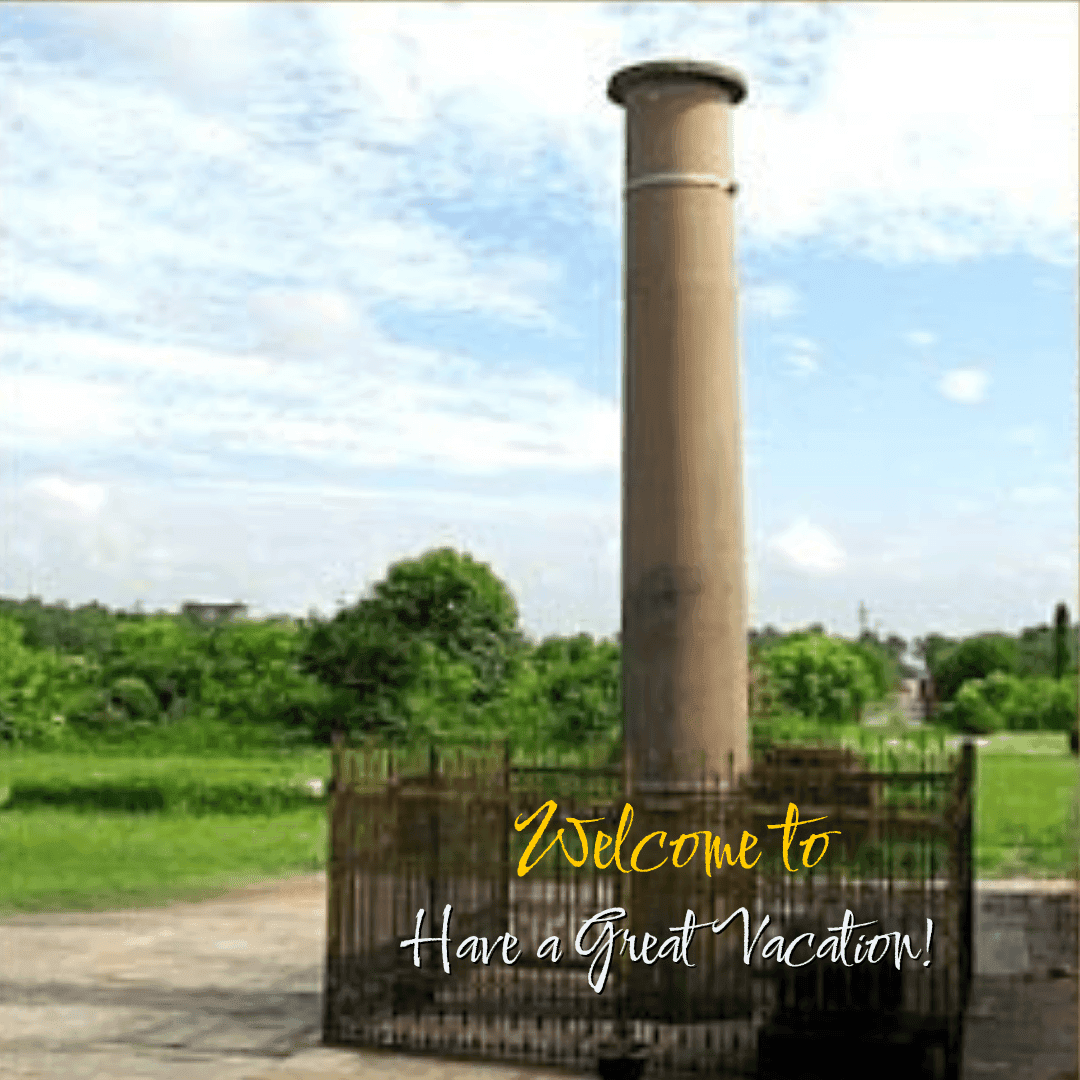
The Ashokan pillar at Kaushambi carries inscriptions addressed directly to the Mahamatras (senior officials) of Kaushambi, mentioning the Buddhist community and Ashoka’s directives for unity within the sangha. Significantly, the pillar inscription reflects a period of dispute within Buddhism—and Ashoka’s personal intervention to resolve it. This pillar is therefore not simply a monument: it is a document of living Buddhist history from the 3rd century BCE.
The original pillar was later moved to the Allahabad Fort by the Mughal emperor Jahangir, where it still stands. But a second pillar with minor Gupta-period inscriptions remains at the Kaushambi site itself—a direct physical connection to the post-Ashoka Buddhist tradition in India.
For Thai pilgrims who revere the Theravada lineage that traces itself back through Ashoka’s own missionary activities, standing at a site where Ashoka himself placed his mark is deeply meaningful.
| 4 | Complete Silence and Solitude: A Spiritual Experience No Crowded Site Can Offer |
Here is something we tell every group we bring to Kaushambi: this is what the sacred Buddhist sites of India felt like 30 years ago, before mass tourism arrived.
Bodh Gaya receives over one million visitors every year. Sarnath and Kushinagar are well-managed but busy. Kaushambi receives a fraction of that number. On many days, your group may be the only pilgrims at the site.
For monks, elderly devotees, or pilgrims traveling for deep spiritual practice rather than sightseeing, this stillness is a profound gift. There is genuine space to meditate, to circumambulate the ruins, to recite sutras, and to sit quietly with the knowledge that the Buddha walked on this very ground—without a loudspeaker, a tour bus, or a selfie crowd disturbing that connection.
In our experience organizing Buddhist circuit tours since 1999, groups that include Kaushambi consistently describe it as the most spiritually moving single stop of their entire India pilgrimage—precisely because of this quality of undisturbed silence.
| 5 | Perfect Placement on the Buddhist Circuit: Easy Add-On from Prayagraj |
Many Thai pilgrims arrive in India via Delhi and travel through the Buddhist circuit by road or rail. Kaushambi is approximately 60 kilometers southwest of Prayagraj (Allahabad), which is itself a natural waypoint on the Buddhist circuit between Varanasi and Bodh Gaya.
Adding Kaushambi to your itinerary requires no major detour. A morning visit from Prayagraj—starting at 7:00 AM, arriving at the site by 8:30 AM, and spending 2 to 3 hours exploring the ruins and meditating—and you can be back in Prayagraj for lunch, then continue your journey to Bodh Gaya in the afternoon.
Prime Value Tours includes Kaushambi as an optional extension on all Buddhist circuit routes. We recommend it especially for groups traveling Route 1 (Bodh Gaya start) and Route 2 (Varanasi start), as the geography makes the addition seamless.
What to Know Before You Visit Kaushambi
Best season: October to March. Winter mornings (November to February) offer cool, clear conditions perfect for walking the open ruins.
Getting there: Kaushambi has no direct train station. The nearest railhead is Prayagraj Junction, from which Kaushambi is a 90-minute road journey. Prime Value Tours arranges private AC vehicles for all group transfers.
What to carry: The site is largely open-air with minimal shade. Bring water, sun protection, and comfortable walking footwear. A small offering (incense or flowers) is appropriate and welcomed.
Best time to arrive: Early morning, 7:00-9:00 AM. The site is quietest, the light is beautiful for photography, and the temperature is coolest.
Nearby sites to combine: Prayagraj Sangam (Triveni Sangam), Sarnath (3 hours east), and Chitrakoot (spiritual forest site, 2 hours south).
| Plan Your Kaushambi Buddhist Pilgrimage with Prime Value Tours We have been organizing Buddhist pilgrimage tours across India and Nepal since 1999, with a special focus on Thai and Southeast Asian groups. We are a Ministry of Tourism-approved operator and proud IATO member. Kaushambi can be added to any of our 4 Buddhist circuit routes. We arrange private AC transport, expert bilingual guides, comfortable hotels, and full-board vegetarian meals for your entire group. Phone / WhatsApp: +91-9794122849 Landline: +91-542-2500113 Email: info@primevaluetours.com LINE: https://line.me/ti/p/6QtZRvYpeP Website: www.primevaluetours.com |
Verified Credentials
Ministry of Tourism, Government of India — Verified Tour Operator
IATO Member — Indian Association of Tour Operators
Explore More Buddhist Pilgrimage Tours
Complete Buddhist Pilgrimage Guide — India and Nepal
Plan Your Buddhist Circuit Tour — All Routes
India Cave Heritage Tour — Ajanta and Ellora
Frequently Asked Questions — Kaushambi Buddhist Pilgrimage
Q: Is Kaushambi worth visiting for Thai Buddhist pilgrims?
A: Yes, absolutely. Kaushambi is one of the few places in India where the Buddha personally stayed for extended periods — specifically his 6th and 9th year varshavasas after enlightenment. For Thai Theravada Buddhists who observe the Rains Retreat (Vassa/Khao Phansa), visiting the place where the Buddha himself observed this retreat carries deep spiritual meaning. The site is also uncrowded and meditative — a rare quality among sacred Buddhist sites in India.
Q: How far is Kaushambi from Varanasi and Bodh Gaya?
A: Kaushambi is approximately 120 kilometres from Varanasi (roughly 2.5 hours by road) and approximately 200 kilometres from Bodh Gaya (roughly 4 hours by road). It is ideally placed as a half-day stop between these two major sites on the Buddhist circuit. Prime Value Tours includes Kaushambi as a seamless add-on to all four of our Buddhist circuit routes.
Q: What is the Ghositarama Monastery at Kaushambi?
A: Ghositarama is one of the oldest known Buddhist monasteries in India, built by Ghosita — a wealthy banker and royal treasurer of Kaushambi — in the 6th century BCE. The Buddha himself stayed at Ghositarama during his visits to Kaushambi, and several discourses recorded in the Pali Tripitaka reference events that occurred at this monastery. The ruins of Ghositarama are the main archaeological remains you visit at the Kaushambi site today.
Q: What is the best time of year to visit Kaushambi?
A: October to March is the best time to visit Kaushambi. The weather is pleasant at 15 to 28 degrees Celsius, roads are dry and accessible, and the open-air ruins are comfortable to explore on foot. November to February offers the ideal cool-morning conditions for meditation and circumambulation. Avoid April to June (extreme heat, 40 degrees+) and July to September (monsoon, muddy roads).
Kaushambi is not simply a site on a list. It is a place where the Buddha chose to return — twice. In our years of organizing Thai Buddhist pilgrimages across India, we have seen pilgrims arrive expecting ruins and leave feeling they have touched something completely real. That is the gift of this hidden sacred site. Come and discover it for yourself.