
Buddhist House of Worship | Prime Value Tours India
“Discover what a Buddhist house of worship is called, how temples,stupas and monasteries differ, and plan your pilgrimage to India’s most sacred Buddhist sites.”
At Prime Value Tours, we have been guiding Thai and Southeast Asian Buddhist pilgrims across India’s most sacred sites since 1999. And in our experience, one of the first questions every first-time visitor asks is exactly this: “What is this place called, and what happens inside?”
What Is a Buddhist House of Worship Called?
The simple answer is: it depends on the tradition and the country. Unlike Christianity, which uses a single word “church” almost everywhere, Buddhism uses several different terms, each carrying its own meaning and architectural identity.
Here are the most common names you will encounter:
Temple (Wat or Vihara)
In Thailand, Laos, Cambodia and much of Southeast Asia, the Buddhist house of worship is called a Wat. In India and Sri Lanka, the ancient Sanskrit term is Vihara, meaning a dwelling place or monastery. When most people say “Buddhist temple,” they are usually referring to a Vihara or a Wat.
The Mahabodhi Temple in Bodh Gaya, India, is one of the most famous examples. It stands at the exact spot where Siddhartha Gautama attained enlightenment, making it arguably the most sacred Buddhist place of worship in the world.
Stupa (Pagoda)
A Stupa is a dome-shaped structure built to enshrine sacred relics or mark a holy event. In many countries, including Myanmar, Thailand, and Sri Lanka, the stupa evolved into the towering Pagoda. Both are considered a buddhist worship place, but they are not spaces where people enter and sit. Instead, devotees walk around them in a clockwise direction, a practice called pradakshina, as a form of prayer and respect.
The Dhamek Stupa at Sarnath, India, marks the spot where the Buddha gave his first sermon. It is one of the most revered buddhist sacred sites in the world.
Monastery (Gompa or Sangharama)
A monastery is where Buddhist monks live, study, and meditate. In Tibetan Buddhism, it is called a Gompa. In Pali texts, it is called a Sangharama. Many monasteries also serve as places of worship for the public, with prayer halls open to visitors. Tibet monasteries and Tibetan monasteries in India, particularly in places like Dharamshala, draw thousands of Buddhist pilgrims every year.
Shrine Room
Inside almost every Buddhist temple or monastery, you will find a Shrine Room. This is the inner sanctuary where the Buddha image is kept, where offerings are placed, and where worship actively takes place. The shrine room is essentially the heart of any buddhism place of worship.
FEATURED IMAGE SUGGESTION
Featured Image 2 (Mid-Blog / Visual Break): A split-image or collage showing three types of Buddhist worship spaces side by side: (1) the Dhamek Stupa at Sarnath, (2) a Tibetan monastery in Dharamshala with prayer flags, and (3) the interior of a Buddhist vihara with a gold Buddha statue and butter lamps. This image helps readers visually understand the difference between a stupa, monastery, and temple. ALT text: “Types of Buddhist house of worship, Dhamek Stupa Sarnath, Tibetan monastery Dharamshala, Buddhist vihara interior India”
How a Buddhist Place of Worship Differs From Other Religious Spaces
This is where it gets really interesting. If you have visited a church, mosque, or Hindu temple, you will immediately notice that a Buddhist place of worship feels different. Not just visually, but in energy, purpose, and experience.
No Congregation-Based Worship
Most religions gather their followers for a communal service at a fixed time. In Christianity, you attend Sunday mass. In Islam, you attend Friday prayers. Buddhist worship is more personal. You arrive at a buddhist place of worship when you choose, you make your offerings when you are ready, and you meditate or circumambulate at your own pace. There is no fixed “service” that everyone must attend at the same time.
The Role of Monks vs. Priests
In a church or mosque, a priest or imam leads the congregation. In a Buddhism place of worship, monks are present, but they are primarily engaged in their own practice, studying and meditating. Lay visitors worship independently, though monks do lead group chantings during festivals and special occasions. The spiritual leader of Buddhism in any given tradition, whether the Dalai Lama in Tibetan Buddhism or a senior monk in Theravada, provides guidance but is not a “priest” in the Western sense.
What Happens During Buddhist Worship
When a Buddhist pilgrim visits a buddhist house of worship, they typically:
- Remove their shoes before entering, as a sign of respect
- Light incense or candles and place them before the Buddha image
- Offer flowers, fruit, or water as symbolic gifts
- Chant prayers or sutras, either silently or aloud
- Meditate or sit quietly in contemplation
- Walk around a stupa or sacred object in a clockwise direction
There is no single prescribed format. Buddhist worship is a personal, reflective practice. This is one reason why visitors of all faiths feel welcome and calm inside any buddhism worship place.
Architecture and Design
The visual identity of a Buddhist house of worship is unmistakable. Look for the Dharma Wheel (Dharmachakra) carved or displayed prominently, a symbol representing the Buddha’s first teaching. You will see lotus motifs everywhere, the lotus being the symbol of purity rising from mud.
The colour palette is typically rich: deep reds, saffron golds, and forest greens dominate monasteries in Tibet and Bhutan. White-washed stupas gleam in the sun at sites like Sanchi and Sarnath in India. In Southeast Asia, Thai temples are covered in golden mosaic tiles that shimmer brilliantly at sunrise.
The Most Sacred Buddhist Houses of Worship in India
India is the birthplace of Buddhism, and it holds the greatest concentration of sacred buddhist sites in the world. If you are planning a Buddhist pilgrimage, these are the worship places you cannot miss.
Mahabodhi Temple, Bodh Gaya
This UNESCO World Heritage Site is built at the spot where the Buddha attained enlightenment beneath the Bodhi Tree. It is the most important buddhist holy place on earth. The temple itself is a 55-metre tall tower, and the surrounding complex includes the original Bodhi Tree, meditation parks, and shrines from Buddhist nations across the world.
Dhamek Stupa, Sarnath
Sarnath is where the Buddha delivered his first sermon after attaining enlightenment. The Dhamek Stupa marks this exact spot. The nearby Sarnath archaeological museum houses some of the finest Buddhist sculptures in existence, including the original Ashokan Lion Capital, now the national emblem of India.
Mahaparinirvana Temple, Kushinagar
This temple marks the place where the Buddha passed into Parinirvana, his final passing. Inside is a 6-metre long reclining Buddha, one of the most moving images in all of Buddhism. Kushinagar is one of the four holiest buddhist pilgrimage places in India.
Vishwa Shanti Stupa, Rajgir
Built by the Japanese Nipponzan Myohoji Buddhist order, this gleaming white stupa sits atop Ratnagiri Hill and offers panoramic views of the valley where the Buddha spent many rainy seasons teaching. Rajgir is also connected to the first Buddhist council held after the Buddha’s passing.
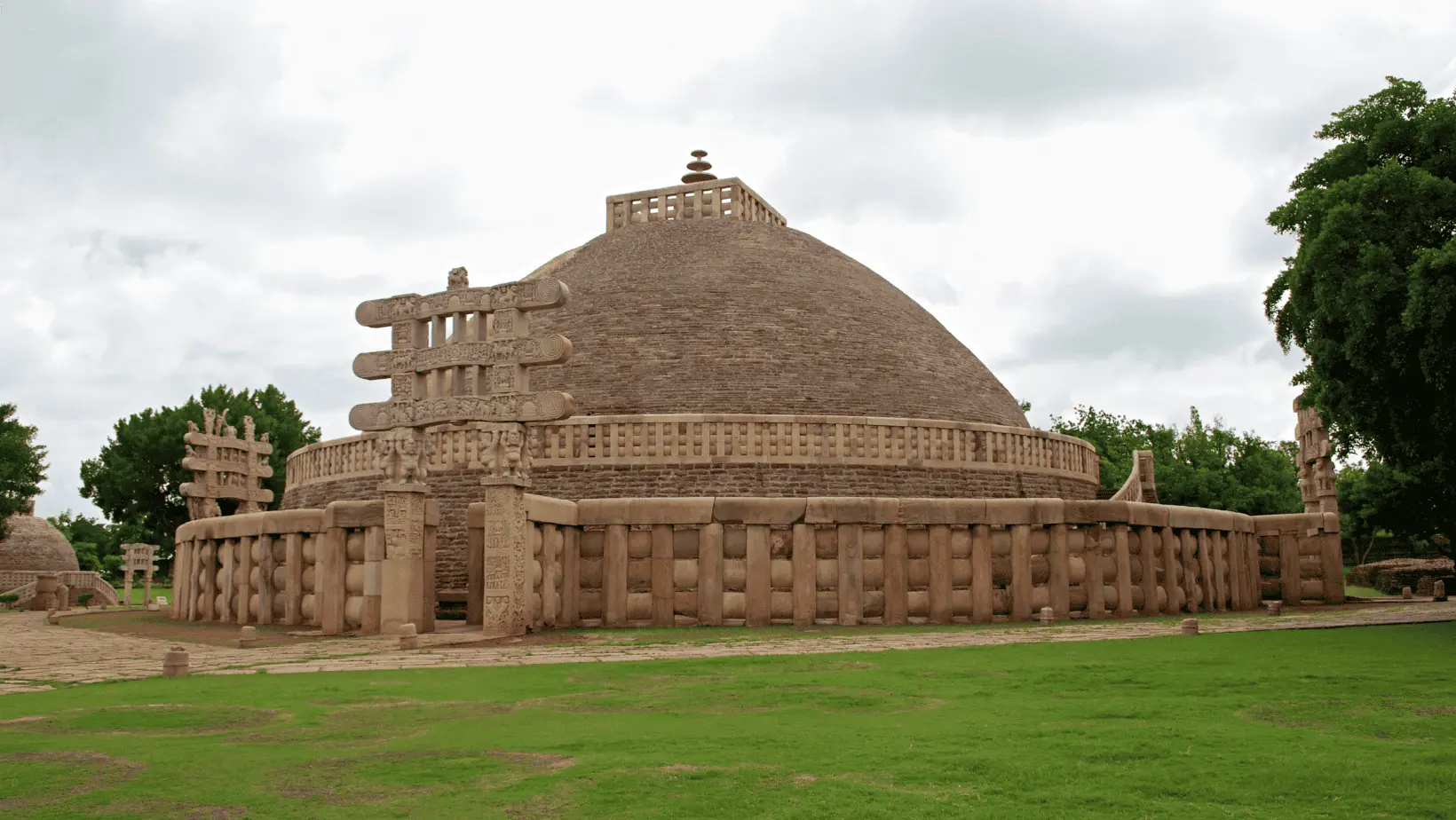
Sanchi Stupa
The Sanchi Buddha Stupa is the oldest stone structure in India and a masterpiece of Buddhist art. Built by Emperor Ashoka in the 3rd century BC, its elaborately carved toranas (gateways) tell the stories of the Buddha’s previous lives. It is a must-visit buddhist sacred place for any pilgrim travelling through central India.
What Is the Buddhist House of Worship Called in Different Countries?
One fascinating thing about Buddhism is how the names and styles of its places of worship evolved differently across Asia. Here is a quick reference:
| Country | Name Used | What It Means |
| Thailand | Wat | Temple complex with multiple buildings |
| India / Sri Lanka | Vihara | Monastery or dwelling of monks |
| Tibet / Bhutan | Gompa | Mountain monastery, place of deep practice |
| Japan | Tera / Ji | Temple, often attached to a cemetery |
| China | Si | Temple or monastery complex |
| Myanmar | Paya / Pagoda | Stupa or tower enshrining relics |
| Cambodia | Wat | Same as Thailand, Theravada tradition |
What to Know Before You Visit a Buddhist Place of Worship
Whether you are visiting a busy temple in Bangkok or a quiet monastery in the Himalayas, a few simple tips will help you enter with confidence and respect.
- Always remove shoes before entering any buddhist place of worship. Look for a shoe rack or follow what others around you are doing.
- Dress modestly. Cover your shoulders and knees. Many temples provide sarongs or cloth wraps at the entrance.
- Walk clockwise around stupas and sacred objects. This is the universal direction of circumambulation in Buddhism.
- Speak softly. Many parts of a buddhism place of worship are active meditation spaces.
- Ask before photographing monks or the inside of shrines. Not all temples permit photography in the inner sanctum.
- It is common and welcome to make a small donation to the temple. This supports the resident monastic community.
- If monks are chanting, sit quietly and listen. You do not need to participate, but respectful presence is appreciated.
Plan Your Buddhist Pilgrimage with Prime Value Tours
We have been organising pilgrimage and cultural tours across India since 1999, with a special focus on Buddhist circuit tours for Thai and Southeast Asian groups.
Contact us today to design your perfect itinerary:
Phone : +91-542-2500113
WhatsApp : +91-9721122849
Email : info@primevaluetours.com
Website : www.primevaluetours.com
LINE : https://line.me/ti/p/6QtZRvYpeP
Experiencing the Buddhist House of Worship for Yourself
There is a difference between reading about a Buddhist place of worship and actually standing inside one. The moment you step through the gate at Bodh Gaya, or climb the steps toward the Dhamek Stupa in Sarnath, or sit in a monastery in Dharamshala as dawn prayers begin, something shifts. It is not just sightseeing. It is an encounter with something ancient, living, and deeply human.
India holds more sacred buddhist sites than almost any country on earth. And every one of them, from the biggest temple to the smallest roadside shrine, is a buddhist house of worship in its own right. A place to come with an open heart, leave your shoes at the door, and experience the quiet power of the Dharma.
We hope this guide helps you arrive better prepared and leave more deeply moved. And when you are ready to plan your pilgrimage, Prime Value Tours is here to take care of every detail.
Frequently Asked Questions
Q1. What is a Buddhist house of worship called?
A Buddhist house of worship goes by several names depending on the country and tradition. In India and Sri Lanka it is called a Vihara. In Thailand and Cambodia it is a Wat. In Tibet it is a Gompa. In Myanmar, the pagoda or Paya is the most iconic form. All are forms of the buddhist place of worship.
Q2. What is the difference between a Buddhist temple and a stupa?
A temple (vihara or wat) is a building where people enter to pray, meditate, and make offerings. A stupa is a dome or tower-shaped monument that enshrines relics or marks a holy site. People do not enter a stupa; instead they walk around it. Both are considered sacred buddhist sites and both qualify as a buddhism place of worship.
Q3. What is the Buddhist church called?
Buddhism does not technically have a “church” in the way Christianity does. The closest equivalent is the Vihara (monastery-temple complex), which serves as the community centre for Buddhist practice. In everyday English, people often simply say “Buddhist temple” as a general term for any buddhist house of worship.
Q4. What happens inside a Buddhist place of worship?
Inside a buddhist place of worship, devotees light incense, offer flowers and fruit, bow before the Buddha image, chant prayers, meditate, and sometimes listen to a monk’s teachings. There is no fixed service that all must attend together. Buddhist worship is personal and flexible, which is why a buddhism worship place always feels calm and welcoming.
Q5. Which is the most sacred Buddhist place of worship in India?
The Mahabodhi Temple in Bodh Gaya is considered the most sacred buddhist holy place in India and arguably the world. It stands at the exact spot where Siddhartha Gautama attained enlightenment. Other deeply sacred sites include the Dhamek Stupa at Sarnath, the Mahaparinirvana Temple at Kushinagar, Lumbini (just across the border in Nepal), and the Sanchi Buddha Stupa in Madhya Pradesh.