- Govt. of India Approved
- IATO Member
- Trusted Since 1999
Pilgrimage Guide › Nepal Sacred Sites 43–49 › Gotihawa
Gotihawa in Kapilvastu district, Nepal, is honoured as the birthplace of Krakuchhanda Buddha, one of the Buddhas before Gautama Buddha. The site has the base of an Ashoka pillar and the remains of a large stupa.
Part of our guide to Buddhist heritage sites in India.
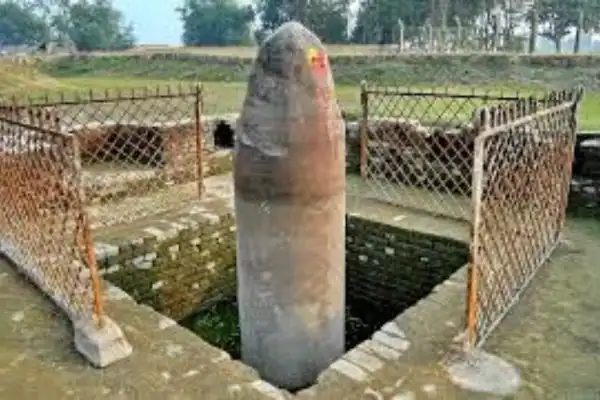
Gotihawa, Kapilvastu district, Nepal
About 4–5 km south-west
About 27 km
Ashoka pillar base and stupa
October to March
1 hour
Buddhist tradition teaches that several Buddhas appeared before Gautama Buddha. Krakuchhanda (Kakusandha in Pali) is the first Buddha of our present age. The Chinese pilgrims Faxian and Xuanzang described a place near Kapilavastu where an Ashoka pillar and stupa honoured him, and this has been identified with Gotihawa.
Today the lower part of an Ashoka pillar stands in the village; its upper part, which may have carried an inscription, is missing. Next to it are the remains of a large brick stupa. Nepal’s Lumbini Development Trust honours Gotihawa as the place where Krakuchhanda Buddha was born and attained Enlightenment.
Gotihawa reminds pilgrims that the Dhamma is timeless and that many Buddhas have walked the same path to awakening. Honouring Krakuchhanda Buddha here deepens the understanding of the long line of Buddhas recited in Thai chanting.
The quiet village setting makes it a peaceful stop on the Kapilavastu circuit.
Gotihawa is about 4–5 km south-west of Taulihawa and about 27 km from Lumbini. It is best visited by private vehicle on the same day as Tilaurakot, Niglihawa and Araurakot. Some village roads are narrow, especially after rain.
October to March is the best time. There are no facilities at the site, so carry water. Gotihawa is a quiet village site; please be respectful of local homes around the pillar. Combine it with the other Kapilavastu sites for a full and meaningful day.
Prime Value Tours can include this sacred place in a private tour for your group, with an English or Thai-speaking guide, comfortable air-conditioned transport, vegetarian meals and unhurried time for chanting and meditation at every stop. Tell us your group size and travel dates, and we will plan the best route and send your quotation within 24 hours.
The Lumbini Development Trust records that Emperor Ashoka visited Gotihawa in 249 BC, set up a stone pillar and built a large stupa for Krakuchhanda Buddha. The pillar stands about 3.25 metres high and about 83 cm wide. It remains in its original place on a masonry base. The Chinese pilgrims Faxian and Xuanzang both mention the pillar and the stupa.
The Lumbini and Niglihawa pillars carry Ashoka’s words. The Gotihawa pillar carries no inscription today. Early Chinese travellers are reported to have noted one, but none can be read now. The silent stone is still a place for quiet reflection.
An officer of the Lumbini Development Trust told the Kathmandu Post in 2019 that the pillar lies below the surrounding ground level, and that water can rise to about three feet around it in the monsoon. If your group wants to stand close to the pillar, plan the visit outside the monsoon season.
The Trust presents Gotihawa and Niglihawa as the birthplaces of two Buddhas of the past, Krakuchhanda and Kanakamuni. One scholarly suggestion is that fragments of the Niglihawa pillar once stood on the base found at Gotihawa. Visiting both places in one day helps pilgrims see how widely the Shakya land was honoured, long before Prince Siddhartha was born.
Krakuchhanda (Kakusandha) is honoured in Buddhist tradition as the first Buddha of our present age, before Gautama Buddha.
You can see the base of an Ashoka pillar and the remains of a large brick stupa.
The upper part of the pillar, which may have carried an inscription, is missing. The identification comes from the accounts of Chinese pilgrims.
Gotihawa is about 4–5 km south-west of Taulihawa in Kapilvastu district, Nepal, about 27 km from Lumbini.
Yes. Gotihawa, Tilaurakot, Niglihawa and Araurakot are usually visited together in one day.
Government-approved tour operator from Varanasi since 1999. Private Buddhist pilgrimage tours for Thai and Southeast Asian groups, with English or Thai-speaking guides.