- Govt. of India Approved
- IATO Member
- Trusted Since 1999
Pilgrimage Guide › Sacred Sites 1–9 › Mahabodhi Temple, Bodh Gaya
The Mahabodhi Temple in Bodh Gaya, Bihar, stands where Prince Siddhartha attained Enlightenment under the Bodhi Tree and became the Buddha. It is the holiest place in the Buddhist world and a UNESCO World Heritage Site. Who built Mahabodhi Temple? Emperor Ashoka built the first shrine here in the 3rd century BCE, and the present brick temple dates from about the 5th–6th century CE. Ask our team for the latest Mahabodhi Temple timings and the best hours for prayer.
Part of our guide to Buddhist heritage sites in India. To visit with a guide, see our Bodh Gaya Tour Package 2026–2027.
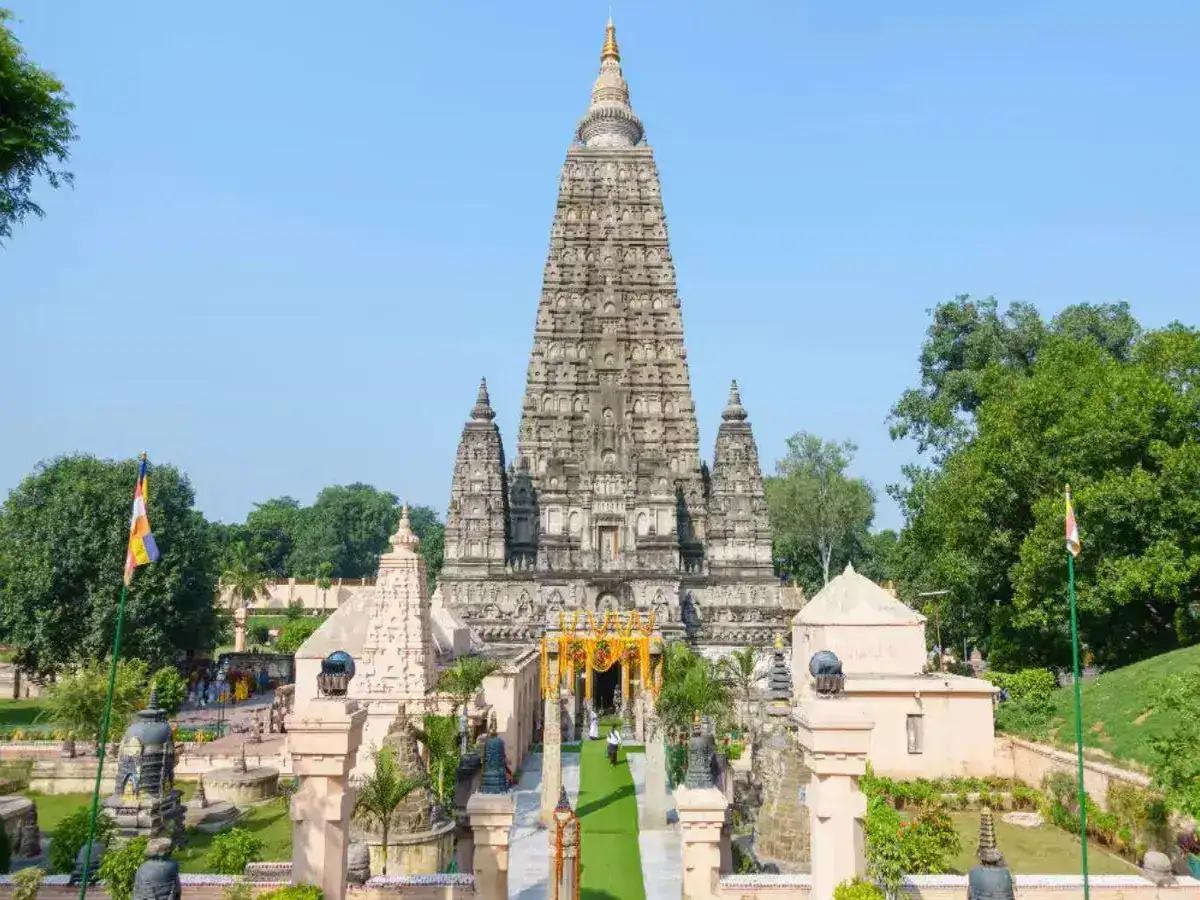
Bodh Gaya, Gaya district, Bihar
UNESCO World Heritage Site (2002)
5:00 AM – 9:00 PM, open every day
Gaya Airport (GAY), about 10 km
October to March
Minimum 2 nights in Bodh Gaya
Pray beneath the Bodhi Tree with a guide who knows the quiet meditation hours. Our 5-day Bodh Gaya pilgrimage also covers Dungeshwari Cave, Sujata Village, Nalanda and Rajgir, starting from Gaya or Varanasi. Quotation within 24 hours.
The Mahabodhi Temple marks the most sacred event in Buddhism. Here, around 2,600 years ago, Prince Siddhartha Gautama sat in deep meditation under a pipal tree on the bank of the Niranjana (Phalgu) River and attained Enlightenment. From that moment he was known as the Buddha, the Awakened One.
Emperor Ashoka visited this place in the 3rd century BCE and built the first shrine beside the Bodhi Tree. The present brick temple, about 55 metres tall, dates mainly from the 5th–6th century CE and is one of the oldest brick temples in India. It was carefully restored in the 19th century. Beside the temple stands the sacred Bodhi Tree, a descendant of the original tree, and below it the Vajrasana (Diamond Throne), the stone seat that marks the exact place of Enlightenment.
The first shrine at this holy place was built by Emperor Ashoka in the 3rd century BCE, more than 200 years after the Buddha’s Enlightenment. Ashoka was a great follower of the Dhamma. He honoured the Bodhi Tree with a shrine and placed the stone Vajrasana to mark the seat of Enlightenment.
The tall temple we see today was built mainly in the Gupta period (5th–6th century CE). It rises about 55 metres and is one of the oldest brick temples still standing in India. Over the centuries, kings and pilgrims from Sri Lanka, Myanmar (Burma) and other Buddhist lands repaired and cared for the Mahabodhi Temple.
After a long period of neglect, the temple was restored in the 1880s under the British archaeologist Sir Alexander Cunningham, with support from the King of Burma. In 2002, UNESCO listed the Mahabodhi Temple Complex as a World Heritage Site. Today the Bodhgaya Temple Management Committee looks after the temple.
For every Buddhist, Bodh Gaya is the centre of the world. To sit quietly beneath the Bodhi Tree, where the Buddha attained Enlightenment, is the wish of a lifetime for many pilgrims. Thai groups often offer robes, flowers and candles, chant together and walk slowly around the temple in prayer.
Monks and pilgrims from many countries pray here side by side every day. This shared devotion gives Bodh Gaya a deep, peaceful atmosphere that stays with pilgrims long after they return home.
The Mahabodhi Temple complex covers about 4.8 hectares. Inside it are the main temple and the sacred places where, according to Buddhist tradition, the Buddha spent each of the seven weeks after his Enlightenment. Your guide will lead your group to each one in order:
Inside the main shrine, a large golden Buddha image sits in the earth-touching gesture (Bhumisparsha Mudra). Around the temple you will also see ancient stone railings, small votive stupas and the outer path where pilgrims walk clockwise in prayer.
The Mahabodhi Temple stands in the centre of Bodh Gaya town, on the banks of the Niranjana River, about 13 km from Gaya city. Gaya Airport (GAY) is about 10 km away and has domestic flights, plus seasonal flights from Bangkok and other Asian cities during the pilgrim season. Gaya Junction railway station is about 15 km from the temple (around 30–40 minutes by road) and is connected to Delhi, Kolkata, Varanasi and Patna. By road, Bodh Gaya is about 250 km from Varanasi (5–6 hours), about 75 km from Rajgir and about 115 km from Patna.
Thai groups travelling from Bangkok usually fly to Gaya, Varanasi or Kolkata. We meet your group at the airport and arrange every transfer.
October to March is the best time, with cool, pleasant days. December and January are the busiest months, when monks from across Asia gather for prayers. Remove your shoes before entering the temple area and dress modestly. Join the early morning sutta chanting at 5:30 AM, when the temple is calm. Plan at least two nights in Bodh Gaya so your group can pray and meditate without hurry.
Prime Value Tours can include this sacred place in a private tour for your group, with an English or Thai-speaking guide, comfortable air-conditioned transport, vegetarian meals and unhurried time for chanting and meditation at every stop. Tell us your group size and travel dates, and we will plan the best route and send your quotation within 24 hours.
To keep the temple peaceful and safe, the Mahabodhi Temple follows these rules:
This is how a peaceful day at the Mahabodhi Temple often looks for our pilgrim groups:
With at least two nights in Bodh Gaya, your group can return to the Mahabodhi Temple more than once, without hurry.
วัดมหาโพธิ์ พุทธคยา คือสถานที่ตรัสรู้ของพระพุทธเจ้า ใต้ต้นพระศรีมหาโพธิ์ และเป็นหนึ่งในสังเวชนียสถาน 4 ตำบล วัดเปิดทุกวัน เวลา 05.00–21.00 น. ไม่มีค่าเข้าชม ห้ามนำโทรศัพท์มือถือเข้าภายในวัด ควรพักที่พุทธคยาอย่างน้อย 2 คืน
Prime Value Tours จัดทัวร์พุทธคยาและทัวร์ตามรอยพระพุทธเจ้า อินเดีย–เนปาล แบบส่วนตัว พร้อมไกด์พูดภาษาไทย ติดต่อเราทาง LINE หรือ WhatsApp +91-9794122849
(Summary for Thai pilgrims: Mahabodhi Temple, Bodh Gaya – timings, rules and our private Bodh Gaya tours with a Thai-speaking guide.)
The Mahabodhi Temple is open every day from 5:00 AM to 9:00 PM. Sutta chanting and meditation take place at 5:30 AM and again at about 6:00 PM.
There is no entry fee for the Mahabodhi Temple. A small fee may apply if you carry a camera.
It stands at the place where the Buddha attained Enlightenment under the Bodhi Tree. It is the holiest of the four main Buddhist pilgrimage sites and a UNESCO World Heritage Site.
The Mahabodhi Temple is in the centre of Bodh Gaya town, in the Gaya district of Bihar, India, on the banks of the Niranjana River. It is about 13 km from Gaya city and about 10 km from Gaya Airport.
Emperor Ashoka built the first shrine here in the 3rd century BCE. The present brick temple dates mainly from the Gupta period (5th–6th century CE) and was restored in the 1880s.
No. Mobile phones, cameras and other electronic gadgets are not allowed inside the temple. Leave them at the deposit counter near the entrance.
Yes. Bodh Gaya has many hotels and monastery guesthouses within walking distance of the temple. We book hotels close to the temple so elderly pilgrims can easily join the early morning chanting.
We recommend a minimum of two nights. This gives time for the temple, the Bodhi Tree, meditation, the national monasteries and a visit to nearby sites.
Fly to Gaya Airport, which is about 10 km from Bodh Gaya, or fly to Varanasi or Kolkata and continue by road or train. Prime Value Tours arranges airport pickups and transfers.
Government-approved tour operator from Varanasi since 1999. Private Buddhist pilgrimage tours for Thai and Southeast Asian groups, with English or Thai-speaking guides.