- Govt. of India Approved
- IATO Member
- Trusted Since 1999
Pilgrimage Guide › Sacred Sites 38–42 › Kanchipuram
Kanchipuram Buddhist heritage goes back more than 1,500 years. The ancient city in Tamil Nadu was a great centre of Buddhist learning, home to famous scholars, and Xuanzang described many monasteries here in the 7th century.
Part of our guide to Buddhist heritage sites in India.
Kanchipuram, Tamil Nadu
About 4th–8th century CE (and later)
Chennai (MAA), about 75 km
Kanchipuram station
November to February
Half a day
Kanchipuram, capital of the Pallava kings, was one of the great cities of ancient South India. For many centuries it was also an important centre of Buddhist learning. When the Chinese pilgrim Xuanzang visited in the 7th century, he wrote of hundreds of monasteries and thousands of monks here.
Xuanzang recorded that Dharmapala, a great teacher of Nalanda, was born in Kanchi. Kanchi is also linked with Acariya Dhammapala, an important commentator of the Pali texts honoured in the Theravada tradition, and later legends connect the city with Bodhidharma. Today Kanchipuram is best known as a temple city, but Buddha images found in the area remind visitors of its Buddhist past.
Kanchipuram is part of the story of the Pali tradition followed in Thailand, Sri Lanka and Myanmar, because great commentators of the Pali texts are linked with this region. For Theravada pilgrims, it is a chance to honour the scholars who helped preserve the teaching.
It also shows how widely the Dhamma once flourished across South India.
The Chinese pilgrim Xuanzang visited Kanchi in the 7th century. He wrote of hundreds of monasteries and about 10,000 monks. He also saw an Ashoka stupa more than 100 feet high, where, he was told, the Buddha had once taught.
Xuanzang also wrote that Dharmapala, a great teacher, was born in Kanchi, the eldest son of a high official of the city. Dignaga, a famous Buddhist teacher of logic, is also linked with the city.
Kanchi is named in the Tamil epic Manimekalai, a Buddhist story, and in other early Tamil writings. Buddhist monasteries stood here for many centuries. Some records show that Mahayana monasteries were still active in the 14th century.
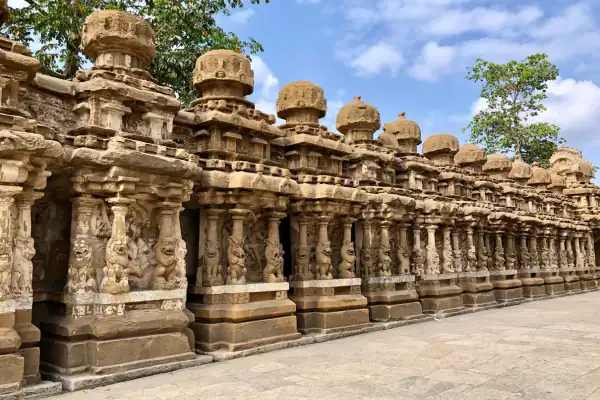
We must be honest with pilgrims: the great Buddhist buildings of Kanchi no longer stand. What remains are a few Buddha statues and carved pieces, some of them kept in temples and other places around the city. Kanchipuram is on India’s Tentative List for World Heritage.
This makes Kanchi a place for learning and remembrance. We suggest that groups visit with a guide who can explain the old Buddhist story of the city, and who can show where the remaining images are kept.
Kanchipuram is about 75 km from Chennai, around 2 hours by road. Chennai International Airport (MAA) has flights from Bangkok, Singapore, Colombo and all major Indian cities. Trains and frequent buses run from Chennai to Kanchipuram. The city is often combined with Mahabalipuram on a heritage tour.
November to February is the most comfortable time. The northeast monsoon brings rain from October to December, and summer (March to June) is hot and humid. Explore early in the morning before the heat. Dress modestly when visiting temples and remove footwear where asked.
Prime Value Tours can include this sacred place in a private tour for your group, with an English or Thai-speaking guide, comfortable air-conditioned transport, vegetarian meals and unhurried time for chanting and meditation at every stop. Tell us your group size and travel dates, and we will plan the best route and send your quotation within 24 hours.
Yes. Kanchipuram was an important centre of Buddhist learning for many centuries. Xuanzang wrote of hundreds of monasteries here in the 7th century.
Xuanzang recorded that Dharmapala of Nalanda was born in Kanchi. The Pali commentator Acariya Dhammapala is also linked with the Kanchi area.
Kanchipuram is about 75 km from Chennai, around 2 hours by road.
Yes. Chennai International Airport has flights from Bangkok and other Asian cities.
November to February is the best time, with milder weather.
Government-approved tour operator from Varanasi since 1999. Private Buddhist pilgrimage tours for Thai and Southeast Asian groups, with English or Thai-speaking guides.