
Buddhist Photography Guide India: 7 Expert Respectful Tips
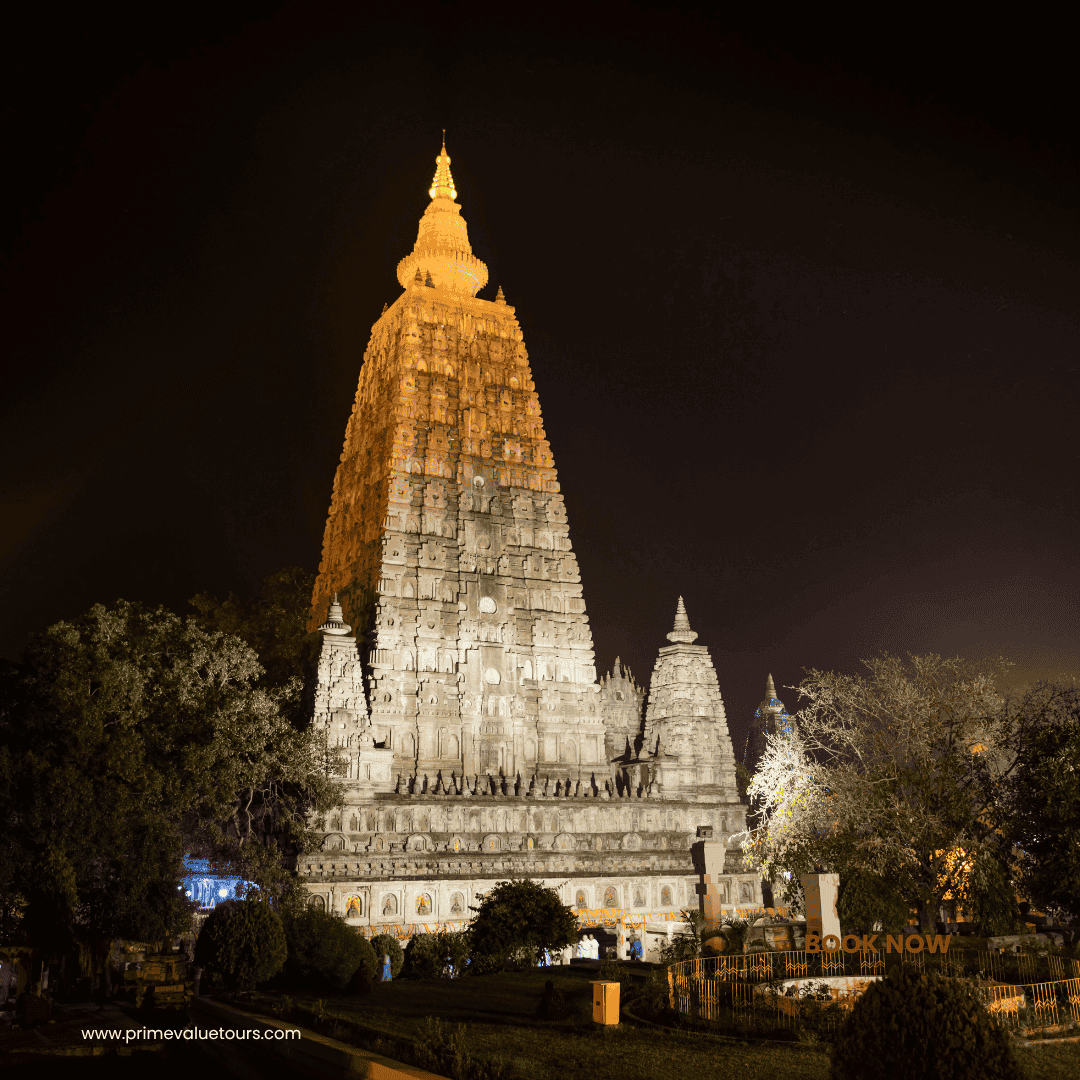
It is 5 o’clock in the morning at Bodh Gaya. The gates of the Mahabodhi Temple open, and a line of monks in saffron robes walks in with candles and flowers. You reach for your phone to take a picture. Then a guard stops you: phones are not allowed inside.
This happens to many first-time pilgrims. That is why we wrote this Buddhist photography guide India travelers can trust. It explains the camera rules at the holy sites, how to photograph monks with respect, and where to find the most beautiful light.
At Prime Value Tours, we have guided Thai and Southeast Asian pilgrim groups for more than 25 years. In our experience, good photos and a peaceful pilgrimage can go together. You only need to know the rules before you arrive.
Why You Need a Buddhist Photography Guide India Pilgrims Can Follow
The holy sites of India and Nepal are not museums. They are living places of prayer. Every day, monks chant, pilgrims meditate, and families offer flowers under the Bodhi Tree. A camera flash or a loud selfie can break that peace.
Each site also has its own rules. Some allow cameras but not phones. Some allow photos in the garden but not inside the shrine. Some ban flash and tripods to protect paintings that are more than 1,500 years old. A simple Buddhist photography guide India visitors can read before the trip saves time, money and embarrassment at the gate.
We know many pilgrims feel worried about this. You want to keep memories for your family at home. But you also do not want to disturb anyone at a sacred place. The 7 tips below solve both problems.
Buddhist Photography Guide India: Camera Rules at a Glance
Here is our Buddhist photography guide India summary, based on what we see on our tours and on current visitor reports. Rules can change, so always read the signs at the gate and follow the guards.
| Site | Mobile phone | Camera | Our main tip |
|---|---|---|---|
| Mahabodhi Temple, Bodh Gaya | Not allowed inside | Separate camera, with a camera ticket at the counter | Leave phones at the deposit counter near the gate |
| Maya Devi Temple, Lumbini | Keep it in your pocket | No photos inside the temple | Take photos in the Sacred Garden and at the pool |
| Sarnath Museum | Not allowed inside | Check the rule at the gate | Photograph Dhamek Stupa outside instead |
| Ajanta Caves | Allowed outside | No flash, no tripod inside | Use a high ISO setting and hold steady |
| ASI site museums | Check at the gate | No flash, tripod or selfie stick | Use only the museum’s own light |
| Drone photography | Not applicable | Needs special permission | Do not fly a drone at any holy site |
Tip 1: Plan for a Phone-Free Mahabodhi Temple
Mobile phones, smartwatches and power banks are not allowed inside the Mahabodhi Temple complex. Many pilgrims learn this only at the security line. If you want photos, bring a small separate camera and buy a camera ticket at the counter near the main entrance.
What most travelers do not know: the phone rule is a gift. Without phones, the temple is calm, and people truly pray. On our tours, we ask each group to choose one or two members as the group photographers. Everyone else leaves their phone at the deposit counter and simply prays.
- Take your group photo outside the main gate, before security.
- Carry a small camera with a charged battery and an empty memory card.
- Keep your passport copy and camera ticket together in one pocket.
Tip 2: Respect the Shrine Rooms and Sacred Interiors
Inside the Maya Devi Temple in Lumbini, the exact birthplace of the Buddha is marked by a marker stone. Photography is not allowed inside this temple, and guards remind visitors to keep silence. Please honour this. The moment is for your heart, not your camera.
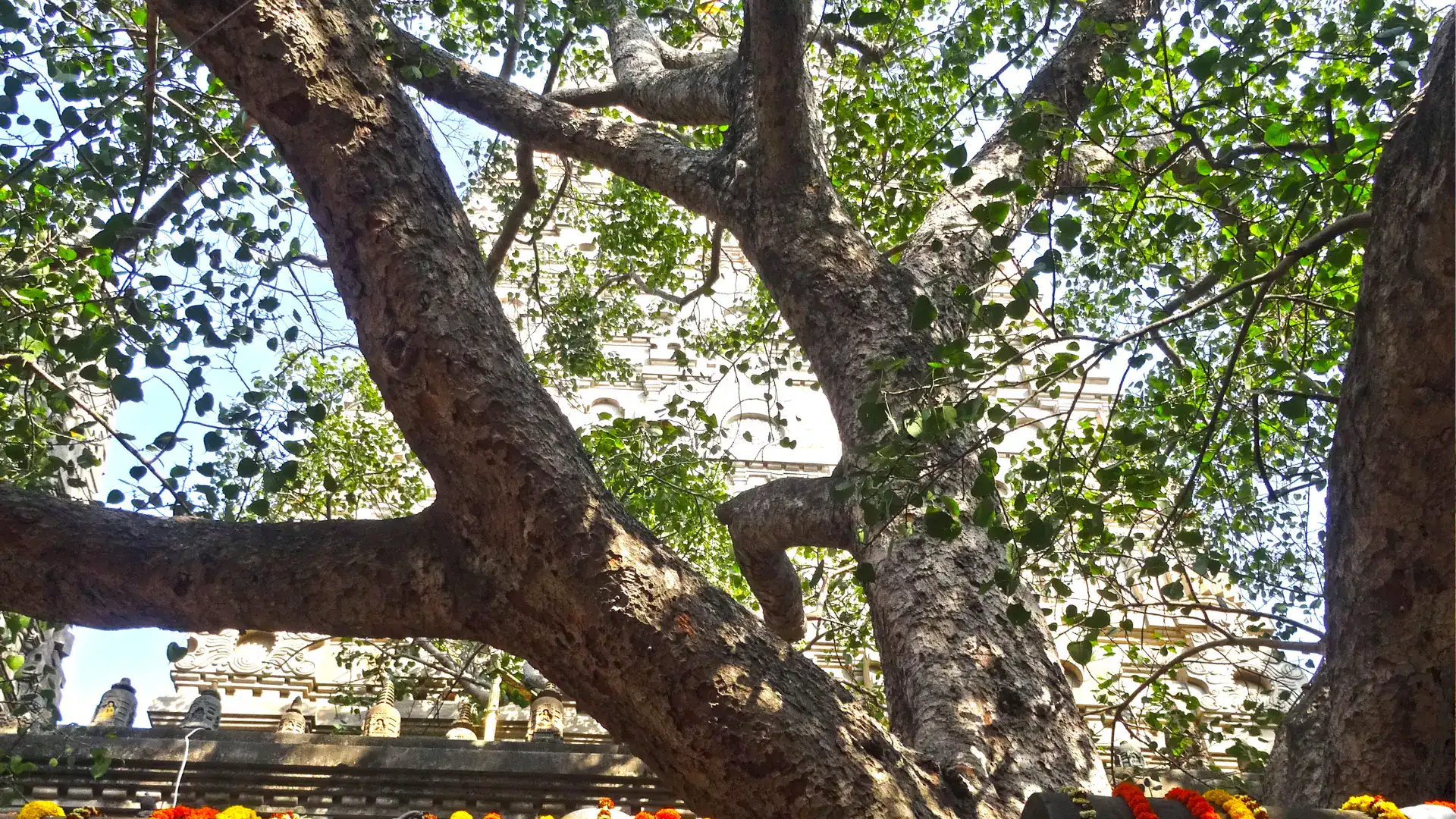
Outside, the Sacred Garden is open for photos. The Ashoka Pillar, the Bodhi Tree with colourful prayer flags and the Puskarini pond are beautiful subjects. In the evening, the pond gives soft reflections of the white temple.
At other shrines, such as the Parinirvana Temple in Kushinagar, the rule can be different. Our simple rule: if you are not sure, ask the caretaker monk or our tour leader before you lift the camera.
Tip 3: Photograph Monks with Permission and Care
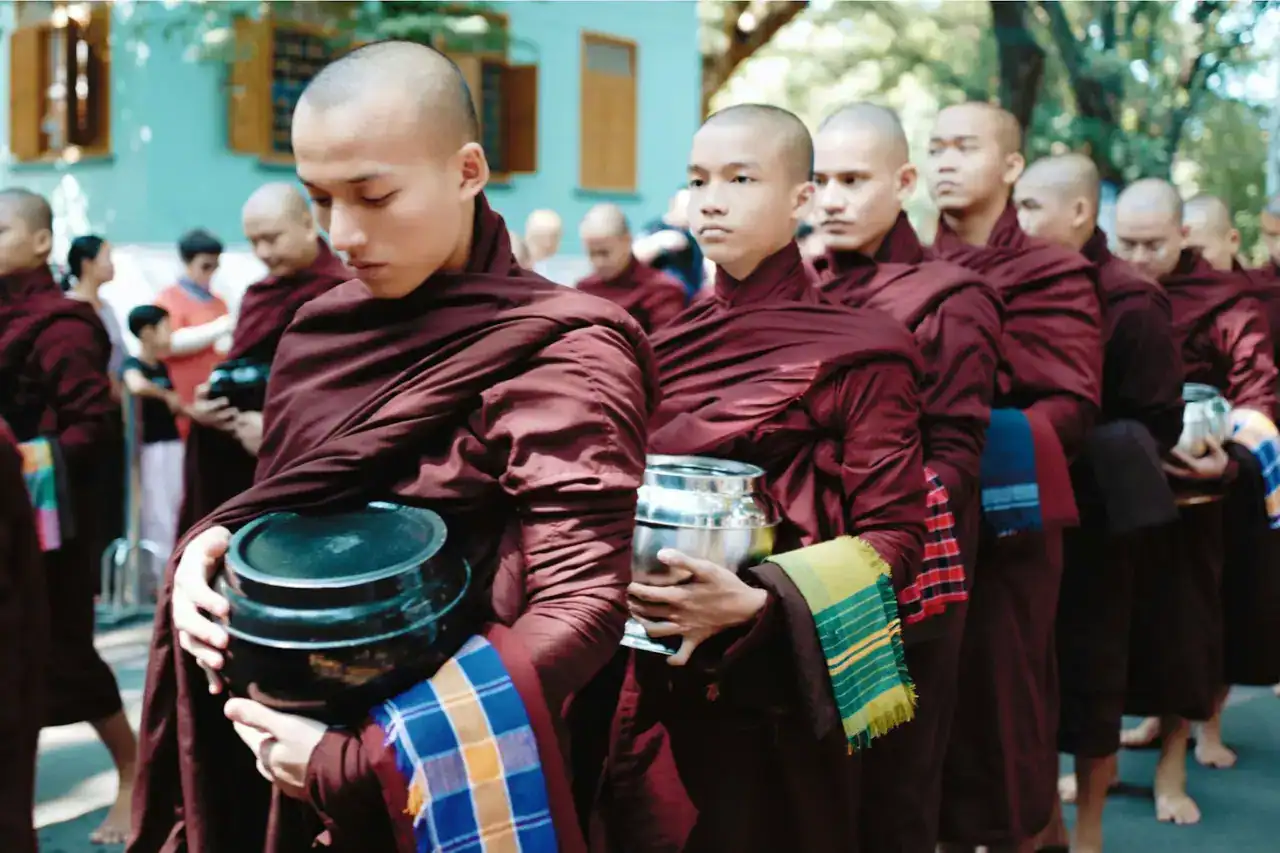
The most important part of this Buddhist photography guide India visitors should remember is about people. Monks are not tourist attractions. They are teachers of the Dhamma. Before you take a close photo of a Bhante, smile, bow slightly with joined palms, and ask with a gesture. Most monks agree. If one says no, thank him and lower the camera.
- Never interrupt chanting, meditation or a blessing to take a photo.
- Women should not touch a monk or hand him the camera directly. Ask a male group member to help.
- Do not stand on steps above a seated monk for a high angle.
- Do not pose with your back turned to a Buddha image. Stand to the side and face the image.
Thai pilgrims already know these customs well. But in a mixed group with Western or Indian travelers, a quick reminder from the tour leader keeps everyone comfortable.
Tip 4: Never Use Flash Near Ancient Paintings
The Ajanta Caves hold some of the oldest Buddhist paintings in the world. Strong light damages them, so flash and tripods are not allowed inside. The caves are also kept dim on purpose.
Here is how our guests still get good pictures: switch off the flash before entering, set a higher ISO, hold the camera with both elbows close to your body, and take 3 photos of each painting. One of them will be sharp. If you plan to visit Ajanta and Ellora, see our Cave Heritage Tour of Ajanta, Ellora and Elephanta.
Museums managed by the Archaeological Survey of India (ASI) follow a similar policy. Tripods, monopods, flash and selfie sticks are not permitted. Visitors may use only the museum’s own lighting.
Tip 5: Follow the Best Light at Each Holy Site
Good light is the heart of any Buddhist photography guide India pilgrims can use. It makes a simple photo look beautiful. From our years of planning daily schedules for pilgrim groups, these are the best times:
- Bodh Gaya: early morning when the gates open, and evening when butter lamps glow around the temple.
- Sarnath: sunrise at the Dhamek Stupa, where the Buddha gave his first sermon. Winter mornings often bring soft mist.
- Lumbini: late afternoon in the Sacred Garden, when the prayer flags glow in warm light.
- Kushinagar: early morning at the Ramabhar Stupa, the cremation place of the Buddha, before the sun gets strong.
- Rajgir: morning at Vulture’s Peak (Griddhakuta), where the view over the hills is clear.
We build these timings into our routes. So you can pray at the quiet hour and take photos at the golden hour, without rushing. Learn more about each site in our Buddhist Pilgrimage Guide for India and Nepal.
Tip 6: Leave the Drone at Home
India divides its airspace into green, yellow and red zones under the Drone Rules, 2021. No one may fly a drone in a red zone or yellow zone without prior permission. Heritage monuments also need separate permission from the ASI and often the local police. Breaking the rules can lead to a fine of up to INR 1,00,000 (about USD 1,200).
Beyond the law, a buzzing drone over chanting monks is simply not respectful. If you want aerial images, buy official postcards or books at the site. They are often better than any drone photo.
Tip 7: Use Your Photos with a Kind Heart
A respectful Buddhist photography guide India pilgrims follow does not end at the temple gate. It continues on social media. Before you post, ask yourself: would the monk in this photo be happy to see it?
- Do not post photos of people praying or crying without their consent.
- Write a respectful caption. Avoid jokes about the Buddha or the holy site.
- Never sell photos of monks or worshippers without written permission.
What to Know Before You Go
This short checklist is the practical side of our Buddhist photography guide India pilgrims ask for. It comes from more than 25 years of real group tours across India and Nepal:
- Pack a small camera, 2 charged batteries and a spare memory card.
- Carry a small cloth bag for shoes. You will remove them at every shrine.
- Wear clothes that cover your shoulders and knees, in white or soft colours.
- Keep small INR notes for camera tickets and shoe-keeper tips.
- Ask your tour leader each morning which sites allow cameras that day.
Planning the full journey? See our 10-day Buddhist circuit daily schedule and the best time to visit Bodh Gaya.
Plan Your Photo-Friendly Pilgrimage with Prime Value Tours
We have organized pilgrimage and cultural tours across India since 1999, with a special focus on Buddhist circuit tours for Thai and Southeast Asian groups. We are a Ministry of Tourism, Government of India approved tour operator and a proud IATO Member (Indian Association of Tour Operators). We also have a ground office in Lumbini, Nepal.
Every route we plan follows this Buddhist photography guide India travelers can trust. Tell us your dates and group size, and we will design a route with the right prayer times and the best photo times. Start with our Plan Your Trip page, or contact us directly:
- Phone: +91-542-2500113
- WhatsApp: +91-9794122849
- Email: info@primevaluetours.com
- Website: www.primevaluetours.com
- LINE: line.me/ti/p/6QtZRvYpeP
Address: Prime Value Tours Pvt. Ltd., 3rd Floor, E-8, Central Jail Rd, Opposite Main Gate, Shanti Vihar, Gilat Bazar, Chotta Chuppepur, Varanasi-221003, India.
A Final Thought
The most precious picture from a pilgrimage is the one you keep in your mind: the first sight of the Bodhi Tree, the silence of Lumbini, the evening chant at Sarnath. Take your photos with care, and then put the camera down. Let the holy places speak to you. We hope this Buddhist photography guide India travelers can use will help you return home with beautiful images and a peaceful heart.
Buddhist Photography Guide India: Frequently Asked Questions
Can I take my mobile phone inside the Mahabodhi Temple?
No. Mobile phones, smartwatches and power banks are not allowed inside the temple complex. You can deposit them at the counter near the entrance. To take photos, bring a separate camera and buy a camera ticket.
Is photography allowed inside the Maya Devi Temple in Lumbini?
No. Photography is not allowed inside the Maya Devi Temple. You may take photos in the Sacred Garden, near the Ashoka Pillar, the Bodhi Tree and the sacred pond.
Can I use flash at the Ajanta Caves?
No. Flash and tripods are not allowed inside the Ajanta Caves because strong light damages the ancient paintings. Use a higher ISO and hold your camera steady.
Is it okay to photograph Buddhist monks in India?
Yes, if you ask first. Greet the monk with joined palms and ask by gesture. Never photograph during chanting or meditation, and respect a polite no.
Can I fly a drone at Buddhist sites in India?
Not without permission. Drone flights in red and yellow zones need prior permission, and heritage sites also need ASI approval. We advise all pilgrims to leave drones at home.